
To build speed and endurance in an endless pool, you’ll want to focus on a mix of sprint drills, pacing exercises, kickboard and pull buoy workouts, and breath control techniques. Incorporate explosive starts, turns, push-offs, and mixed pace sets to challenge your muscles and mental focus. Using targeted drills helps you improve technique and power. Keep progressing gradually and stay consistent; if you continue exploring, you’ll discover even more effective ways to maximize your training.
Key Takeaways
- Incorporate sprint intervals and speed endurance drills to develop explosive power and sustain high speeds in an endless pool.
- Use pacing and technique-focused exercises, including start, turn, and push-off drills, to improve efficiency and transition speed.
- Include kickboard and pull buoy sets to enhance leg strength and upper body technique for overall swimming performance.
- Practice hypoxic breathing techniques to increase lung capacity and stamina during endurance workouts.
- Combine varied pacing, mindfulness, and descending sets to optimize mental focus, stamina, and overall swimming speed.
Sprint Intervals for Explosive Power
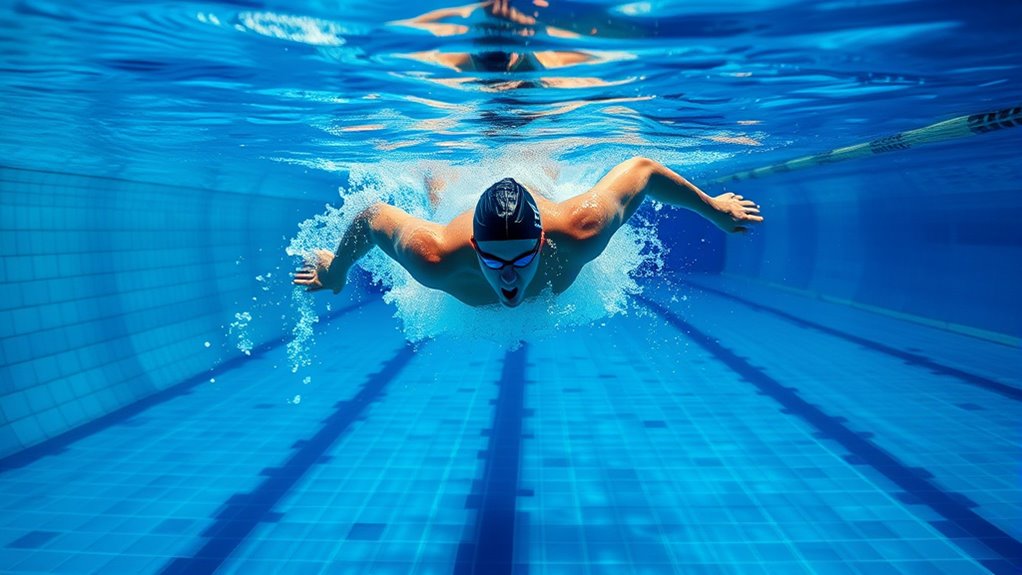
Sprint intervals in the pool are an effective way to build explosive power. When you push yourself during these short, intense bursts, you activate fast-twitch muscle fibers that generate maximum force. To start, warm up with easy swimming for 5-10 minutes. Then, swim all-out sprints for 20-30 seconds, focusing on powerful, explosive strokes. Rest for 30-60 seconds between each sprint to recover fully. Repeat this cycle 6-8 times, gradually increasing intensity as you improve. Keep your form sharp and avoid sacrificing technique for speed. Incorporating sprint intervals into your routine enhances your strength and acceleration, translating to faster times in longer swims. Consistent practice helps develop the explosive power necessary for competitive swimming or improving overall speed. Additionally, using proper recovery techniques ensures your muscles repair effectively and reduces the risk of injury.
Pacing Drills to Maintain Consistent Speed
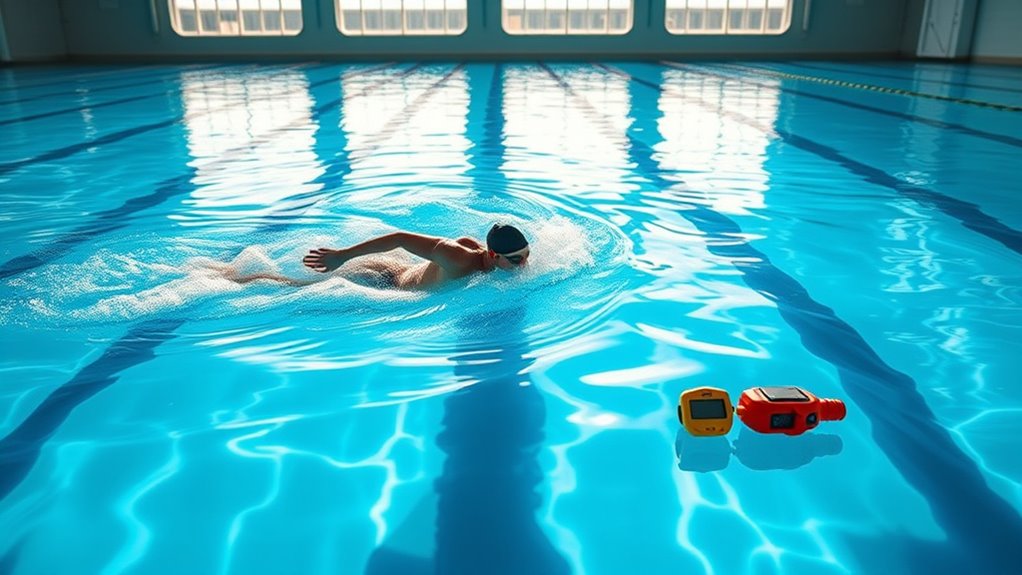
After engaging in explosive power exercises like sprint intervals, it’s important to focus on maintaining a steady pace throughout your swim. Pacing drills help you develop a sense of rhythm and consistency, preventing you from starting too fast and burning out early. To practice this, set a target pace and swim multiple laps, monitoring your speed with a stopwatch or pool timer. Focus on smooth, controlled strokes and steady breathing to stay at your desired tempo. As you become more comfortable, challenge yourself to hold that pace over longer distances. Regular pacing drills improve your ability to conserve energy and perform better during races. Remember, consistency is key—training your body to sustain a steady speed translates directly into improved race performance. Proper pacing can also help you manage your Required Minimum Distributions (RMDs) during retirement, ensuring you avoid penalties and optimize your energy expenditure.
Kickboard Sets for Leg Strength

Using a kickboard during your swim workouts is an effective way to build leg strength and improve your overall propulsion in the water. By focusing solely on your legs, you can develop the muscles needed for powerful kicks that enhance your speed and efficiency. To maximize benefits, perform kickboard sets with a steady, controlled kick, maintaining proper body position and engaging your core. Incorporate different kick styles, such as flutter, dolphin, or breaststroke kicks, to target various muscle groups. Short, intense intervals followed by rest help build endurance while increasing power. Consistent use of kickboards also promotes better body awareness and technique, making your overall swimming more efficient and less tiring. Additionally, practicing swimming techniques with a kickboard can help reinforce proper form and improve your efficiency in the water. Keep challenging yourself by gradually increasing the intensity and duration of your kick sets.
Pull Buoy Workouts to Enhance Upper Body Technique
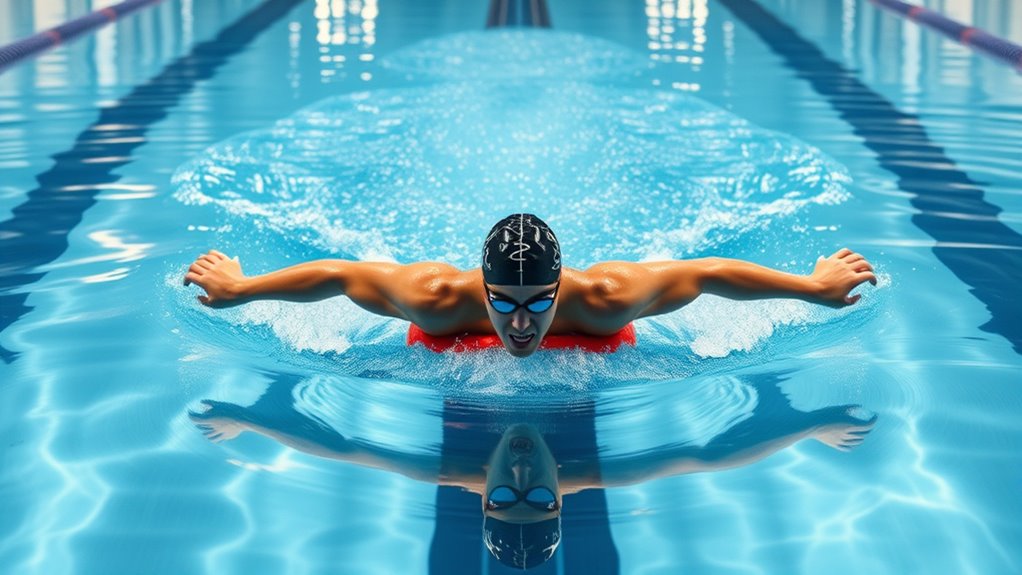
A pull buoy is a simple yet effective tool for focusing on upper body strength and technique during your swim workouts. By placing the buoy between your legs, you eliminate the need for kicking, allowing you to concentrate solely on your arm strokes and body positioning. Use it to develop a stronger, more efficient pull, which translates to increased speed and endurance in the water. Incorporate pull buoy drills like focused catch-up drills, single-arm swims, or long, steady sets to refine your arm movement, hand entry, and shoulder engagement. Pay attention to maintaining a streamlined body position and consistent rhythm. Regular use of the pull buoy helps identify weaknesses in your upper body technique and builds the muscle memory needed for more powerful, efficient swimming.
Hypoxic Training to Improve Breath Control

Hypoxic training involves intentionally limiting your breath intake during swims to enhance your lung capacity and breath control. By reducing the frequency of breaths, you force your lungs to adapt, increasing their efficiency over time. Start with controlled intervals, such as taking a breath every three or five strokes, and gradually extend the duration between breaths as you become more comfortable. Focus on maintaining steady, relaxed strokes to conserve energy and prevent dizziness. This practice improves your ability to stay calm under water and manage oxygen levels better during intense efforts. Remember, hypoxic training should be approached gradually to avoid dizziness or discomfort. Consistent practice helps build stronger lungs, boosts endurance, and enhances your overall swimming performance. Additionally, understanding how indoor air quality can impact respiratory health emphasizes the importance of proper breathing techniques during training.
Fartlek Sessions for Varied Intensity

Fartlek sessions add variety and unpredictability to your swim workout by alternating between different intensities and paces throughout each set. This method keeps your muscles engaged and challenges your endurance. To get the most out of your session, try these strategies:
- Vary your speed every 30 to 60 seconds to mimic race conditions.
- Incorporate bursts of maximum effort followed by easy recovery laps.
- Mix in different strokes or drills to prevent monotony and target different muscle groups.
- Pay attention to your breathing patterns to maximize oxygen intake and improve stamina.
Technique Focused Drills for Streamlining
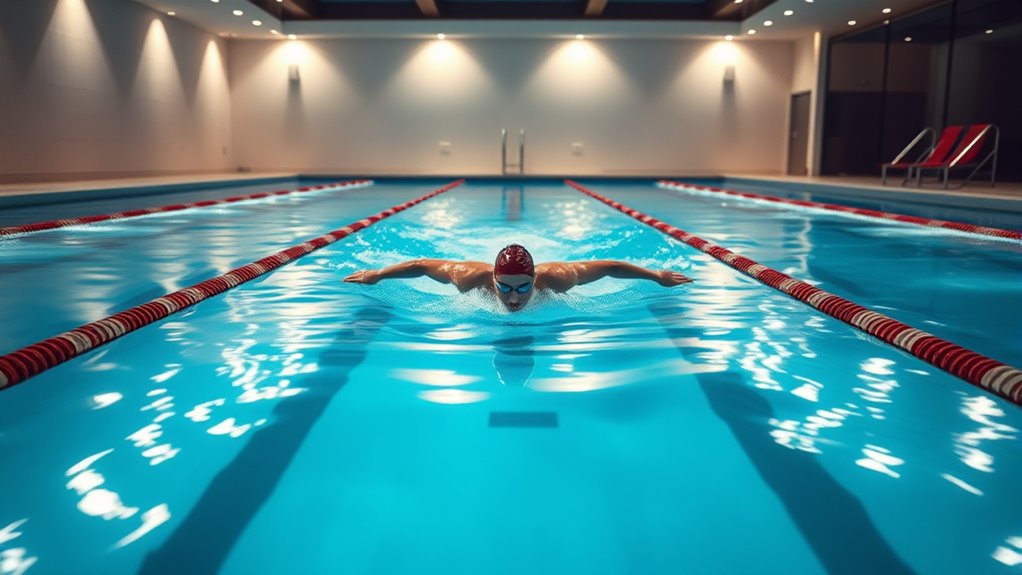
To maximize your swim efficiency, focusing on technique drills that enhance your streamline position is essential. These drills help reduce drag and improve your glide through the water. Start with body alignment exercises, like kicking with a streamlined body, and practice holding your head in a neutral position. Incorporate drills such as single-arm swims to refine arm extension and minimize unnecessary movements. Use the table below to identify key aspects of streamlining:
| Drill | Focus Area | Tip |
|---|---|---|
| Streamline Kicks | Body alignment and kicks | Keep hips high and core tight |
| Fingertip Drag | Arm extension and reach | Reach forward fully before pulling |
| Wall Push-offs | Power and glide efficiency | Push off with minimal splash |
Consistent practice improves efficiency, making your swim smoother and faster. Additionally, selecting durable, high-quality kitchen cabinets can enhance the overall aesthetic of your space, just as proper technique enhances your swimming performance.
Endurance Sets With Longer Distances
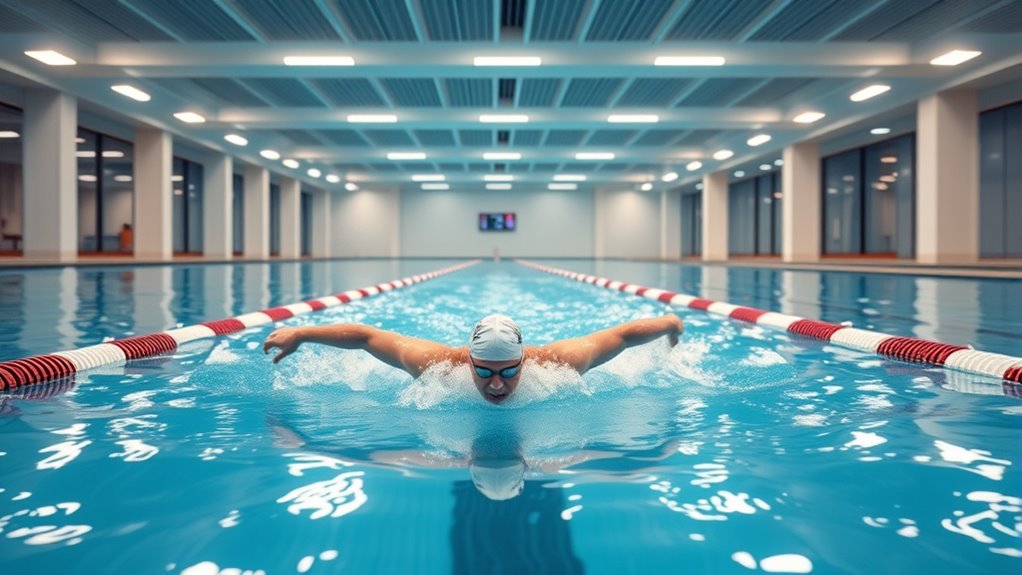
Endurance sets with longer distances are essential for building your stamina and improving your overall swimming performance. These sets challenge your body to sustain effort over extended periods, boosting your aerobic capacity. To maximize benefits, focus on:
- Choosing distances that push your current limits, like 400-800 meters, to develop sustained effort.
- Maintaining a consistent pace throughout each set to build endurance gradually.
- Incorporating rest intervals that are short enough to keep your heart rate elevated but allow recovery for the next effort.
Descending Sets to Build Speed Endurance

Descending sets are an effective way to build speed endurance by gradually increasing intensity throughout your workout. You start with a moderate pace, then reduce your rest intervals or increase your speed with each set. This approach challenges your body to adapt to higher speeds while maintaining effort levels. For example, swim a set of 100 meters at a comfortable pace, then do 75 meters at a faster pace with less rest, and finish with 50 meters at your maximum speed. The key is to push yourself harder as fatigue sets in, gradually improving your ability to sustain high speeds. Incorporating mindfulness techniques into your routine can help you stay focused and motivated during challenging sets. Incorporate descending sets into your routine once or twice a week to boost your stamina and develop the mental toughness needed for speed.
Breakout and Start Practice for Explosive Launches

Building explosive power off the start can markedly improve your overall swim times, especially in races where quick launches give you an early advantage. To master your breakout and start, focus on these key drills:
- Explosive Push-Offs: Practice pushing off the wall with maximum force, aiming for a streamlined glide that propels you forward quickly.
- Streamline Kicks: After the push-off, maintain a tight streamline and kick vigorously to develop explosive leg power.
- Rapid Breakout Drills: transition smoothly from underwater to surface swimming, emphasizing a quick, powerful upward movement to maximize momentum.
- Refining Technique: Consistent practice of proper body positioning during the start enhances overall explosiveness and efficiency.
Consistently practicing these drills enhances your ability to launch explosively, gaining valuable seconds right from the start of each race.
Drill Sets Incorporating Turns and Push-Offs
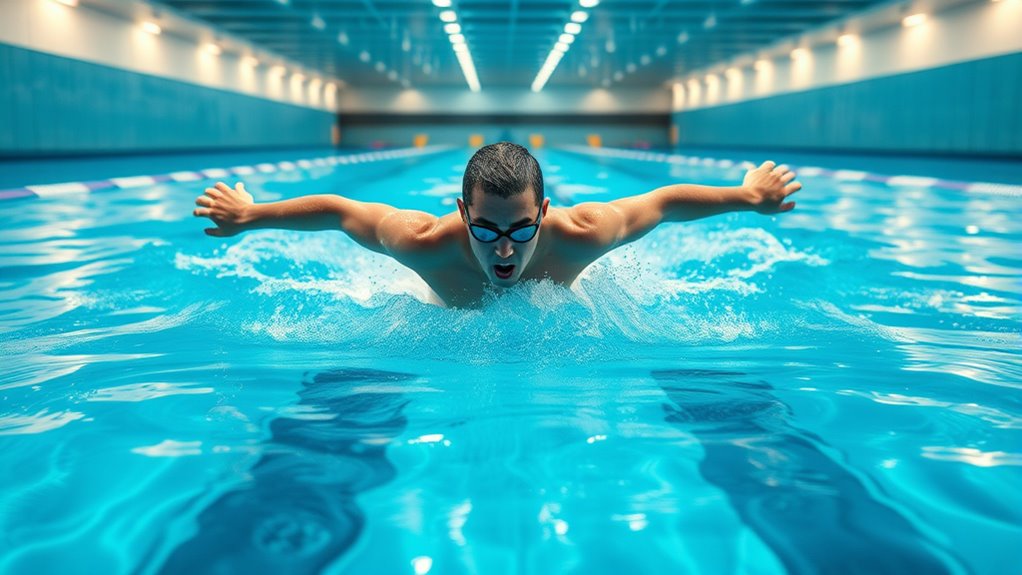
Incorporating turns and push-offs into your drill sets can substantially boost your overall speed and efficiency in the pool. Focus on quick, tight turns to minimize time lost, and explode off the wall with maximum force. Practice push-offs with streamlined body positions to maximize glide and reduce drag. These elements improve your progression from underwater to surface swimming, building momentum and endurance. To help you refine technique, try this drill:
| Turn Focus | Push-Off Focus |
|---|---|
| Quick, tight flips | Explosive push-offs |
| Streamlined body | Maximize glide |
| Underwater streamline | Maintain body position |
| Fast turns | Accelerate after push-off |
| Consistent rhythm | Minimize resistance |
This combination sharpens your agility and power, translating directly into faster swimming.
Mixed Pace Sets for Overall Conditioning

After mastering turns and push-offs to boost your speed and efficiency, adding mixed pace sets can elevate your overall conditioning. These sets challenge your body to adapt to varying speeds, improving endurance and mental focus. To get started:
- Alternate between 50-meter sprints at maximum effort and 50-meter recovery swims at a relaxed pace.
- Mix in steady-state swims for 200 meters, then incorporate 25-meter accelerations every 4 strokes.
- Combine different strokes or drill variations within a single set to target multiple muscle groups and prevent boredom.
- Incorporate Kia Tuning techniques such as suspension upgrades or ECU remapping to optimize your training equipment for better performance.
Frequently Asked Questions
How Often Should I Incorporate These Drills Into My Training Routine?
You should incorporate these drills into your training routine 2 to 3 times per week. This frequency allows you to build speed and endurance without overtraining. Make sure to diversify the drills and include rest days to optimize recovery. Pay attention to your body’s signals, and adjust the intensity and frequency as needed to prevent injury and ensure steady progress toward your swimming goals.
Can Beginners Safely Perform All These Underwater and Hypoxic Drills?
Yes, beginners can safely perform underwater and hypoxic drills if they start slowly and listen to their bodies. It’s important to progress gradually, avoid pushing too hard, and consult with a coach or trainer beforehand. Always prioritize safety, confirm proper breathing techniques, and never practice alone in case of emergencies. With careful planning, these drills can boost your swimming skills without risking your health.
What Equipment Is Necessary for Optimal Use of These Workouts?
Think of your pool as your personal training ground, like a mini Olympic arena. For ideal workouts, you’ll need a sturdy kickboard, pull buoy, fins, and a timer or waterproof watch. These tools help you focus on technique, build strength, and track progress. Make sure your equipment fits well and is appropriate for your skill level. With the right gear, you’ll maximize your endurance and speed gains safely and effectively.
How Do These Drills Translate to Open Water Swimming Performance?
These drills improve your open water swimming by enhancing your speed, stamina, and technique. As you practice in the pool, you’ll develop better body awareness and efficiency, which directly transfers to open water conditions. The consistent effort boosts your confidence and adaptability in real-world environments. Plus, the simulated endurance builds mental toughness, helping you stay focused and maintain pace during longer open water swims.
Are There Specific Recovery Strategies Recommended After Intense Interval Sessions?
Think of recovery as your secret weapon after intense interval sessions. You should cool down with easy swimming, focusing on relaxed strokes to flush out lactic acid. Hydrate well and refuel with nutritious carbs and proteins to repair muscles. Incorporate gentle stretching and foam rolling to reduce soreness. Prioritize rest, listen to your body, and gradually ease back into training—your energy tank will thank you.
Conclusion
By incorporating these 12 endless pool drills, you’ll transform your swimming game faster than a jet streaking through the sky. Each workout targets key areas like speed, endurance, and technique, turning you into a powerhouse in the water. Stick with these drills consistently, and you’ll see your performance skyrocket to heights you never thought possible. Get ready to leave your competition in the dust — your ultimate swim upgrade starts now!