
To keep your pool crystal clear, you need to balance key chemicals like pH (7.2–7.8), alkalinity, and chlorine levels (1–3 ppm). Test regularly with simple kits and adjust as needed to prevent cloudiness, algae growth, and equipment damage. Maintaining proper circulation and cleaning your filter also helps. If you want to learn easy steps to master your pool’s chemistry and keep it sparkling all season, continue exploring the essentials.
Key Takeaways
- Regularly test and balance pH (7.2–7.6) and alkalinity (80–120 ppm) to maintain water clarity and prevent equipment damage.
- Keep chlorine levels between 1–3 ppm for effective disinfection and use stabilized chlorine products for convenience.
- Run your pool filter 8–12 hours daily to circulate water, remove debris, and maintain clarity.
- Shock the pool weekly to eliminate bacteria, algae, and organic contaminants, ensuring sparkling water.
- Promptly address chemical imbalances and clean filters to sustain crystal-clear, healthy pool water.
Understanding Pool Water Chemistry Basics

Understanding pool water chemistry basics is essential for keeping your pool safe and inviting. When you know how your water’s chemistry works, you can prevent common issues like algae growth, cloudy water, and equipment damage. Key elements include pH, alkalinity, and sanitizer levels. pH measures how acidic or basic your water is; maintaining it between 7.2 and 7.8 keeps water comfortable and equipment functioning properly. Alkalinity acts as a buffer, stabilizing pH fluctuations. Sanitizers like chlorine or bromine kill bacteria and keep your water safe. By understanding these fundamentals, you set a solid foundation for proper pool maintenance. This knowledge helps you identify problems early and ensures your pool remains clean, clear, and safe for swimmers. Additionally, understanding pool water chemistry basics can help prevent damage to your pool equipment and extend its lifespan.
Testing and Balancing Your Pool Water
Regular testing is essential to keep your pool water balanced and safe for swimmers. You’ll want to check key parameters regularly, such as pH, alkalinity, and sanitizer levels, to prevent issues like cloudy water or algae growth. Use test strips or a liquid test kit for quick, accurate results. Once you have your readings, adjust chemicals accordingly to restore proper balance. Here’s a simple overview of common test results:
| Parameter | Ideal Range | Adjustment Needed |
|---|---|---|
| pH | 7.2 – 7.6 | Add pH increaser or decreaser |
| Alkalinity | 80 – 120 ppm | Adjust with alkalinity increaser/decreaser |
| Chlorine | 1 – 3 ppm | Add more sanitizer if low |
| Cyanuric Acid | 30 – 50 ppm | Add stabilizer if too low |
| Calcium Hardness | 200 – 400 ppm | Adjust with calcium increaser |
Maintaining proper chemical balance also helps prevent corrosion or scaling in your pool equipment.
Managing Chlorine and Disinfection
Maintaining proper chlorine levels is key to keeping your pool safe and clear. You should regularly test your chlorine to ensure it stays within the recommended range of 1 to 3 ppm. If levels drop too low, bacteria and algae can grow, making your water cloudy and unsafe. To keep disinfection effective, add chlorine regularly, especially after heavy use or rain. Using stabilized chlorine products like tablets or granules simplifies maintenance. Remember to wait a few hours after adding chlorine before swimming. Proper circulation also helps distribute the disinfectant evenly. Be cautious not to over-chlorinate, as excess chlorine can cause skin irritation and unpleasant odors. Regularly inspecting and maintaining your pool equipment ensures optimal performance and water quality. Consistent monitoring and timely adjustments will keep your pool hygienic and inviting.
Controlling Ph and Alkalinity Levels
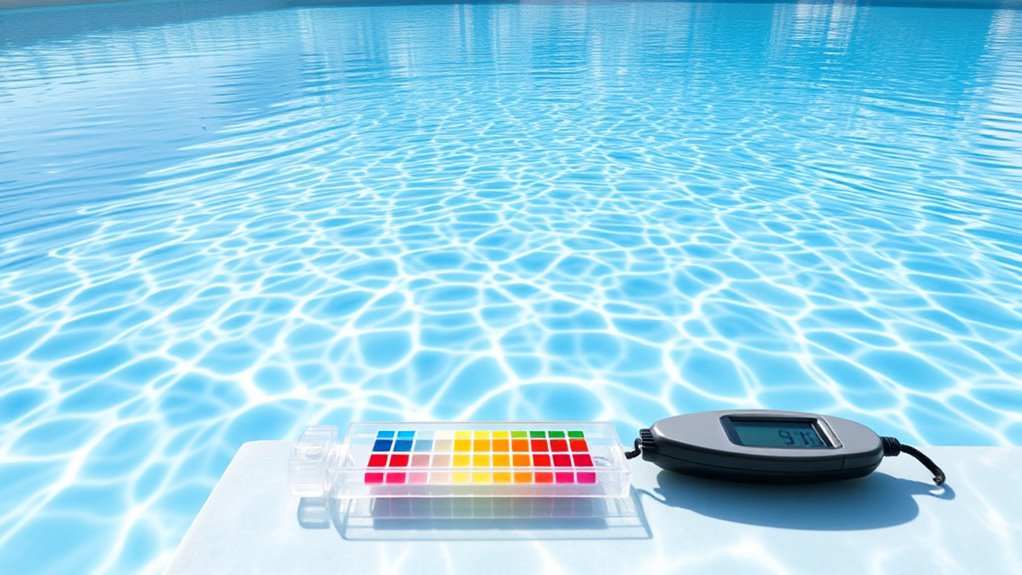
Controlling pH and alkalinity levels is essential for keeping your pool water balanced and comfortable. When these levels are off, water can become cloudy, irritate your skin, or damage your equipment. To maintain proper balance, you’ll want to monitor these levels regularly using test strips or a liquid test kit.
Maintaining proper pH and alkalinity keeps your pool water clear, safe, and comfortable.
Imagine:
- A perfectly balanced pool with clear, sparkling water
- Water that feels smooth on your skin
- Equipment that runs smoothly without corrosion or buildup
Adjust pH with pH increasers or decreasers as needed. Alkalinity acts as a buffer, preventing sudden pH swings. Keeping these levels stable ensures your pool stays inviting, safe, and easy to maintain. Regular testing and small adjustments keep your water crystal-clear.
Tips for Maintaining a Healthy, Clear Pool

Keeping your pool healthy and clear involves consistent attention and proactive steps. Regularly test your water using test strips or a kit, aiming for proper pH, alkalinity, and sanitizer levels. Skim the surface daily to remove debris and prevent cloudiness. Run your filter system for at least 8-12 hours a day to keep the water circulating and pollutants at bay. Shock your pool weekly to eliminate bacteria and organic contaminants. Maintain proper chemical balance by adjusting chlorine or bromine levels as needed. Clean your filter regularly to guarantee peak performance. Keep the water balanced and debris-free, and address issues promptly. Incorporating regular water testing with appropriate reagents can help you accurately monitor and maintain optimal chemical levels. These simple habits will help you enjoy crystal-clear water and a healthy swimming environment.
Frequently Asked Questions
How Often Should I Shock My Pool for Optimal Clarity?
You should shock your pool about once every 1 to 2 weeks to maintain ideal clarity. If you notice cloudy water, strong odors, or algae growth, shock it more frequently. Always follow the manufacturer’s instructions for the correct amount of shock and guarantee proper filtration afterward. Regular shocking keeps your pool clean, clear, and safe for swimming, especially during heavy usage or hot weather when contaminants build up faster.
Can Natural Remedies Replace Chemical Treatments?
Natural remedies can’t fully replace chemical treatments for maintaining your pool’s clarity and safety. While options like enzymes, algae starters, and mineral systems help reduce chemicals, they don’t eliminate the need for regular sanitization with chlorine or bromine. You should still test your water frequently and balance the pH and sanitizer levels. Using a combination of natural solutions and traditional chemicals gives you the best chance for clear, healthy water.
What Are Common Signs of Chemical Imbalance?
You might notice cloudy water, a strong chemical smell, or skin irritation, which are common signs of chemical imbalance. Your pH levels could be off, causing water to become either too acidic or alkaline. Additionally, algae growth or foam on the surface indicates imbalances. Regular testing with strips or a tester helps you catch these signs early, so you can adjust chemicals and maintain clear, safe water.
How Does Weather Affect Pool Water Chemistry?
Like a fickle weather vane, your pool’s chemistry reacts to changing weather conditions. Rain can dilute your chemicals, lowering pH and alkalinity, while hot, sunny days increase evaporation and chemical consumption. Wind stirs up debris and introduces contaminants. To keep your water clear, test regularly, adjust chemicals accordingly, and consider using a cover during storms or intense sun. Staying vigilant helps maintain balanced, inviting water all year round.
Is It Necessary to Drain and Refill My Pool Regularly?
Yes, you should drain and refill your pool periodically, especially if the water becomes cloudy, develops a strong odor, or if chemical levels are hard to balance. Regular refilling helps maintain water quality and prevents buildup of contaminants. Typically, draining every 1-3 years is recommended, but it depends on usage, water source, and maintenance routines. Always test your water before refilling to make certain of proper chemical balance.
Conclusion
Now that you know the essentials of pool chemistry, keeping your water crystal-clear is easier than ever. Regular testing and balancing might seem like a lot, but with practice, you’ll master it faster than you can say “sparkling clean.” Think of your pool as a mini paradise—pristine, inviting, and perfectly balanced. Stick to these tips, and your pool will shine brighter than a diamond, making every swim an unbeatable, invigorating escape!