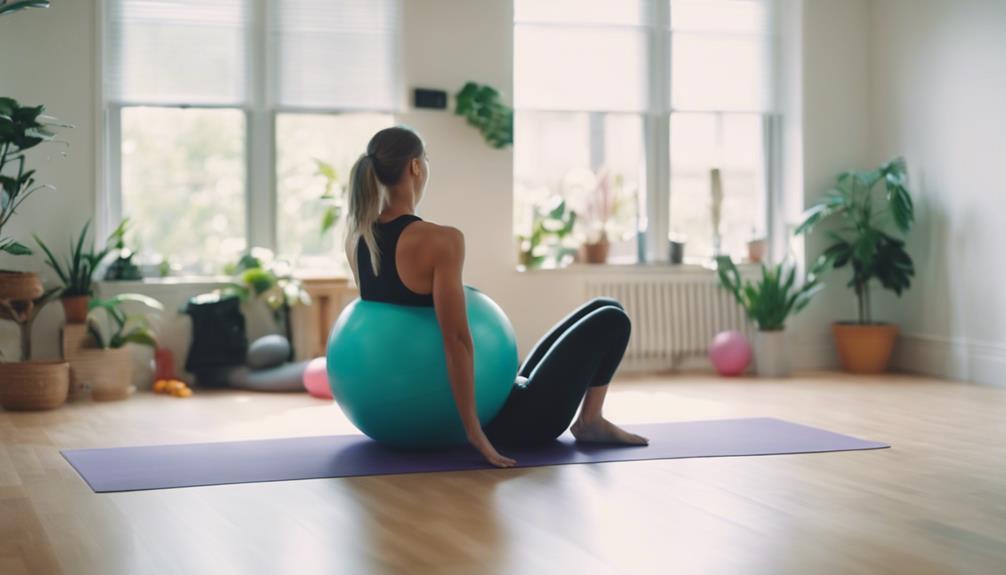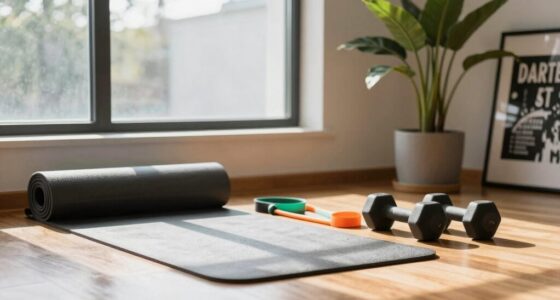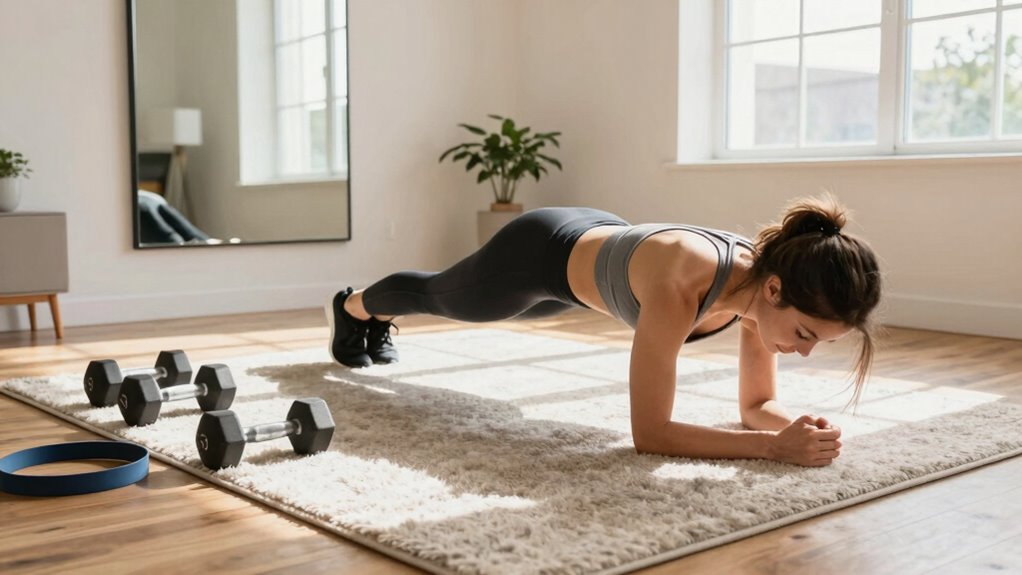

You can get a great workout at home with minimal equipment by combining bodyweight exercises like push-ups, squats, and lunges with cardio moves such as jumping jacks and high knees. Focus on alternating between strength and cardio to boost your endurance and build muscle efficiently. Using household items like water bottles for resistance helps increase intensity. Stick with short, dynamic sessions to stay motivated, and explore more tips for effective routines that fit your space and schedule.

Get workout gear delivered free — and shop member deals
- Fast, free delivery on millions of items
- Access to Prime Big Deal Days deals on October 6–7
- Prime Video, Amazon Music and more included
Key Takeaways
- Combine bodyweight exercises like push-ups, squats, and lunges for comprehensive strength training without equipment.
- Incorporate cardio moves such as jumping jacks and high knees to boost cardiovascular health efficiently.
- Use household items like water bottles or canned goods to add resistance and increase workout intensity.
- Structure workouts with warm-up, targeted exercises, and cool-down to maximize effectiveness and prevent injury.
- Vary routines regularly by changing exercises or repetitions to prevent plateaus and maintain motivation.
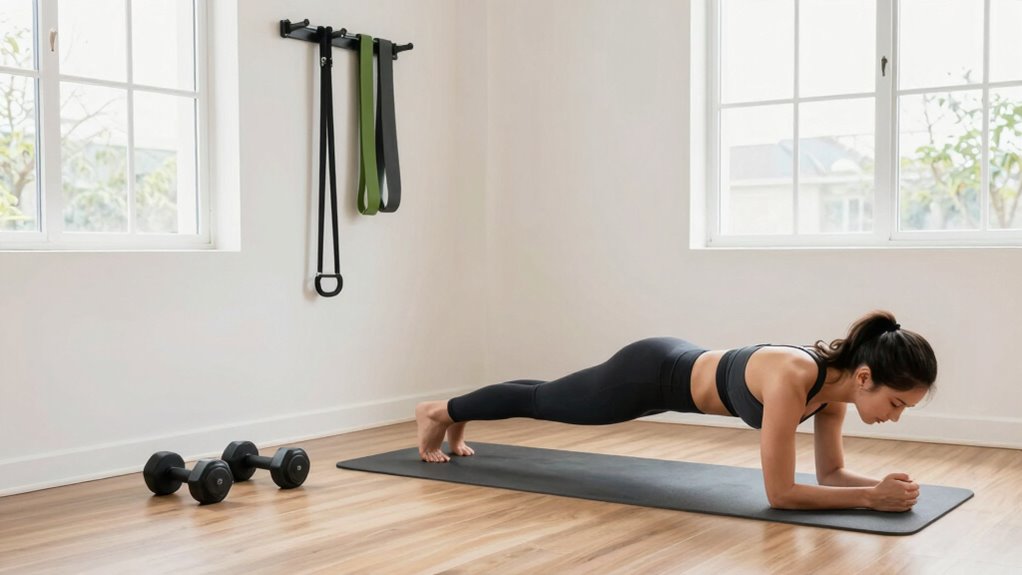
Working out at home doesn’t require a lot of space or fancy equipment to stay fit and healthy. You can create effective routines that boost your endurance and build strength using just your body weight or minimal gear. When it comes to staying active, combining cardio routines with strength training is a smart way to maximize your workout time and see real results. Cardio routines, such as jumping jacks, high knees, or brisk walking in place, get your heart rate up and improve your cardiovascular health. These exercises are simple to do, require no equipment, and can be easily integrated into your daily schedule. To keep things interesting, alternate between different cardio movements or set a timer to challenge yourself with intervals—this keeps your body guessing and prevents boredom.
Simple home cardio moves like jumping jacks and high knees boost your heart health and fit easily into your daily routine.
Strength training, on the other hand, helps you develop muscle tone and increase overall strength. You don’t need weights or machines to do effective strength exercises. Push-ups, squats, lunges, and planks are excellent options that target multiple muscle groups. You can modify these movements to match your fitness level, making them accessible whether you’re a beginner or more advanced. For added resistance, use household items like water bottles or canned goods. Incorporating strength training into your routine a few times a week not only enhances muscle endurance but also boosts your metabolism, helping you burn calories more efficiently even at rest. Additionally, understanding seasonal variations can help you adapt your workouts to different times of the year, making your routine more sustainable.
Implementing proper exercise form ensures you maximize benefits and reduce the risk of injury, which is especially important when working out on your own. A well-rounded home workout combines both cardio routines and strength training for balanced fitness. For example, you might start with a 10-minute warm-up of jumping jacks and high knees, then move into a series of bodyweight exercises like push-ups, squats, and planks. Finish with a cool-down stretch to improve flexibility and prevent injury. Keep your workouts dynamic by changing the order of exercises or increasing repetitions as you progress. Progressive overload is a key principle to continuously challenge your muscles and avoid plateaus. Minimal equipment doesn’t mean minimal effectiveness; it just means you need to be creative with your movements.
Consistency is key. Even short, 20-minute sessions can make a difference if you stick to a routine. Remember, the goal is to stay active and challenge your body regularly, so find what works for your schedule and preferences. By focusing on effective cardio routines and strength training with minimal gear, you’ll build a sustainable habit that keeps you fit without the need for a gym or bulky equipment. Incorporating exercise variety can also prevent plateaus and keep you motivated over time.
home workout resistance water bottles
As an affiliate, we earn on qualifying purchases.
As an affiliate, we earn on qualifying purchases.
Frequently Asked Questions
How Often Should I Do Home Workouts Weekly?
You should aim for home workouts about 3 to 5 times a week, balancing workout progression with your body’s recovery. Incorporate nutrition planning to support your fitness goals, ensuring you fuel your body properly. Vary your routines to prevent plateaus and promote progress. Rest days are essential for recovery, so listen to your body and adjust frequency accordingly. Consistency and proper nutrition are key to seeing results.
Can I Build Muscle With Minimal Equipment?
Yes, you can build muscle with minimal equipment. Focus on bodyweight exercises like push-ups, squats, and planks to target major muscle groups. Incorporate resistance bands to add resistance and challenge your muscles further. Progression is key—gradually increase repetitions, sets, or resistance. Consistency, proper form, and a balanced diet support muscle growth. With dedication, minimal equipment can still lead to significant strength and muscle gains at home.
What Are the Best Warm-Up Routines?
To warm up effectively, start with dynamic stretching to activate your muscles and increase blood flow. Incorporate movements like leg swings, arm circles, and torso twists for about 5-10 minutes. Follow this with foam rolling to release muscle tension and improve flexibility. This routine prepares your body for exercise, reduces injury risk, and enhances performance, making your workout more efficient and safe.
How Do I Stay Motivated at Home?
Staying motivated at home feels like climbing Everest, but you can do it! Keep your mental focus sharp by setting clear goals and tracking your progress. Mix up your routine with workout variety to make each session exciting, preventing boredom. Celebrate small wins and remind yourself of your “why.” Surround yourself with inspiring music or visuals, and remember, consistency turns effort into achievement—your motivation will soar like an eagle!
Are There Safety Tips for Home Workouts?
To stay safe during home workouts, prioritize stretching safety to prevent injuries, warming up before exercising and cooling down afterward. Guarantee equipment safety by inspecting your gear for damage and using it correctly. Clear your workout space to avoid accidents, and don’t push beyond your limits. Staying mindful of these safety tips helps you avoid strains and injuries, making your workouts more effective and enjoyable.
Conclusion
Think of your home workout journey as tending a small but resilient garden. With just a few tools—your body, some simple equipment—you nurture strength and flexibility daily. Each session is like watering your plants, helping them grow stronger and healthier. Even with minimal gear, you cultivate a vibrant, thriving space of fitness within your own walls. Keep tending your garden consistently, and watch your strength blossom, transforming your home into a sanctuary of wellness.
Evergreen bestsellers Picks
bestsellers
As an affiliate, we earn on qualifying purchases.