

When installing an infinity pool in an earthquake-prone area, you need to take into account site stability, soil type, and seismic risks. Choose a location with solid ground, and make sure your foundation is deep and reinforced to withstand seismic forces. Incorporate seismic isolation and damping systems to absorb movement, and reinforce water containment features to prevent leaks. Paying attention to materials and building codes can help protect your pool during quakes—more strategies await if you continue exploring.
Key Takeaways
- Conduct thorough geotechnical analysis to assess soil stability and liquefaction risks before selecting a site.
- Design foundations with deep piles, reinforced concrete, and seismic isolators to withstand seismic forces.
- Use flexible, high-ductility materials like reinforced concrete and structural steel to absorb seismic vibrations.
- Incorporate seismic damping systems and base isolators to limit structural movement and energy transfer during earthquakes.
- Reinforce joints, edges, and water containment features to prevent leaks and structural damage in seismic events.
Understanding Seismic Risks in Pool Locations

Understanding seismic risks in pool locations is essential to guarantee safety and structural integrity. You need to assess how the nearby geology and ground stability could impact your pool during an earthquake. Areas with loose or sandy soils are more prone to liquefaction, which can cause the ground to behave like a liquid, undermining the pool’s foundation. Additionally, proximity to fault lines increases the likelihood of seismic activity affecting your site. Recognizing these risks helps you plan for reinforcement measures and choose appropriate construction techniques. You should also consider the history of seismic events in the region and consult local geotechnical reports. Being aware of liquefaction susceptibility can significantly influence your safety assessments and construction decisions. This understanding allows you to proactively mitigate potential damage, ensuring your infinity pool remains safe and secure during seismic events.
Site Selection and Geotechnical Analysis
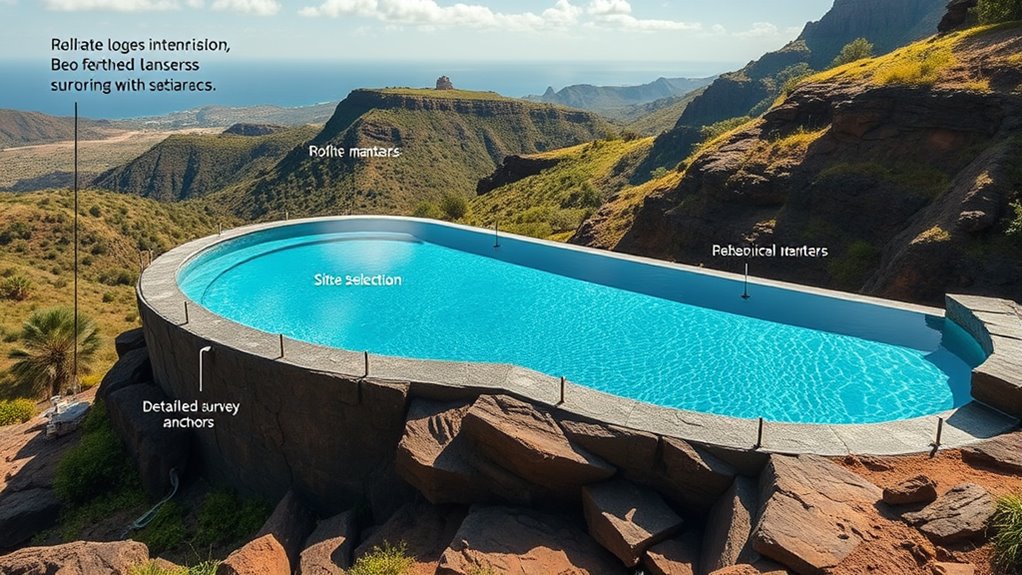
Choosing the right site for your infinity pool requires careful geotechnical analysis to guarantee stability and safety. You need to assess soil properties, bearing capacity, and drainage conditions to ensure the ground can support the structure, especially during seismic events. Conduct soil tests like boreholes and cone penetrometer analyses to identify potential weaknesses or liquefaction risks. Steer clear of sites with loose, sandy, or highly compressible soils that may shift during an earthquake. Evaluate the slope and topography to prevent instability or erosion. Good drainage is essential to avoid water accumulation that can undermine the foundation. By thoroughly analyzing these factors, you reduce seismic risks and create a solid, durable base for your infinity pool, ensuring long-term safety and stability.
Structural Design Principles for Seismic Resilience

To improve seismic resilience, you need to focus on reinforced structural frameworks that can withstand shaking. Incorporating flexible mounting systems helps absorb movements and reduce stress on the pool structure. Seismic base isolators further protect your design by isolating the pool from ground motion, ensuring stability during an earthquake. Additionally, understanding somatic therapy techniques can provide insights into managing stress and trauma resulting from seismic events.
Reinforced Structural Frameworks
Reinforced structural frameworks are essential for ensuring the seismic resilience of infinity pools. You must design these frameworks with strong materials like reinforced concrete or steel, which can absorb and distribute seismic energy effectively. Proper reinforcement helps prevent cracks, structural failure, and water leaks during earthquakes. You should incorporate seismic bracing or cross-bracing to enhance stability, especially around load-bearing elements. Connecting columns and walls with reinforced joints also improves overall resilience. Additionally, you need to contemplate the placement and anchoring of the framework to the foundation to prevent shifting or collapse. Considering dynamic load capacity is crucial for accommodating seismic forces safely. By prioritizing reinforcement, you ensure your infinity pool can withstand seismic forces, maintaining safety and structural integrity during and after an earthquake.
Flexible Mounting Systems
Flexible mounting systems play an essential role in enhancing the seismic resilience of infinity pools by allowing movement and absorbing forces during earthquakes. These systems prevent rigid connection points that could crack or fail under seismic stress. By incorporating flexibility, you enable the pool to shift slightly without damage, reducing overall risk. Consider these key principles:
- Use of elastomeric bearings or flexible joints to accommodate movement.
- Designing connection points that absorb shear and tensile forces.
- Ensuring compatibility with structural supports to distribute seismic loads evenly.
- Incorporating dynamic analysis during design to predict and mitigate seismic impacts.
Implementing these strategies helps your infinity pool withstand seismic forces, minimizing structural damage and maintaining safety. Flexibility in mounting systems ultimately improves durability, ensures resilience, and preserves the pool’s integrity during seismic events.
Seismic Base Isolators
Have you considered how seismic base isolators can dramatically enhance your infinity pool’s resilience during earthquakes? These devices act as a buffer between your pool and the ground, absorbing seismic energy and reducing transmitted forces. By isolating the pool from ground motion, base isolators limit structural stresses, preventing cracks and damage. They allow the pool to move independently of the shaking ground, maintaining stability and safety. You can choose from materials like elastomeric bearings or sliding bearings, tailored to your site’s seismic profile. Proper installation guarantees effective performance, especially in high-risk zones. Incorporating seismic base isolators into your design not only safeguards your investment but also guarantees the safety of users during seismic events. They are a vital component for resilient, long-lasting infinity pools. Additionally, understanding the role of attention in the design process can help ensure meticulous installation and maintenance.
Material Selection for Earthquake Resistance

Choosing the right materials is key to ensuring your infinity pool withstands seismic forces. You should prioritize flexible construction materials that absorb movement, impact-resistant surfaces that prevent damage, and reinforced structural components for added stability. Making informed choices now can considerably improve your pool’s earthquake resilience.
Flexible Construction Materials
Selecting appropriate construction materials is crucial for ensuring that infinity pools can withstand seismic forces. Flexible materials can absorb movement, reducing stress on the structure during an earthquake. When choosing materials, consider:
- Reinforced concrete with elastic properties to flex without cracking.
- Structural steel that offers high ductility and energy absorption.
- Engineered composites designed for enhanced flexibility and durability.
These materials help dissipate seismic energy, preventing damage and maintaining the pool’s integrity. Flexible construction materials allow the structure to move with ground shifts rather than resisting them, minimizing stress concentrations. Properly selected materials enable the infinity pool to endure seismic events without significant damage, ensuring safety and longevity. Incorporating seismic-resistant design principles into your construction plan further enhances the structure’s ability to withstand earthquakes, reducing potential damage and repair costs.
Impact-Resistant Surface Choices
Flexible construction materials help a pool withstand seismic forces by absorbing ground movement. When choosing surface materials, prioritize impact-resistant options that can endure shaking without cracking or breaking. Materials like rubberized coatings, textured concrete, or engineered composites offer flexibility and durability. These surfaces can absorb vibrations and prevent damage, reducing repair costs after an earthquake. Avoid brittle materials such as glazed tiles or smooth stone that crack easily under stress. Additionally, guarantee the surface has a non-slip quality to prevent accidents during seismic events. Proper impact-resistant surfaces protect both the structural integrity of your infinity pool and the safety of users. Selecting the right materials now minimizes damage and maintenance costs if seismic activity occurs. Seismic resistance is a crucial factor in ensuring long-term durability and safety for your pool.
Reinforced Structural Components
To guarantee your infinity pool withstands seismic forces, it’s essential to incorporate reinforced structural components crafted from materials optimized for earthquake resistance. Selecting the right materials ensures durability and safety during seismic events. Consider these key options:
- High-Strength Reinforced Concrete: Provides excellent compression strength and can be engineered with fiber reinforcements for added flexibility.
- Structural Steel: Offers high tensile strength, allowing the structure to absorb and dissipate seismic energy effectively.
- Engineered Composites: Modern composites like fiber-reinforced polymers combine lightweight properties with exceptional strength and durability.
- Seismic Design Principles: Incorporating seismic design principles into your construction process further enhances the ability of your infinity pool to withstand seismic forces while maintaining structural integrity and safety.
Foundation Design and Reinforcement Strategies

When designing foundations for infinity pools in seismically active areas, it’s essential to prioritize robust reinforcement strategies that can withstand seismic forces. You should select deep foundations, like piles or caissons, to transfer loads below the active seismic zone, reducing lateral movement. Reinforced concrete with high ductility guarantees the structure absorbs seismic energy without cracking. Incorporate steel reinforcement bars strategically placed to handle tension and shear stresses during quakes. Consider base isolators or flexible joints to allow movement without damaging the pool shell. Properly compacted, high-quality backfill around the foundation enhances stability. Regularly inspect and maintain reinforcement elements to prevent corrosion and deterioration. Understanding seismic design principles is crucial for developing structures that can resist earthquake forces and protect the integrity of your infinity pool. These strategies help ensure your infinity pool remains secure and functional during seismic events.
Incorporating Seismic Isolation and Damping Technologies

Incorporating seismic isolation and damping technologies can considerably enhance an infinity pool’s resilience against earthquake forces. These systems reduce the transmission of seismic energy, minimizing structural stress and preventing damage. To implement effectively, consider these options: 1. Base Isolators: Install elastomeric or sliding bearings beneath the pool to absorb ground motion. 2. Tuned Mass Dampers: Use heavy weights that counteract seismic vibrations, stabilizing the structure. 3. Viscous Dampers: Incorporate fluid-based devices that dissipate seismic energy through controlled movement. Additionally, understanding AI security vulnerabilities can inform better safety measures for structural monitoring systems.
Water Containment and Spill Prevention During Quakes
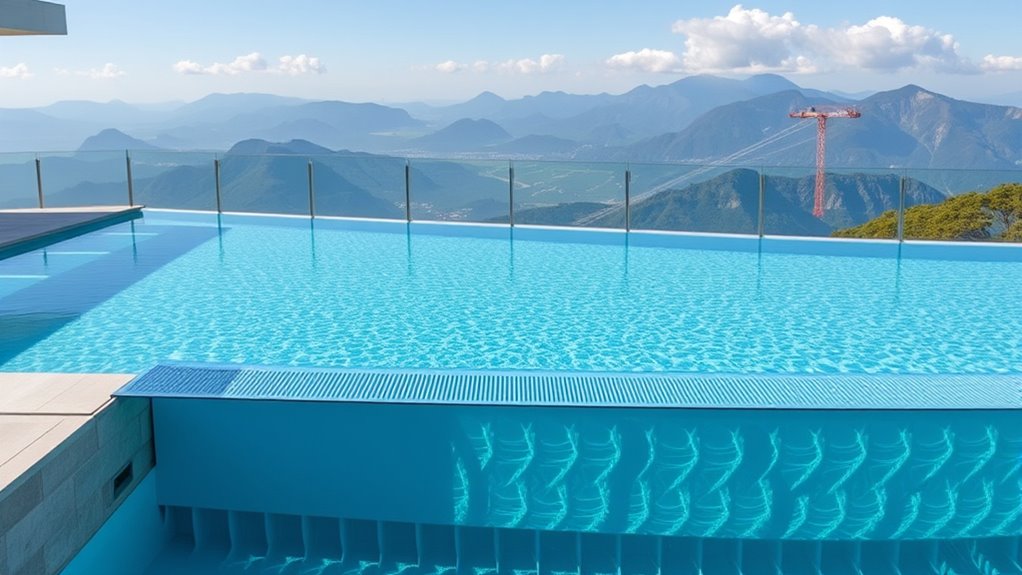
During an earthquake, guaranteeing that your infinity pool maintains water containment and prevents spills becomes essential to avoid property damage and safety hazards. You should reinforce the pool’s structural joints and edges to withstand seismic forces, preventing cracks or leaks. Installing flexible sealants can absorb movement and prevent water escape. Properly anchored spill containment barriers or overflow channels help contain splashes and prevent water from spilling over the pool’s edge during shaking. Regular inspections ensure the integrity of these systems, catching potential vulnerabilities early. Additionally, consider installing automatic shutoff valves that activate during seismic activity to prevent uncontrolled water flow. By taking these precautions, you safeguard your property and ensure the safety of everyone around the pool during seismic events.
Building Codes and Regulatory Compliance

Making certain your infinity pool complies with local building codes and regulations is a key step in planning for seismic events. These codes are designed to ensure safety and structural integrity during earthquakes. To meet these requirements, you should:
- Consult local building authorities early to understand specific seismic provisions.
- Use approved seismic design standards, such as ASCE 7 or local adaptations.
- Obtain necessary permits and inspections before construction begins.
Maintenance and Inspection for Long-Term Safety

How often should you inspect your infinity pool to guarantee its long-term safety? Regular inspections are essential, ideally every three to six months. Focus on checking for cracks, corrosion, or shifting in structural components, especially after seismic activity or extreme weather. Verify the overflow system and drainage are functioning properly to prevent water buildup and pressure stress. Examine the pool’s anchoring and support structures for signs of movement or deterioration. Keep an eye on the pool’s water level and stability, and confirm that all safety features, like barriers and sensors, work correctly. Promptly address any issues you find to prevent minor problems from escalating. Consistent maintenance and inspections help ensure your infinity pool remains safe, resilient, and beautiful over the years.
Frequently Asked Questions
How Do Seismic Events Affect the Lifespan of an Infinity Pool?
Seismic events can substantially reduce the lifespan of your infinity pool if not properly designed. Earthquakes cause ground movement and stress that can crack the structure, damage the foundation, or displace the pool’s edges. Over time, repeated seismic activity weakens the materials, increasing the risk of leaks or failure. To protect your investment, make certain your pool is engineered with seismic-resistant features and undergoes regular inspections, especially in earthquake-prone areas.
What Emergency Procedures Should Be in Place for Seismic Incidents?
You should establish clear emergency procedures, including immediate shutdown of the pool and electrical systems, to prevent hazards during seismic events. Make certain everyone knows how to evacuate safely and designate safe zones away from windows and structures. Regularly conduct drills, keep emergency contact information accessible, and inspect the pool for damage afterward. Having these steps in place helps protect everyone and minimizes damage during seismic incidents.
Can Seismic Activity Cause Permanent Damage to Pool Water Levels?
Think of your pool like a glass of water on a shaky table. Seismic activity can cause temporary splashing and shifting, but it rarely causes permanent water level damage. If the ground settles afterward, water levels usually return to normal. However, severe quakes might cause structural issues that could lead to leaks or water loss over time. Regular inspections and proper design help minimize long-term effects.
Are There Specific Monitoring Systems Recommended for Seismic Activity Near Pools?
Yes, there are specific monitoring systems you should consider for seismic activity near pools. You can install seismic sensors or accelerometers that detect ground movements and send alerts promptly. These systems help you respond quickly, minimizing damage. Automated alerts can notify you immediately if seismic activity exceeds safe thresholds. By integrating these systems, you stay proactive in protecting your infinity pool and ensuring safety during seismic events.
How Do Seismic Considerations Influence Pool Aesthetic and Design Choices?
Seismic considerations influence your pool’s aesthetic and design choices by encouraging you to choose flexible materials and structural reinforcements that blend seamlessly with your landscape. You might opt for subtle, reinforced edges or hidden support systems that maintain visual appeal while ensuring safety. Incorporating adjustable design elements allows your pool to withstand seismic activity without compromising style, giving you peace of mind and a stunning, resilient feature in your outdoor space.
Conclusion
By understanding seismic risks and applying resilient design principles, you turn your infinity pool into a steadfast oasis amid nature’s unpredictable symphony. Think of it as crafting a sturdy vessel that dances gracefully through earthquakes, not one that breaks under pressure. With careful site selection, smart materials, and modern damping tech, you create a sanctuary that stands tall even when the ground beneath shivers. Your pool isn’t just a luxury — it’s a resilient masterpiece built to withstand Earth’s whispers and roars.