TL;DR

Get workout gear delivered free with Prime
- Fast, free delivery on millions of items
- Prime Video, Amazon Music and more included
- Member-only deals all year
A Nautilus report describes research in which people who imagined exercising a small hand muscle increased its strength by 22 percent; participants who physically exercised it increased strength by 30 percent. The findings support mental practice as a possible complement to physical training, not a replacement, and the report says the reasons and limits remain uncertain.
Imagining an exercise may help increase muscle strength, according to research highlighted in a Nautilus report, which cites a study finding that people who mentally practiced contracting a small finger muscle increased its strength by 22 percent. Those who physically exercised the muscle gained 30 percent in the study, suggesting that mental rehearsal may support training but does not replace it.
The report focuses on work by exercise scientist Guang Yue, who tested whether people could strengthen a muscle through imagined contractions alone. Participants mentally practiced using the muscles that move the pinkie away from the hand, while another group physically exercised those muscles. The reported strength gains were 22 percent with mental practice and 30 percent with physical exercise.
The figures concern a particular muscle and task, not a general promise that imagining any workout will produce comparable gains. The source does not provide the study’s sample size, participant characteristics, training schedule, or the period over which strength changed. Those details are needed to judge how broadly the result applies.
The article also describes evidence for motor imagery in activities involving coordination and decision-making. It cites a study by Rutgers psychologist Robert Woolfolk and colleagues in which people who imagined making a golf putt had 30.4 percent more successful putts than those who did not. A review paper published in June, as described in the report, concluded that there was “compelling evidence” that motor imagery promotes motor learning. These findings relate to different tasks and should not be treated as the same measure of strength.
Mental Rehearsal May Support Training
The findings suggest a possible way to practice when physical movement is limited or when someone is preparing for a skill that benefits from rehearsal. The reported finger-strength result is striking because it concerns a relatively simple muscular action, while other examples in the report involve golf and virtual-reality surgery. Together, they indicate that imagined movement can engage processes involved in performing movement.
That does not establish that mental practice can build the same strength or fitness as exercise. In the cited finger study, the gain from physical exercise was larger than the gain from imagined exercise. The report describes mental practice as a supplement rather than an alternative, and says a meta-analysis of different physical activities identified about 20 minutes as an optimal mental-practice session. Readers should not interpret that figure as a universal prescription: the source does not give enough detail about the studies or activities included to determine how it applies to a particular training plan.
Products Worth Considering

Bowflex PR1000 Home Gym

BowFlex Results Series SelectTech 552 Adjustable Dumbbell

Garmin Venu 3 Fitness Smartwatch, 45 mm, Black
As an affiliate, we earn on qualifying purchases.
How Imagined Movement Reaches the Brain
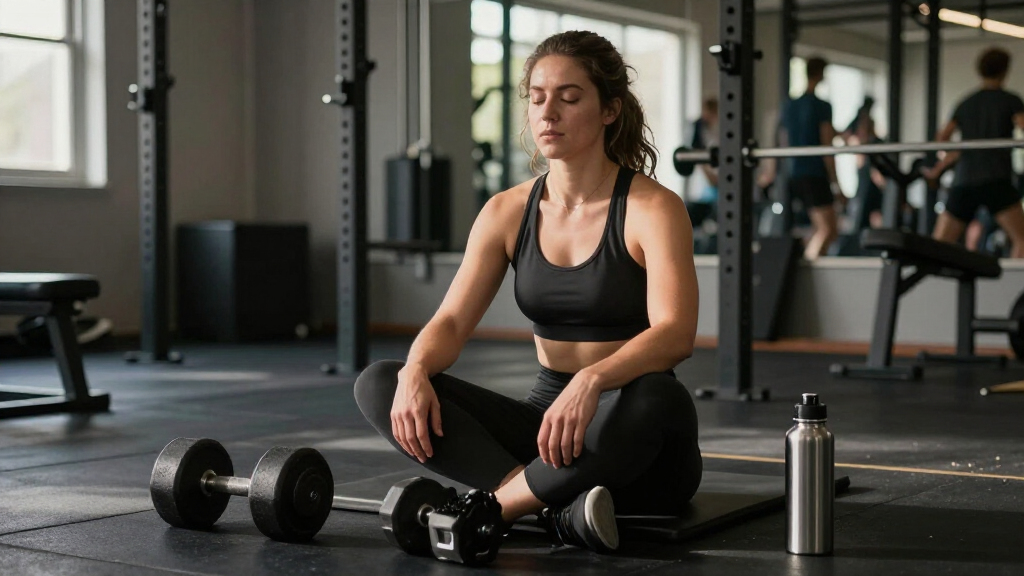
Motor imagery means mentally rehearsing a movement, such as spreading the fingers, without carrying it out. The Nautilus report distinguishes this from simply visualizing an action: a person can imagine the bodily sensation or intention of moving without necessarily forming a vivid picture. The relevant sense of the body’s position and movement is called proprioception.
The report traces scientific interest in the idea to Alexander Bain’s 1855 treatise and to Edmund Jacobson’s 1931 research into mental imagery and subtle muscle activity. It says later brain-imaging research found that imagined and actual movements involve overlapping brain activity, while inhibitory signals prevent imagined commands from reaching the muscles in the same way. This offers a possible explanation for why rehearsal can affect performance, but the supplied material does not establish a single, settled mechanism for the strength changes.
Limits of the Strength Evidence
The supplied report does not include enough information about Yue’s study to assess its design in detail, including the number of participants, duration, or how strength was measured. It also does not establish whether the reported 22 percent gain would occur in other muscles, in people with different fitness levels, or over longer periods.
The source says the reason mental practice can affect strength is unclear. It suggests that limited feedback from the physical world or difficulty sustaining concentration may help explain why longer sessions are less effective, but presents these as possibilities. The roughly 20-minute session length is reported from a meta-analysis, yet the included activities and conditions are not specified here. The findings therefore do not support a general workout plan based on imagination alone.
What Further Studies Need to Test
The report describes existing research rather than announcing a new trial, and it gives no upcoming study or publication date. Further research would need to test mental practice across more muscles and participant groups, report the training schedules and measurement methods, and compare imagined practice with physical exercise and combined programs over time.
For now, the evidence presented supports treating motor imagery as a possible rehearsal tool alongside physical practice. Whether a specific routine can produce meaningful strength gains for an individual remains a question for better-described and replicated studies.
Key Questions
Can imagining exercise make muscles stronger?
The report cites a study in which people who imagined exercising a pinkie muscle increased its strength by 22 percent. The result applies to the study described and does not show that imagined exercise will produce the same gains for every muscle or person.
Does mental practice work as well as physical exercise?
Not in the finger-muscle comparison reported: the mental-practice group gained 22 percent, while the physical-exercise group gained 30 percent. The report presents imagery as a complement to physical training, not a replacement.
What is motor imagery?
Motor imagery is mentally rehearsing a movement without physically performing it. It can involve sensing or intending the movement, and does not require a vivid visual picture.
How long should a mental-practice session last?
The report says a meta-analysis found about 20 minutes to be an optimal session length across many physical activities. The supplied material does not identify the activities or conditions in enough detail to make this a universal recommendation.
Why might imagined exercise affect strength?
The report says imagined and actual movements involve some of the same brain activity, while inhibitory signals limit the movement command from reaching the muscles during imagination. The exact reason mental practice can change strength remains unclear.
Source: nautil.us