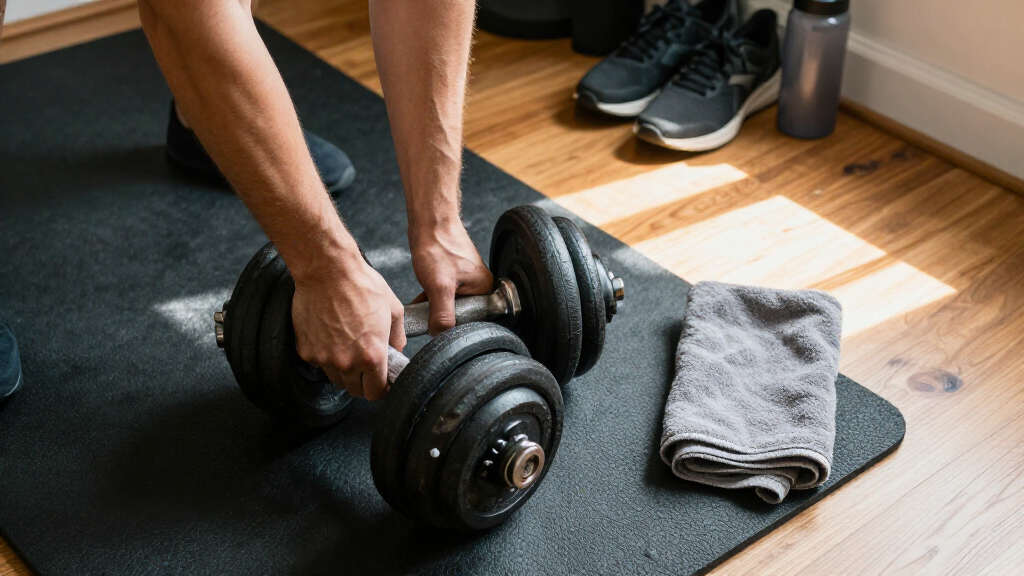
Anyone building a home gym on a budget eventually faces the same fork in the road: buy a pair of dial-adjustable dumbbells like the Bowflex SelectTech 552s or PowerBlock Elites, or buy a traditional spinlock set — two threaded handles, a stack of cast-iron plates, and screw-on collars. Both give you a whole rack’s worth of weights in a small corner of a room, but they get there in very different ways, and the price gap between them can be four to eight times.

Get workout gear delivered free — and shop member deals
- Fast, free delivery on millions of items
- Access to Prime Big Deal Days deals on October 6–7
- Prime Video, Amazon Music and more included

FDB2 Adjustable Dumbbell Set of 2, 5-in-1 Weights (25 lbs each) with Storage Box and Anti-Slip Silicone Grip
- ✔ Weight per dumbbell: 25 lbs
- ✔ Total weight: 50 lbs
- ✔ Weight settings: 4, 10, 15, 20, 25 lbs

UNNMIIY 5-in-1 Adjustable Dumbbell Set (20-90 lbs) – Converts to Barbell, Kettlebell, and Push-Up Stands
- ✔ Brand: UNNMIIY
- ✔ Model: AD55LBS
- ✔ Configuration: 5-in-1 (dumbbells, barbell, kettlebells, push-up stands)

OLIXIS Adjustable Dumbbell Set, 20/40/60 lbs, 5-in-1 Weight Set
- ✔ Brand: OLIXIS
- ✔ Configuration: 5-in-1 (dumbbells, barbell, kettlebell, weight plates, push-up stands)
- ✔ Available weights: 20 / 40 / 60 lbs
The real tension is not “which is better built” — it is what your time and patience are worth. Dial dumbbells change weight in two or three seconds with a wrist flick, which keeps circuit workouts, drop sets, and supersets flowing. Spinlock sets cost far less per pound, last essentially forever, and can grow with you by buying more plates, but every weight change means unscrewing collars, shuffling plates, and re-securing everything, which can add a minute or more per change.
If you train alone with short rest periods and value a smooth, low-friction experience, the dial systems usually justify their price. If you train with long rests, share equipment, or are simply keeping costs down, the spinlock set is arguably the better value in home fitness. This guide compares them side by side across the criteria that actually drive the decision so you can match the right style to how you train.
At a Glance
| Criteria | Dial/Selector-Style Adjustable Dumbbells (e.g., Bowflex SelectTech, PowerBlock) | Spinlock/Plate-Loading Adjustable Dumbbells (standard 1-inch bars with collars) | Winner |
|---|---|---|---|
| Weight-change speed | 2–5 seconds via dial or pin; near-instant | 30–90 seconds per dumbbell; unscrew, re-stack, re-tighten | A |
| Price per pound of weight | $3–6+ per pound; a 5–52.5 lb pair often costs $400–600 | $0.80–1.50 per pound; a 105–200 lb set commonly costs $60–150 | B |
| Long-term durability and repairability | Drop-sensitive; plastic housings can crack; repairs often mean replacement | Cast iron and steel are nearly indestructible; loose parts replaceable for pennies | B |
| Feel in the hand during lifts | Bulky and long; size stays large even at light settings | Compact, balanced, and consistent at every weight; collars may loosen over a set | B |
| Maximum weight ceiling and expandability | Usually capped at 50–90 lb per dumbbell; expansion kits limited and pricey | Grows indefinitely — add plates as you get stronger; same bars hold 100+ lb | B |
| Footprint and storage | Very compact — one cradle replaces a whole rack | Bulkier overall — plates and bars need a rack, corner, or shelf | A |
| Noise and floor safety | Quiet dial mechanism but very fragile if dropped; needs care and rubber flooring | Metal plates chip floors and are loud if dropped, but tolerate drops | A |
| Resale value and availability | Strong resale market for big brands; easy to sell later | Low resale price but always in demand; used sets are everywhere | A |
FDB2 Adjustable Dumbbell Set of 2, 5-in-1 Weights (25 lbs each) with Storage Box and Anti-Slip Silicone Grip
For most home lifters, the daily friction of changing weights is what kills a dumbbell routine, and that’s exactly where this set separates itself from the two convertible options in this lineup. With five weight settings per dumbbell (4, 10, 15, 20, 25 lbs) switchable in about one second, the FDB2 lets you move straight from warm-up sets to working sets without stopping to unscrew anything — a genuine workflow advantage over the UNNMIIY and OLIXIS, both of which require manual plate re-stacking between exercises.The dual-lock safety system is the other meaningful differentiator. You adjust the weight while the dumbbell sits in its base, and the handle auto-locks the plates the moment you lift it. Compared with the screw-on locking nuts on the UNNMIIY and the expansion nuts on the OLIXIS, this design removes the human error factor: you can’t forget to tighten something. The tradeoff is that you must return the dumbbell to its base to change weight, which means keeping the base within reach during circuits.Build quality also leans in the FDB2’s favor. Its cast iron core with a thick PE outer shell should age better than the cement-and-iron-sand filling in both competitors, which can degrade if the casing cracks. Add the soft anti-slip silicone grip on a 33mm handle — noticeably more comfortable than hard ABS bars during sweaty sessions — and a storage box that replaces five dumbbell pairs, and this pick makes the most sense for anyone who values speed and durability over exercise variety.
Pros:
- One-second weight adjustment directly from the storage base
- Dual-lock system secures plates automatically when the dumbbell is lifted
- Cast iron core with crack-resistant PE shell outlasts sand-filled plates
- Replaces five dumbbell pairs and includes a storage box
Cons:
- Weight can only be adjusted while the dumbbell is seated on its base
- 25 lbs per dumbbell ceiling is too light for advanced lifters
- No barbell or kettlebell conversion like the other two sets
Best for: Beginners and intermediate lifters who want fast, safe weight changes and primarily do dumbbell workouts in limited space
Not ideal for: Lifters who want barbell or kettlebell movements, or anyone pressing beyond 25 lbs per hand
Bottom line: The fastest, safest, and most durable pick here — the FDB2 is the right choice if pure dumbbell training is your priority.
“The fastest, safest, and most durable pick here — the FDB2 is the right choice if pure dumbbell training is your priority.”
UNNMIIY 5-in-1 Adjustable Dumbbell Set (20-90 lbs) – Converts to Barbell, Kettlebell, and Push-Up Stands
Where the FDB2 optimizes for dumbbell-only speed, the UNNMIIY bets on exercise variety. This set converts into a barbell for bench presses and squats, kettlebells for swings, and push-up stands for upper-body work — effectively an entire home gym that stores in under two square feet. For someone training alone in an apartment, that breadth matters more than shaving seconds off weight changes.The foam-padded 20mm connecting rod is a thoughtful touch the OLIXIS matches but doesn’t exceed, keeping barbell work comfortable across your neck and shoulders during squats, while the upgraded locking nuts do a credible job of keeping plates secure through dynamic movements. The floor-friendly PE-cased plates are another practical advantage over bare iron: they won’t gouge hardwood or tile if dropped, a real consideration compared with the FDB2’s harder shell.The honest tradeoffs: per-dumbbell weight maxes out at 22.5 lbs — slightly less than the FDB2’s 25 lbs — and the cement-and-iron-sand plates are bulkier than solid iron at the same weight, which can feel awkward on smaller hands. Switching between configurations also takes real time, so this option is better suited to lifters who structure workouts around a few set configurations rather than people who like to micro-adjust between every set. Compared with the OLIXIS, you get a more refined rod and nut design; compared with the FDB2, you trade speed for a far wider exercise menu.
Pros:
- 5-in-1 design replaces multiple pieces of home gym equipment
- Floor-friendly PE-cased plates protect hardwood and tile
- Compact storage footprint of under 2 square feet
- Foam-padded 20mm connecting rod keeps barbell work comfortable
Cons:
- Maximum 22.5 lbs per dumbbell is too light for advanced lifters
- Cement and iron sand plates are bulkier than solid iron
- Manual conversions between dumbbell, barbell, and kettlebell modes take time
Best for: Home lifters who want barbell, kettlebell, and bodyweight exercises from one compact set
Not ideal for: Anyone who prioritizes fast weight changes or trains with heavy loads above 22.5 lbs per hand
Bottom line: The most exercise-diverse option in the lineup — choose the UNNMIIY when variety matters more than adjustment speed.
“The most exercise-diverse option in the lineup — choose the UNNMIIY when variety matters more than adjustment speed.”
OLIXIS Adjustable Dumbbell Set, 20/40/60 lbs, 5-in-1 Weight Set
The OLIXIS plays the same convertible game as the UNNMIIY — dumbbells, barbell, kettlebells, weight plates, and push-up stands — but it’s the most budget-conscious entry point of the three. Available in 20, 40, and 60 lb configurations, it lets a beginner start light and gives budget shoppers a genuine choice about how much total weight they actually need, something the fixed-spec FDB2 doesn’t offer.Safety engineering is where OLIXIS holds its own. The four safety expansion nuts anchor plates from inside the bar, a design that resists loosening under the torque of kettlebell swings and rows, and the non-slip textured connecting rod adds confidence during barbell movements. Compared with the UNNMIIY’s locking nuts, the expansion-nut approach is arguably more secure for dynamic, swinging exercises — though both still demand occasional checks that the FDB2’s auto-lock system eliminates entirely.What you give up is refinement and long-term durability. The cement-and-iron-sand filling inside the PE shell is less durable than the FDB2’s cast iron core, and the 60 lb total ceiling (30 lbs per dumbbell if split evenly) will eventually limit stronger lifters. The grip and finish also feel more utilitarian than the FDB2’s silicone handle. Still, for someone testing whether home training will stick, this model delivers the full 5-in-1 experience at the lowest commitment level in this comparison — and that’s a trade many first-time buyers should happily make.
Pros:
- Same 5-in-1 versatility as higher-priced convertible sets at a lower entry point
- Four safety expansion nuts keep plates stable during dynamic movements
- Choice of 20/40/60 lb configurations lets buyers match their strength level
- Anti-slip textured grips reduce injury risk
Cons:
- 60 lb maximum is limiting as strength progresses
- Cement-and-iron-sand filling is less durable than solid cast iron
- Manual plate changes interrupt workout flow
Best for: Budget-conscious beginners who want to try barbell, kettlebell, and dumbbell training without a big upfront commitment
Not ideal for: Lifters planning to progress to heavy loads or anyone wanting premium grip comfort and fast adjustments
Bottom line: The smartest low-risk way into convertible home training — accept the durability tradeoffs and the OLIXIS pays off.
“The smartest low-risk way into convertible home training — accept the durability tradeoffs and the OLIXIS pays off.”
As an Amazon Associate we earn from qualifying purchases.
Key Differences
The difference that shapes every workout is weight-change speed. With dial dumbbells, you rest the handle in its cradle, turn a dial, and lift a new weight — the change happens faster than a typical rest period, so your heart rate and momentum carry across exercises. With spinlock sets, changing from 15 to 30 pounds means unscrewing two collars, sliding off plates, finding the right combination, re-stacking, and re-tightening. In a session with ten weight changes, that can add 10–20 minutes of pure fiddling. This is why people who do circuits, HIIT dumbbell workouts, or progressive supersets overwhelmingly prefer dial systems, while people doing straightforward straight-set strength work (where you change weight three or four times per session) tolerate spinlocks easily.
The second big difference is economics. A quality spinlock set delivering 100–200 total pounds of adjustable weight costs roughly what one dial dumbbell handle costs. That money buys either convenience or capacity: the same $500 that gets you a 5–52.5 lb dial pair could get you a spinlock set that tops out over 100 pounds per dumbbell, a bench, and flooring. For beginners unsure about long-term commitment, that math matters — and spinlocks also let you start with a 60 lb set for under $70 and expand plate by plate as you grow, while dial systems have hard ceilings and expensive, brand-specific expansion kits.
The third difference is durability philosophy. Cast iron plates survive decades of abuse, basement humidity, and being dropped; if a collar strips, a replacement costs a few dollars. Dial dumbbells are precision mechanisms wrapped in plastic — most manufacturers explicitly warn against dropping them, and a cracked housing or failed selector can turn a $300 dumbbell into scrap. Dial systems reward careful users in controlled spaces; spinlocks shrug off almost anything a garage gym can inflict.
Detailed Comparison
Weight-change speed and workout flow (Dial/Selector-Style Adjustable Dumbbells (e.g., Bowflex SelectTech, PowerBlock) wins — major)
This is the dial system’s core selling point and it is a major gap, not a marginal one. Selector-style dumbbells shift weight in two to five seconds; spinlocks take 30–90 seconds per dumbbell when done safely. In practice, this means dial users keep rest periods honest and actually finish fast-paced sessions, while spinlock users either lengthen workouts or design routines that minimize changes (doing all sets at one weight before moving on). If you follow along with video workouts that change weights every few minutes, spinlocks will constantly pull you out of sync. If you do classic 3–4 exercise strength sessions with 2–3 minute rests, the changes hide comfortably inside your rest time and the gap feels small.
Price and cost per pound (Spinlock/Plate-Loading Adjustable Dumbbells (standard 1-inch bars with collars) wins — major)
Spinlocks win decisively. A 105 lb spinlock set commonly runs $60–100; a 200 lb set around $120–180. A single Bowflex 552 dumbbell can cost $200+, and a full 5–52.5 lb pair typically lands between $400 and $600. That is roughly four to eight times the cost for comparable early-stage capacity. Dial systems also depreciate the convenience premium: a used spinlock set sells for $30–60, while used SelectTechs hold value surprisingly well — which softens, but does not close, the gap. For anyone on a tight budget or funding a whole home gym at once, spinlocks free up hundreds of dollars for a bench, flooring, or additional plates.
Durability and repairability (Spinlock/Plate-Loading Adjustable Dumbbells (standard 1-inch bars with collars) wins — major)
Cast iron does not care about your feelings. Spinlock plates and handles survive drops, dings, and decades; the only wear item is the collar thread, and replacement collars cost a few dollars at any hardware or fitness store. Dial dumbbells are mechanisms: springs, pins, and plastic housings that most manufacturers explicitly say must not be dropped. A single careless drop at the end of a failed rep can crack a shell or jam a selector, and out-of-warranty repairs are often impractical. The gap is major for anyone who trains to failure, works out in a garage, or shares equipment with teenagers. It is moderate for careful solo lifters on rubber flooring.
Feel and ergonomics during lifts (Spinlock/Plate-Loading Adjustable Dumbbells (standard 1-inch bars with collars) wins — moderate)
Spinlock dumbbells feel like regular fixed dumbbells: compact, a consistent length regardless of load, with knurled steel handles. Dial dumbbells are necessarily bulkier — long, boxy, or cage-shaped — and a 17.5 lb dial setting handles like a large object rather than a small weight. Some lifters find the shape interferes with movements like curls or presses at the bottom position; others adapt within a week and stop noticing. PowerBlock’s cage design is more compact than Bowflex’s but puts your hand inside a grid. The spinlock’s one ergonomic drawback is collars that can loosen during long sets and need a quick re-tighten. Overall a moderate edge to spinlocks, mainly relevant to lifters sensitive to handle geometry.
Weight ceiling and expandability (Spinlock/Plate-Loading Adjustable Dumbbells (standard 1-inch bars with collars) wins — major)
Most dial systems cap out between 50 and 90 pounds per dumbbell, and going higher means expensive brand-specific add-on kits. Spinlock bars, by contrast, will physically hold well over 100 pounds of standard plates, and expanding is as cheap as buying more iron — which is also the cheapest per-pound fitness purchase that exists. For lifters who already press 60+ lb dumbbells or plan to get there, dial systems can become a dead end. For general population fitness, a 52.5 lb ceiling covers years of progress. The gap is major for intermediate-to-advanced strength trainees and minor for everyone else.
Footprint and storage (Dial/Selector-Style Adjustable Dumbbells (e.g., Bowflex SelectTech, PowerBlock) wins — moderate)
Dial dumbbells replace an entire rack of fixed weights with two cradles about the size of shoeboxes each — genuinely impressive for apartments and spare corners. A spinlock set’s plates and bars need a shelf, corner stack, or small A-frame rack, and the loose plates look like a workshop rather than a gym. Neither is bad, but dial systems are clearly tidier. This is a moderate difference: relevant if you share living space or want equipment that stays presentable, forgettable if you have a garage.
Safety in use (Dial/Selector-Style Adjustable Dumbbells (e.g., Bowflex SelectTech, PowerBlock) wins — minor)
Two distinct issues. First, drops: dial dumbbells can break when dropped, so they encourage controlled lowering and demand rubber flooring; spinlocks can be dropped freely but will chip concrete and dent toes. Second, mechanism failure: a poorly tightened spinlock collar can shed a plate mid-press — rare when you develop the habit of hand-tightening, but a real hazard for kids or careless guests. A jammed dial selector simply gives you the wrong weight or a stuck handle. Overall a slight edge to dial systems for attentive adults, and to spinlocks for anyone who trains hard to failure. Call it a minor, situational difference.
Dial/Selector-Style Adjustable Dumbbells (e.g., Bowflex SelectTech, PowerBlock): Pros and Cons
Pros:
- Weight changes in seconds keep fast-paced workouts flowing
- Extremely compact — two cradles replace a full dumbbell rack
- Clean, modern look that fits apartments and shared spaces
- Convenient incremental jumps (often 2.5 lb steps at low weights) for steady progression
- Strong resale value for major brands
Cons:
- Four to eight times the cost of comparable spinlock capacity
- Fragile if dropped; plastic housings and selector mechanisms can fail
- Bulky, long shape feels awkward for some lifts regardless of weight
- Hard weight ceilings; expansion kits are limited and expensive
- Usually sold with proprietary cradles and can’t share plates with other equipment
Spinlock/Plate-Loading Adjustable Dumbbells (standard 1-inch bars with collars): Pros and Cons
Pros:
- Dramatically cheaper — often under $100 for a full starter set
- Cast iron and steel last decades and shrug off drops and abuse
- Expandable indefinitely by buying cheap standard plates
- Compact, dumbbell-like feel at every weight setting
- Standard 1-inch plates work across bars, and parts are replaceable anywhere
Cons:
- Manual plate swapping adds 10–20 minutes of fiddling per session
- Loose plates and collars create clutter and a workshop aesthetic
- Collars can loosen mid-set if not tightened properly
- Changing weights mid-superset or during video workouts is impractical
- Plates chip floors and are loud on contact without mats
Who Should Choose What
Choose Dial/Selector-Style Adjustable Dumbbells (e.g., Bowflex SelectTech, PowerBlock) if:
- You do circuits, supersets, drop sets, or follow video workouts with frequent weight changes
- You train in an apartment or shared room where a tidy footprint and low clutter matter
- You value a low-friction experience and will pay for convenience you use every session
- You lift moderate loads (under ~50–70 lb per dumbbell) and mostly train alone and carefully
- You want equipment with strong resale value if you stop training
Choose Spinlock/Plate-Loading Adjustable Dumbbells (standard 1-inch bars with collars) if:
- You are on a tight budget or building an entire home gym for the price of one dial pair
- You do traditional strength work with long rests and few weight changes per session
- You already press or row heavy and need a path past 50–90 lb per dumbbell
- You train in a garage or basement where drops, dust, and rough handling are realistic
- You want equipment that lasts decades and can be repaired with five-dollar parts
Skip both if: You are an advanced bodybuilder or strength athlete who regularly uses 90+ lb dumbbells — buy used fixed dumbbells or a rack instead, as neither adjustable style will keep up with your loads or feel.
Value for Money
Value here depends almost entirely on usage frequency of the feature you’re paying for. Dial dumbbells charge a 4–8x premium almost purely for weight-change speed — the actual iron inside is worth a fraction of the sticker. If you change weights ten times per session, four sessions a week, that’s roughly 2,000 fast changes a year; many users find that absolutely worth $300–400 extra. If you change weights three times per session with long rests, you are paying hundreds of dollars for a convenience you barely exercise, and the spinlock set is the clear value winner.
The spinlock set is also the lower-risk purchase: at $60–150, a mistake costs little, resale losses are small, and the iron never becomes obsolete. The dial system is the better experience; the spinlock is the better investment. Beginners uncertain about commitment should nearly always start with spinlocks and upgrade later only if the fiddling genuinely annoys them — that annoyance, not any spec sheet, is the real upgrade trigger. People who know they hate friction should buy the dial system once and skip the regret cycle.
Final Verdict
For most beginners and budget-conscious lifters, the spinlock set is the smarter buy: it delivers more total weight, better durability, and room to grow for a quarter or less of the cost, and its only real weakness — slow weight changes — is a problem you can design around with straightforward programming. Choosing it means accepting some fiddling and a less polished setup, in exchange for hundreds of saved dollars and equipment that outlives your interest in it.
Choose dial dumbbells if workout flow is your top priority: you do circuits, drop sets, or guided video sessions; you train in a tidy shared space; and you’re confident you’ll use them consistently for years. The premium buys back time and removes friction every single session — but treat them carefully, because they will not survive the abuse spinlocks shrug off.
The single deciding factor is how often you change weights and how much that waiting annoys you. If the answer is “constantly, and a lot,” pay for dials. If it’s “a few times, and I don’t mind,” buy the spinlocks and put the savings toward a bench or more plates.
Frequently Asked Questions
Are dial adjustable dumbbells worth the extra money over spinlocks?
Only if you change weights frequently. The premium buys speed and compactness, not more iron. Lifters doing circuits, supersets, or video workouts typically find the convenience worth it within weeks; people doing straight-set strength training with long rests rarely get $300+ of value from it. A useful test: if you’d happily pause your workout for 30–60 seconds several times per session, buy spinlocks and keep the money.
Can I drop dial dumbbells like regular dumbbells?
No. Most selector-style dumbbells explicitly warn against dropping — the plastic housings and internal mechanisms can crack or jam, often ruining the dumbbell. If you train to failure and habitually drop weights at the end of heavy sets, spinlock (or fixed) dumbbells are the safer choice, or invest in thick rubber flooring and controlled lowering habits.
What’s the maximum weight I can realistically get from each type?
Dial systems typically cap at 50–52.5 lb per dumbbell, with some models and expansion kits reaching 70–90 lb. Standard spinlock bars can hold well over 100 lb of plates each, and you simply buy more iron as you get stronger. If you already press 60+ lb dumbbells, spinlocks are the practical path.
Do spinlock collars come loose during exercises?
They can if not tightened firmly, especially during long, high-rep sets. Developing the habit of a solid hand-tighten (plus a quick check between sets) makes it a non-issue for most users. Aftermarket star or spring collars also grip better than basic screw collars for a few dollars.
Which type is better for a small apartment?
Dial dumbbells, clearly. Two cradles the size of shoeboxes replace a whole rack, there are no loose plates to scatter, and nothing chips the floor when set down gently. Spinlock sets work in apartments too, but the plate stack looks industrial and takes up more visual and shelf space.
Halloween Picks
halloween
As an affiliate, we earn on qualifying purchases.