
TL;DR
Adjustable dumbbell sets combine several training weights in one handle or compact assembly, saving space compared with a rack of fixed weights. Compare each dumbbell’s range and increments, adjustment style, grip, locking design, storage, warranty and full-set price before buying. Follow the maker’s instructions, check that plates are secured before every lift, and don’t drop a set unless its manufacturer says it can handle drops.
Compare the minimum and maximum weight per dumbbell, then check whether the increments suit your planned exercises.
Choose a dial or pin system for quicker changes, or consider plate-loaded and screw-adjustable styles if slower, hands-on adjustments suit you.
Check handle shape, locking stability, stand footprint, warranty and replacement-part availability before buying.
Follow manufacturer instructions, check the plates and selector before every lift, and don’t assume a set can be dropped.
Weigh the full price and included parts against the space you’ll save and how often you’ll use different loads.
What adjustable dumbbell sets give you in one small footprint
Adjustable dumbbell sets combine a handle or compact assembly with removable plates, giving you several weight options without a full rack of fixed dumbbells. You change the load with a dial, pin, plates and collars, or screw-lock parts; most sets come as a pair, and some include a stand or tray. That space-saving design can suit an apartment, spare room or home gym where every bit of floor matters. For example, if your workout moves from light curls to heavier rows, you can change the load on the same pair instead of carrying two separate pairs across the room. Think of it like a small tool kit: several useful options packed into one case. The trade-off is that adjustable models can cost more upfront, and some feel longer or less balanced than fixed dumbbells, particularly at lighter settings. The phrase adjustable dumbbells use describes the basic idea: a shared handle and a way to change the plates or selected load. Before choosing a set, ask whether that flexibility matches your routine. If you only lift one weight for one exercise, a fixed pair may be simpler; if you switch loads often or have limited storage, adjustable dumbbells can be a practical fit.How each adjustment system changes your workout
Adjustable dumbbell sets come in four common styles: dial-select, pin-select, plate-loaded and screw-adjustable. Dial and pin systems are designed to change loads quickly, while plate-loaded and screw-adjustable styles ask you to handle loose plates or collars. The right mechanism depends on how often you switch weights and how much hands-on adjustment you’re comfortable with. The practical difference shows up in the pauses between exercises: a selector can help keep a circuit moving, while handling plates takes time but makes each change visible and straightforward to check. Imagine a circuit that alternates between shoulder raises and heavier rows. A quick selector can make those changes feel smooth; a plate-loaded pair may take longer, but its simpler parts could appeal if you prefer a more hands-on setup. That extra time matters most when you change loads repeatedly or want to keep your workout flowing. If you do only a few exercises at one setting, it may barely affect your session. Either way, learn the maker’s locking process before your first workout, since speed is useful only when the selected plates are securely engaged.| System | How it works | What to think about |
|---|---|---|
| Dial-select | Turn a dial to select a load; unused plates stay in a cradle. | Convenient for frequent changes; selector and plate-lock designs vary. |
| Pin-select | Move a pin to choose the weight. | Simple to operate; check the pin is fully seated before lifting. |
| Plate-loaded | Add or remove plates and secure them with collars. | Often straightforward in design, though changes take longer. |
| Screw-adjustable | Attach plates to threaded handles or sleeves. | Compact and relatively simple, but requires more handling between exercises. |
How to compare sets before you spend
To compare adjustable dumbbell sets, check the load range, adjustment steps, grip, construction, storage, repair support and complete price. Those details tell you more about everyday usefulness than a large maximum-weight number by itself. Start with the movements you plan to do, then see whether the set fits both your current training and room to progress. A maximum load is only useful if the dumbbell remains comfortable and practical for the exercises you actually do; conversely, a set that fits today’s needs may become limiting if there’s little room to increase the load. For example, a beginner who uses one corner of a bedroom for workouts may value a tidy tray and comfortable handle as much as a high maximum load. Storage and grip affect every session, while extra capacity matters only if your training calls for it. Work through these checks before you order:- Match the range to your exercises. Check the minimum and maximum weight per dumbbell. A set’s top load may help with rows but exceed what you need for smaller movements. Make sure the lightest setting also works for controlled exercises such as raises.
- Check the increments. Smaller steps let you increase the load gradually; bigger jumps may feel abrupt when you’re already near your limit. If the next setting is too large a change, you may have to repeat a weight longer or adjust the exercise instead of progressing smoothly.
- Try to judge grip and shape. Compare handle diameter, knurling, length and overall shape. These affect how the dumbbell feels in your hand and fits into each movement. A long or bulky assembly can get in the way on close-range movements, even if its weight range looks appealing.
- Inspect the locking design. Look for clear instructions and stable plates at each setting, then check what the manufacturer says about use and care. A mechanism you can engage and verify consistently is easier to use confidently, especially when changing weights between exercises.
- Measure the storage footprint. A tray or stand takes up floor space too. Confirm whether it’s included and whether you can store or move it easily. The set saves space only if its storage spot fits your room without blocking access or needing to be cleared each workout.
- Read the warranty and parts details. Find out what coverage includes and whether you can get replacement plates or components. A selector or custom part may be harder to replace than a standard plate, so support can affect how useful the set remains if a component wears or gets damaged.
- Compare the complete price. Include both dumbbells, the stand, shipping and accessories—not only the advertised starting price. A low entry price can represent a smaller range or omit a stand, changing the value once you account for the setup you need.
How to use adjustable dumbbells with a safer setup
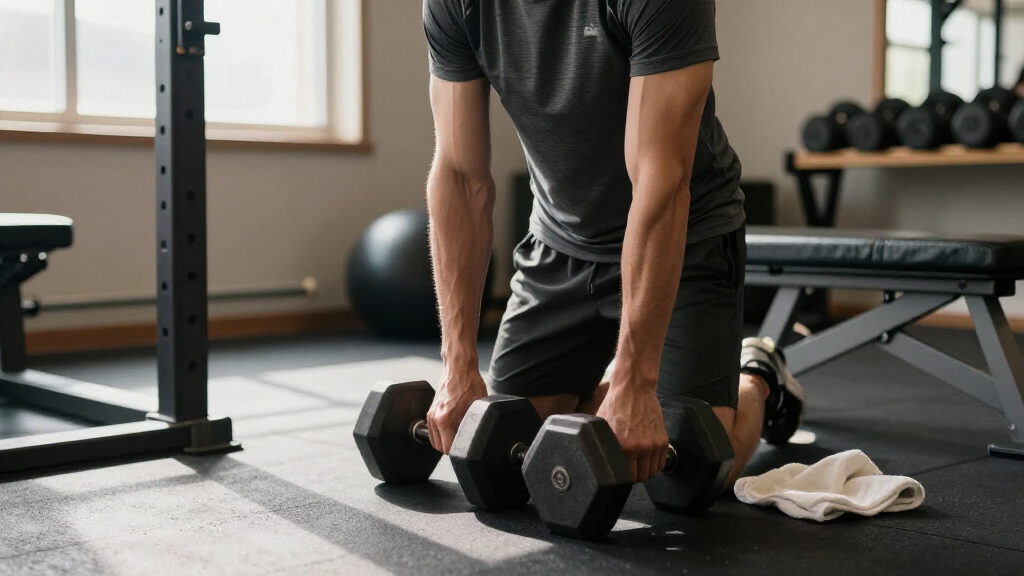
Use adjustable dumbbells safely by following the maker’s instructions, securing each selected load and checking the plates before every lift. Keep the selector mechanism clean and dry, and return the dumbbells to their tray or a stable surface between sets. Unless the manufacturer explicitly says a set is built to handle drops, don’t drop it. Adjustable designs depend on connections that let plates move or lock into place; an impact can damage those parts even when the outer casing looks intact. Before your first set, practice changing the load without lifting. Check that plates sit correctly and the pin or selector has engaged; a few calm seconds can help you catch a missed connection before the dumbbell leaves the floor. If your routine includes floor presses, place each dumbbell down with control instead of letting it fall beside you. This check matters because a partly engaged selector may not behave as expected once the dumbbell is raised or moved.For instance, if you finish a set of presses and move to a lighter exercise, place both dumbbells on a level surface first, reset each one according to the instructions, and check it again before lifting. Follow the manufacturer’s guidance for storage and care; designs differ, so one set may need different attention from another. Keeping the dumbbells in their intended tray also helps prevent plates or selector parts from being knocked out of alignment.Before every lift, confirm the selected load is engaged and the plates are seated. A damaged selector can be harder to repair than a standard fixed dumbbell.
When adjustable dumbbells make sense—and when fixed pairs fit better
Adjustable dumbbells can be worth buying when one set can cover several loads and save space you need for other things. They may be less appealing if you want the familiar feel of fixed dumbbells, change weights only rarely, or need loads beyond the set’s range. Your workout habits matter as much as the advertised capacity: frequent changes make quick selectors more valuable, while a single-weight routine may not benefit enough to justify a mechanism and its cost. Picture a spare bedroom with enough room for a mat, a bench and one compact stand. A pair of adjustable dumbbells could keep that setup tidy while supporting a variety of strength exercises. The saved floor space can make the room easier to use for other activities, though the stand still needs a permanent spot. In a dedicated gym with a long dumbbell rack, fixed pairs may feel quicker to grab and set down, especially when several people share the space. Their familiar shape can also feel more balanced, but covering many weights takes more room and means buying multiple pairs. Recent designs continue to focus on faster weight changes, compact storage and wider ranges, but selector styles, increments and included stands vary by model. Those are broad product trends, not guarantees about a particular set; check current specifications and availability with the manufacturer before you buy. If the pair feels unfamiliar in your hands, try one in person when possible, especially if grip comfort matters to you. How a dumbbell feels during a press or curl can matter more over time than a feature that sounds convenient on the product page.Key facts that help you choose a beginner-friendly set
A beginner-friendly adjustable dumbbell set pairs a comfortable grip with manageable weight steps, a range suited to planned exercises, clear instructions and secure storage. Different movements call for different loads, so the maximum number on the package doesn’t tell you whether a set fits your whole routine. It’s useful to check the lightest setting too, especially if you plan to train smaller muscle groups. A set that is too heavy at its minimum may leave some movements awkward, while one with large jumps can make it harder to build up gradually. For example, you might use one load for rows and a lighter one for shoulder raises; if the set only offers large jumps, switching between those movements can feel less natural. Smaller increments give you more choices when finding a manageable load, though they may add plates or selector steps to the design. One handle or a compact assembly can still cover many training loads, but the shape and balance may differ from conventional dumbbells. Take time to handle the set or read carefully about its dimensions if you can’t try it in person, since comfort and clearance can influence which exercises feel practical.If you have a pre-existing condition or are unsure which exercises fit your needs, ask a qualified health professional before starting or changing a fitness routine. That guidance can help you choose movements and loads that suit your circumstances.Key fact: Smaller adjustment increments allow finer load increases, while larger jumps may feel abrupt when you’re close to your current limit.
Frequently Asked Questions
Are adjustable dumbbells worth it?
They can be a practical choice if space is tight or you want several weights in one purchase. Their value depends on the usable weight range, build quality, adjustment steps and how often you’ll train.
What weight range should I choose?
Choose a range that suits the exercises you plan to do now and gives you room to progress. Check the load per dumbbell and remember that different movements often call for different weights.
Can adjustable dumbbells replace a full rack?
They can replace many fixed pairs for general strength training while taking up less space. A full rack may still offer a more familiar feel, faster access to several loads, or weights beyond an adjustable set’s range.
Can you drop adjustable dumbbells?
Don’t assume you can. A drop may damage selectors, trays or plate connections, so check the manufacturer’s instructions and set the weights down with control.
How quickly can you change the weight?
Dial and pin systems are generally designed for faster changes than plate-loaded styles, but actual operation varies by model. If your workout switches loads often, check the adjustment process before you buy.