Adjustable kettlebells let you swap weights in seconds, replacing a rack of fixed bells with a single footprint — but the tradeoff is always handle size versus convenience. For most home lifters chasing strength, the BowFlex SelectTech 840 is my best overall pick because its dial system changes weight from 8 to 40 lbs almost instantly, which matters for circuits and progressive overload. If you want heavier pressing and swings at a lower price, the REP Fitness Adjustable Kettlebell (24 kg model) offers a more traditional bell feel with plate-loaded adjustability. Budget buyers should look at the Yes4All Adjustable Kettlebell Set, which covers a wide weight range for far less money, though with a bulkier profile. Read on for the full breakdown of all nine options, including who each one suits and who should skip it.

Get workout gear delivered free with Prime
- Fast, free delivery on millions of items
- Prime Video, Amazon Music and more included
- Member-only deals all year
Complete the kit

Key Takeaways
- Dial-based systems (BowFlex 840) won for speed of weight changes, but their wider handles make two-handed swings and cleans feel different from a fixed cast-iron bell — a real drawback for kettlebell purists.
- REP Fitness appears three times in this lineup, and the models are not interchangeable: the fixed cast-iron singles suit dedicated home gyms, while the adjustable steel bell suits lifters with limited floor space.
- The two VEVOR 7-level models are nearly identical on specs but differ in value depending on the weight ceiling you need — buying more headroom than you’ll use wastes money, since these are priced by max load.
- Budget plate-style sets from Yes4All and Yagud deliver the lowest cost per pound, but every one of them requires partial disassembly to change weight, which breaks workout flow more than buyers expect.
- No single option covers beginner (under 15 lbs) through advanced (over 50 lbs) loads well; the widest-range adjustable bells get unwieldy at low weights because the shell never shrinks.
| REP Fitness Kettlebell Set and Singles, 4kg to 24kg, Cast Iron |  | Best Fixed-Weight Alternative | Weight Range: 4kg to 24kg (sold as singles and sets) | Material: Cast iron | Finish: Textured matte | VIEW LATEST PRICE | See Our Full Breakdown |
| BowFlex SelectTech 840 Adjustable Kettlebell |  | Best Overall | Weight Range: 8 to 40 lbs | Weight Settings: 6 | Adjustment Mechanism: Twist dial | VIEW LATEST PRICE | See Our Full Breakdown |
| VEVOR Adjustable Kettlebell with 7 Weight Levels |  | Best Weight Range | Weight Levels: 5, 11.5, 18, 24.5, 31, 37.5, 44 lbs (7 total) | Material: Die-cast aluminum and ABS | Handle: Electroplated aluminum alloy | VIEW LATEST PRICE | See Our Full Breakdown |
| Yes4All Adjustable Kettlebell Set |  | Best Budget Pick | Max Weight: 40 lbs | Number of Plates: 6 cast iron plates | Adjustment Mechanism: Lock and slide | VIEW LATEST PRICE | See Our Full Breakdown |
| Rep Fitness Adjustable Kettlebell |  | Best Premium Build | Model Options: 16 kg, 24 kg, or 40 lb | Weight Settings: 5 quick-select levels | Material: Steel | VIEW LATEST PRICE | See Our Full Breakdown |
| VEVOR Adjustable Kettlebell with 7 Weight Levels | | Best Budget Adjustable Pick | Weight Levels: 3.5, 7, 10, 13, 16, 19.5, 22.5 lbs | Material: Die-Cast Aluminum and ABS | Handle Material: Electroplated Aluminum Alloy | VIEW LATEST PRICE | See Our Full Breakdown |
| Yagud Adjustable Kettlebell, 22.5 lbs with 7 Levels |  | Best for Small Home Gyms | Weight Range: 2.5 to 22.5 lbs | Gear Levels: 7 | Dimensions: Φ8.3″ x 12.6″ | VIEW LATEST PRICE | See Our Full Breakdown |
| Rep Fitness Adjustable Kettlebell | 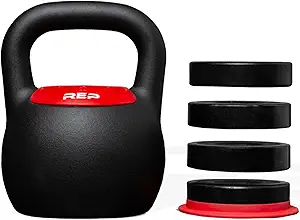 | Best Premium for Serious Lifters | Weight Options: 16 kg, 24 kg, or 40 lb | Settings Per Model: 5 adjustable weights | Material: Steel with matte powder coating | VIEW LATEST PRICE | See Our Full Breakdown |
| Yes4All Vinyl Coated Cast Iron Kettlebell |  | Best Value Fixed Bell | Weight Range: 5-100 lbs (sold individually) | Material: Cast iron with vinyl coating | Handle Width: 6.7 in | VIEW LATEST PRICE | See Our Full Breakdown |
| adjustable kettlebells for strength training | Material | Best Use |
|---|---|---|
| REP Fitness Kettlebell Set and | Cast iron | Swings, squats, presses, ballistics |
| BowFlex SelectTech 840 Adjusta | — | Full-body strength and conditioning circuits |
| VEVOR Adjustable Kettlebell wi | Die-cast aluminum and ABS | Full-body strength training, shared home use |
| Yes4All Adjustable Kettlebell | Cast iron | Home strength training on a budget |
| Rep Fitness Adjustable Kettleb | Steel | Swings, squats, presses, strength and endurance training |
| VEVOR Adjustable Kettlebell wi | Die-Cast Aluminum and ABS | — |
| Yagud Adjustable Kettlebell | — | — |
| Rep Fitness Adjustable Kettleb | Steel with matte powder coating | — |
| Yes4All Vinyl Coated Cast Iron | Cast iron with vinyl coating | — |
More Details on Our Top Picks
REP Fitness Kettlebell Set and Singles, 4kg to 24kg, Cast Iron
Full transparency: this isn’t an adjustable kettlebell, and that’s exactly why it earns a spot. Traditional cast iron bells like these offer something dial-based competitors can’t — a fixed, perfectly balanced weight that behaves identically on every swing, clean, and snatch. Compared with the BowFlex SelectTech 840, there’s no adjustment mechanism to add bulk to the handle or shift the center of gravity mid-set. The tradeoff is obvious: building a collection from 4kg to 24kg costs more over time and eats storage space, where the BowFlex consolidates six weights into one shell. For lifters who’ve tried adjustable options and found the ergonomics compromised, this single-bell purchase path is the honest fix.
Pros:- Textured matte finish keeps chalk-free grip secure during high-rep swings
- True fixed center of gravity for technical ballistics work
- Color-coded weights make grab-and-go training faster than any dial
- Available individually so you can buy only what you need
Cons:- Not adjustable at all — each weight gain requires a new purchase
- Costs accumulate quickly compared to a single adjustable bell
Best for: Lifters frustrated with adjustable handle ergonomics who want to build a traditional kettlebell collection one bell at a time
Not ideal for: Anyone with limited storage or budget — buying multiple fixed bells costs far more than one adjustable unit
- Weight Range:4kg to 24kg (sold as singles and sets)
- Material:Cast iron
- Finish:Textured matte
- Adjustable:No
- Base:Flat for upright storage
- Best Use:Swings, squats, presses, ballistics
Our verdict“Buy this if you’ve outgrown the compromises of adjustable handles and want competition-grade feel, one bell at a time.”
BowFlex SelectTech 840 Adjustable Kettlebell
The SelectTech 840 is the pick I’d point most buyers toward because it nails the core promise of adjustable kettlebells: six weights, one footprint, one motion to change. Twisting a dial between 8 and 40 lbs takes seconds, which matters more than it sounds — quick weight drops between circuits keep training density high, something the Yes4All adjustable set can’t match with its plate-and-lock system. Compared with the REP Fitness adjustable bell, the BowFlex offers more granular settings but a bulkier handle, so purists doing heavy two-hand swings may notice the wider grip. The bundled JRNY trial membership adds guided programming for beginners who don’t know where to start. Price per pound of usable weight is the best in this lineup.
Pros:- Dial adjustment switches weight in seconds with no plates to handle
- Replaces six kettlebells in the footprint of one
- Wide 8–40 lb range suits beginners and intermediates alike
- Includes JRNY guided workout trial for structured training
Cons:- Handle is noticeably bulkier than a traditional bell, affecting grip on smaller hands
- Premium price over basic plate-style adjustables
Best for: Home gym owners who want one kettlebell covering beginner through intermediate strength without cluttering a corner
Not ideal for: Advanced kettlebell athletes — 40 lbs tops out quickly for heavy swings and goblet work
- Weight Range:8 to 40 lbs
- Weight Settings:6
- Adjustment Mechanism:Twist dial
- Footprint:Replaces six kettlebells
- Included Extras:2-month JRNY All-Access Membership
- Best Use:Full-body strength and conditioning circuits
Our verdict“The most convenient all-around adjustable kettlebell for anyone building a home setup from scratch.”
VEVOR Adjustable Kettlebell with 7 Weight Levels
Where the BowFlex 840 stops at 40 lbs, this VEVOR keeps climbing to 44 lbs across seven levels — the widest usable span in this batch, starting at a beginner-friendly 5 lbs. That floor-to-ceiling range makes it the rare adjustable bell that works for both a first-ever goblet squat and loaded two-arm swings a year later. The die-cast aluminum and ABS build keeps it lighter to ship and handle than all-cast-iron options like the Yes4All set, though that composite construction means I’d keep it indoors and off rough garage floors. The electroplated handle resists sweat corrosion better than bare iron. It’s the value play if one bell needs to serve a whole household of different strength levels.
Pros:- Seven levels from 5 to 44 lbs — widest range in the lineup
- Low 5 lb starting weight suits complete beginners
- Corrosion-resistant electroplated handle
- Flat bottom enables renegade rows and elevated pushups
Cons:- Composite materials feel less rugged than solid cast iron under abuse
- At 44 lbs max, still short of what advanced swingers need
Best for: Households where multiple users at very different strength levels share one piece of equipment
Not ideal for: Outdoor or garage-gym lifters — the aluminum and ABS shell isn’t built for drops onto concrete
- Weight Levels:5, 11.5, 18, 24.5, 31, 37.5, 44 lbs (7 total)
- Material:Die-cast aluminum and ABS
- Handle:Electroplated aluminum alloy
- Base:Flat bottom for stability
- Adjustment Levels:7
- Best Use:Full-body strength training, shared home use
Our verdict“The best single bell for a family or couple spanning beginner to intermediate strength.”
Yes4All Adjustable Kettlebell Set
For buyers who want adjustability without the BowFlex price tag, this Yes4All is the straightforward answer. Six cast iron plates and a lock-and-slide mechanism get you from light warmups up to 40 lbs, at a cost well below dial-based competitors. The compromise compared with the BowFlex SelectTech 840 is speed and friction: swapping plates mid-workout interrupts flow, so it rewards lifters who program weight changes between sessions rather than between sets. Unlike the VEVOR 7-level bell, the all-cast-iron build tolerates rougher treatment and feels more like a traditional kettlebell in the hand. The non-slip textured handle and flat storage base are details that matter at this price, where corners are usually cut.
Pros:- Lowest cost per pound of any adjustable option here
- Solid cast iron plates feel traditional and durable
- Non-slip textured handle stays secure with sweaty hands
- Flat bottom stores upright and supports floor exercises
Cons:- Lock-and-slide plate changes are slow compared to dial systems
- 40 lb ceiling limits long-term progression for stronger lifters
Best for: Budget-conscious beginners who want adjustable weight and don’t mind slower plate swaps
Not ideal for: Circuit trainers who change weight multiple times per session — plate swapping kills pacing
- Max Weight:40 lbs
- Number of Plates:6 cast iron plates
- Adjustment Mechanism:Lock and slide
- Material:Cast iron
- Handle:Non-slip textured surface
- Base:Flat bottom for upright storage
- Best Use:Home strength training on a budget
Our verdict“The cheapest credible entry into adjustable kettlebell training, ideal if you plan workouts around weight changes.”
Rep Fitness Adjustable Kettlebell
Rep Fitness builds gym-grade equipment, and this adjustable bell reflects that pedigree. The matte powder-coated steel shell delivers one of the most secure bare-handed grips in the category — noticeably better than the smoother finish on the VEVOR — and the rugged internal weight retainers mean plates don’t rattle or shift mid-swing, a common complaint with cheaper plate systems like the Yes4All. Five quick-select settings cover the swings, squats, and presses most home programs demand. The catch: it costs more than both the Yes4All and VEVOR, and you’re locked into whichever chassis size you buy — the 16 kg, 24 kg, or 40 lb model — so the ceiling is fixed at purchase. Compared with the BowFlex 840, you give up some weight granularity but gain a more traditional, competition-style feel.
Pros:- Powder-coated steel handle grips securely even without chalk
- Internal weight retainers eliminate plate rattle during swings
- Ergonomic handle closely mimics a traditional bell
- Compact single-unit design saves floor space
Cons:- Priced well above plate-based competitors like the Yes4All
- Max weight is fixed by the model you choose at purchase
Best for: Buyers who prioritize grip quality and long-term durability and will pay extra for gym-grade construction
Not ideal for: Bargain hunters — comparable weight ranges cost substantially less elsewhere in this lineup
- Model Options:16 kg, 24 kg, or 40 lb
- Weight Settings:5 quick-select levels
- Material:Steel
- Surface:Matte powder coat
- Handle:Ergonomic
- Internal Design:Rugged weight retainers
- Best Use:Swings, squats, presses, strength and endurance training
Our verdict“The premium choice for lifters who hate compromise on grip and build quality and will pay for it.”
VEVOR Adjustable Kettlebell with 7 Weight Levels
This option stands out for seven clean weight increments from 3.5 to 22.5 lbs at a price that undercuts most dial-and-twist competitors. Compared with the Yagud Adjustable Kettlebell, which offers a similar range, the VEVOR’s die-cast aluminum shell feels more rigid than a pure ABS build, which matters when the bell bumps against your forearm during cleans. The tradeoff is real, though: the ceiling of 22.5 lbs means serious lifters will outgrow it quickly, and the fixed-size shell stays bulky even at the lowest setting, so light warmup sets feel clunkier than a small fixed bell would. This pick makes the most sense for beginners and intermediates who want progression without buying a rack of kettlebells.
Pros:- Seven precise weight increments spanning 3.5 to 22.5 lbs
- Die-cast aluminum shell is more rigid than all-plastic rivals
- Electroplated aluminum handle resists corrosion and sweat
- Replaces seven separate kettlebells in a compact footprint
Cons:- Maximum weight of 22.5 lbs limits long-term usefulness for strength training
- Costs more per pound than a single fixed kettlebell of equal weight
Best for: Budget-conscious beginners who want one bell that covers a full progression from 3.5 to 22.5 lbs
Not ideal for: Intermediate-to-advanced lifters — the 22.5 lb ceiling is too light for swings, goblet squats, or presses once you build a strength base
- Weight Levels:3.5, 7, 10, 13, 16, 19.5, 22.5 lbs
- Material:Die-Cast Aluminum and ABS
- Handle Material:Electroplated Aluminum Alloy
- Adjustment Points:7 levels
- Max Weight:22.5 lbs
- Model Number:Kettlebell 7WL
Our verdict“A smart entry point if you’re new to kettlebell training and want adjustable progression on a tight budget, as long as you accept you may outgrow it within a year.”
Yagud Adjustable Kettlebell, 22.5 lbs with 7 Levels
Where the VEVOR 7-Level model feels built like a tank, the Yagud leans into convenience: its 7-gear adjustment system shifts weight from 2.5 to 22.5 lbs in seconds, which keeps circuit training and drop-set routines flowing without interruption. The ergonomic aluminum grip is a genuine highlight compared with coated steel handles that get slick with sweat, and the ABS shell keeps the whole unit light enough to stash in a closet. That lighter shell is also the weakness — nylon thermoplastic internal fasteners can work loose over months of swinging, something the steel-bodied Rep Fitness Adjustable Kettlebell handles with far more confidence. If your priority is a space-saving bell for apartment-friendly, moderate-intensity training, the Yagud earns its spot.
Pros:- Fast 7-gear adjustment from 2.5 to 22.5 lbs for seamless circuit training
- Ergonomic aluminum handle stays grippy during sweaty sessions
- Compact single-bell footprint replaces a seven-weight set
- Low starting weight of 2.5 lbs suits true beginners and rehabilitation work
Cons:- Nylon thermoplastic fasteners may loosen with repeated high-impact swings
- Same 22.5 lb ceiling as cheaper rivals without heavier build quality
- Bulky shell dimensions make low weights feel awkward
Best for: Apartment dwellers and small-space trainees who do high-rep, circuit-style workouts with frequent weight changes
Not ideal for: Anyone doing heavy ballistic work like long swing sessions — the plastic internals and 22.5 lb cap aren’t built for it
- Weight Range:2.5 to 22.5 lbs
- Gear Levels:7
- Dimensions:Φ8.3″ x 12.6″
- Handle Material:Aluminum
- Shell Material:ABS plastic
- Internal Fasteners:Nylon thermoplastic
Our verdict“Buy this if you value fast weight switching and a comfortable grip in a compact bell; skip it if heavy swings are the core of your program.”
Rep Fitness Adjustable Kettlebell
This model is better suited to lifters who have outgrown the 22.5 lb ceiling shared by the VEVOR and Yagud models. Available in 16 kg, 24 kg, or 40 lb configurations, each with five internal settings, it’s the only pick in this batch that can serve genuine strength work — heavy swings, presses, and loaded carries. The steel body with matte powder coating delivers a tacky, chalk-friendly grip that plastic shells can’t match, and the rubber bottom protects floors during renegade rows. The adjustment itself — push down and twist — is secure but slower than the Yagud’s gear dial, and the premium price stings compared with fixed cast-iron bells like the Yes4All, which costs less per pound. You’re paying for consolidation: one serious bell instead of five.
Pros:- Heavier model options (24 kg / 40 lb) support real strength progression
- Steel construction with matte powder coating for a durable, non-slip grip
- Rubber bottom protects floors and enables stable renegade rows
- Five settings per model replace five fixed kettlebells
Cons:- Noticeably more expensive than fixed cast-iron kettlebells at equivalent weight
- Push-down-and-twist mechanism has a learning curve and is slower mid-workout
Best for: Intermediate and advanced lifters who need heavier top-end weights and want to replace a rack of fixed kettlebells with one steel unit
Not ideal for: Casual beginners or anyone on a budget — the price per pound is high and the adjustment mechanism takes practice to master
- Weight Options:16 kg, 24 kg, or 40 lb
- Settings Per Model:5 adjustable weights
- Material:Steel with matte powder coating
- Handle:Ergonomic
- Base:Rubber bottom
- Adjustment Mechanism:Push down and twist
Our verdict“The clear choice if you’re past beginner weights and want one rugged, floor-friendly bell that grows with your training — provided the premium price fits your budget.”
Yes4All Vinyl Coated Cast Iron Kettlebell
Honesty time: this isn’t an adjustable kettlebell at all — it’s the traditional cast-iron alternative included here because sometimes fixed beats adjustable. With sizes spanning 5 to 100 lbs, it can scale from a first goblet squat to a two-handed swing at serious load, territory no adjustable model in this roundup can reach. Compared with the Rep Fitness Adjustable, you get more iron for your dollar and zero mechanical parts to fail, but no way to change weight within a single unit — you buy the weight you need. The vinyl coating quiets floor contact and the flat bottom adds stability for rows and stored-position work. Expect a break-in odor and gradual coating wear under heavy use.
Pros:- Available from 5 to 100 lbs, covering beginner through advanced loads
- One-piece cast iron build with no moving parts to wear out or loosen
- Vinyl coating dampens noise and protects flooring
- Flat bottom enables stable floor presses, renegade rows, and upright storage
Cons:- Not adjustable — each weight is a separate purchase
- Vinyl coating can chip and wear with heavy or outdoor use
- Slight chemical odor when first unpacked
Best for: Lifters who know their working weight and want maximum durability and value per pound without adjustment mechanisms
Not ideal for: Anyone wanting one space-saving bell with multiple weights — you’ll need to buy separate bells as you progress
- Weight Range:5-100 lbs (sold individually)
- Material:Cast iron with vinyl coating
- Handle Width:6.7 in
- Grip Area:4.5 in
- Handle Diameter:1.2 in
- Height:7.6 in
- Weight Tolerance:±3%
Our verdict“If you already know your target weight and prioritize durability over versatility, this fixed bell delivers more iron for the money than any adjustable rival.”

How We Picked
I ranked these kettlebells around one question: how well does each support progressive strength training at home? That meant weighing four factors: the weight range and increment size (can you actually progress in small jumps?), the speed and effort of changing weight (dial and pin systems beat plate-and-collar designs mid-workout), the handle geometry (grip diameter and width determine whether swings, cleans, and two-handed work feel natural), and build durability (cast iron and steel outlast plastic-shell designs under drops and high-rep use).
Price per pound of usable weight range separated the value picks from the premium ones, and I also factored in footprint — the whole point of an adjustable bell is saving space, so oversized shells got penalized. Finally, I considered who each product realistically serves: a dial bell that tops out at 40 lbs is excellent for beginners but dead weight for an intermediate presser, and the rankings reflect that fit rather than raw feature counts.
| adjustable kettlebells for strength training | Material | Best Use |
|---|---|---|
| REP Fitness Kettlebell Set and | Cast iron | Swings, squats, presses, ballistics |
| BowFlex SelectTech 840 Adjusta | — | Full-body strength and conditioning circuits |
| VEVOR Adjustable Kettlebell wi | Die-cast aluminum and ABS | Full-body strength training, shared home use |
| Yes4All Adjustable Kettlebell | Cast iron | Home strength training on a budget |
| Rep Fitness Adjustable Kettleb | Steel | Swings, squats, presses, strength and endurance training |
| VEVOR Adjustable Kettlebell wi | Die-Cast Aluminum and ABS | — |
| Yagud Adjustable Kettlebell | — | — |
| Rep Fitness Adjustable Kettleb | Steel with matte powder coating | — |
| Yes4All Vinyl Coated Cast Iron | Cast iron with vinyl coating | — |
Factors to Consider When Choosing Adjustable Kettlebells For Strength Training
Before picking a specific model, it helps to understand what actually separates a good adjustable kettlebell from a frustrating one. These are the factors that shaped my rankings — and the mistakes I see buyers make most often.Weight Range and Increment Size
The most common mistake is buying a bell that matches your strength today rather than your strength in a year. For strength training specifically, you want the top end of the range to be roughly 50% above your current best press or swing, because overload is what drives adaptation. Increment size matters just as much: 5 lb jumps are manageable for swings but often too large for pressing movements, where 2.5 to 3 lb progressions keep you moving forward. A bell with seven levels spread across a wide range will serve you longer than one with three coarse jumps, even if the max weight looks similar on paper. Also remember that adjustable bells don’t get lighter — a 40 lb-max shell still weighs its empty minimum, which can feel clumsy for high-rep warm-ups.
Adjustment Mechanism: Speed Versus Security
There are three main mechanisms, and they change how you train more than most buyers expect. Dial systems (like the BowFlex) switch weight in under five seconds but add handle bulk and moving parts that can wear. Pin or selector-pin systems are nearly as fast and mechanically simpler. Plate-and-collar designs — the budget standard — require unscrewing a lock and adding plates by hand, which takes a minute or more and tends to pull you out of interval workouts. If you train circuits or supersets, pay the premium for fast adjustment; if you do straight sets with long rests, a plate system saves money without hurting your session. Whatever you choose, check that the locking mechanism has no rattle or shift under swing momentum, since loose plates change the bell’s balance mid-rep.
Handle Geometry and Comfort
Handle feel is where adjustable bells most often disappoint compared with fixed cast iron. A handle diameter of 1.3 to 1.5 inches suits most hands for swings and cleans; thicker handles fatigue your grip faster and cap your working sets prematurely. Width matters for technique: a handle too narrow for both hands ruins two-handed swings, while an overly wide one makes single-arm work sloppy. Powder-coated or textured steel grips better than chrome as your hands sweat. If you already train with a fixed bell you like, measure its handle before buying an adjustable version — matching that dimension does more for your technique than any weight-range spec on the box.
Build Material and Durability
Cast iron and steel are the materials that survive drops, and kettlebell training inevitably involves the occasional dropped bell during fatigued sets. Aluminum-and-ABS designs like the VEVOR keep weight down and cost low, but the plastic shell can crack if the bell lands on its edge — a real risk with overhead work. Coatings matter too: powder coating resists rust and chalk adherence better than bare metal, while vinyl (as on the Yes4All fixed bells) protects floors but adds bulk without adding durability. Check the warranty length as a proxy for manufacturer confidence; brands backing their bells for multiple years are betting you won’t break them. For adjustable models specifically, look at the hinge or plate connection points, since those fail long before the shell does.
Footprint and Storage
The entire appeal of an adjustable bell is replacing a rack, so size math matters. One dial-style bell typically replaces six to eight fixed kettlebells, freeing several square feet of floor — meaningful in an apartment or garage shared with a car. But adjustable bells are often taller and wider than a fixed bell at the same weight, which affects where the bell rests against your forearm during cleans and presses. Some lifters find this dimension change uncomfortable enough to abandon adjustable models entirely, so read the product dimensions, not just the weight spec. If you eventually want heavier loads, also check whether the model accepts add-on plates or whether you’d need to buy a second bell entirely.
Price Per Pound and Long-Term Value
Compare adjustable bells by dividing price by the total weight range covered, not by list price. A $150 bell covering 8–40 lbs costs less per usable pound than a $60 bell covering a 15 lb span, and the math improves every time you progress past another fixed weight you didn’t have to buy. Budget plate sets from Yes4All and Yagud win on raw cost per pound but lose value if their adjustment friction makes you skip workouts. Premium is only worth it when you’ll genuinely use the top of the range — an intermediate lifter buying a 40 kg-capable bell they’ll never load past 24 kg has paid for capacity, not training. Match the spend to your realistic two-year trajectory, not your ambition on purchase day.
Frequently Asked Questions
Can an adjustable kettlebell really replace a full set of fixed kettlebells for strength training?
For most home lifters, yes — with one honest caveat. An adjustable bell covers the weight progression you need for presses, rows, squats, and swings in a single footprint, which is exactly why it wins for space-limited home gyms. The caveat is geometry: adjustable shells are usually wider or bulkier than a fixed bell at the same weight, so movements that rest the bell on your forearm (cleans, front squats, pressing from rack position) can feel different, and dial-style handles can be too wide for comfortable two-handed swings. If your program leans heavily on technical ballistic movements, many lifters keep one fixed bell for those and use the adjustable for strength presses and rows. For general strength work, though, the replacement holds up well.
What weight range should a beginner actually buy?
Beginners consistently overbuy, and it costs them both money and technique. A sensible starting range is roughly 10 to 25 lbs for most women and 15 to 35 lbs for most men, which covers swings, goblet squats, and presses for the first six to twelve months. Buying a bell that tops out at 50+ lbs sounds like future-proofing, but the empty shell of those models is often heavier than a true beginner weight, making early workouts harder than they should be. Better approach: pick a model whose minimum weight you can press overhead for ten clean reps today, with a top end about 50% above your current best. The BowFlex 840’s 8–40 lb range hits this window well, which is part of why it ranks so high here.
Are dial-adjustable kettlebells like the BowFlex durable enough for swings?
Swings are actually one of the safer movements for dial bells, because the lock mechanism is designed for momentum along the swing path. The real risks are drops and overhead misses — the internal selector plates and plastic housing don’t tolerate being dropped from rack height the way solid cast iron does. Treat a dial bell the way you’d treat a loaded dumbbell: set it down under control, and don’t program movements you might bail on. Under normal use, the mechanism holds up for years, and the weight plates themselves don’t wear meaningfully. If your training includes max-effort work where drops are likely, a plate-and-collar steel model like REP’s adjustable bell is the safer purchase.
Is it cheaper to buy an adjustable kettlebell or a set of fixed ones?
Almost always cheaper to go adjustable — once you pass about three fixed weights. Fixed kettlebells run roughly $1.50–$2.50 per pound, so replacing six bells spanning 10–50 lbs can easily exceed $500, while a good adjustable covering that same range lands between $100 and $250. The fixed-set case still makes sense in two situations: if multiple people train simultaneously and each needs their own weight, or if you compete in kettlebell sport where exact bell dimensions matter. The Yes4All vinyl fixed bells (single purchases from 5–100 lbs) are a smart middle path if you only ever need one or two specific weights. But for solo progressive training, the adjustable math wins clearly.
Do plate-loaded adjustable kettlebells shift or rattle during exercises?
Well-designed ones don’t — but this is where cheap models earn their bad reputation. A quality plate-and-collar system uses a threaded lock or compression mechanism that holds plates firmly against the shell, and a firm shake test before buying (or checking reviews for rattle complaints) tells you most of what you need to know. Rattle isn’t just annoying; shifting plates change the bell’s center of gravity mid-swing, which forces your grip and forearm stabilizers to compensate and can degrade technique on cleans. The Yes4All and Yagud sets in this lineup are acceptable here, though their collars need periodic retightening during long sessions. If you notice any plate movement after setup, stop and re-secure it — a loose collar under a swing is a genuine safety issue, not a cosmetic one.
Conclusion
The right pick here depends less on budget and more on how you train and where you’ll be in a year. For best overall, the BowFlex SelectTech 840 wins on pure training efficiency — its dial makes weight changes nearly instant, which keeps progressive overload frictionless for beginners through intermediates. For best value, the Yes4All Adjustable Kettlebell Set delivers the most usable weight per dollar, and the Yagud 22.5 lb model is the smartest cheap entry point for true beginners who want to test the waters. On the premium side, the REP Fitness Adjustable Kettlebell in 24 kg offers the most traditional bell feel of any adjustable option here, built from steel that will outlast plastic-shell competitors. For dedicated home gym builders who already know their working weights, REP’s fixed cast-iron singles and the Yes4All vinyl bells are actually the better buy — adjustability costs money, and if you don’t need it, don’t pay for it. Match the pick to your trajectory, not your ambition, and any of these will support years of strength gains.
Fall Picks
fall essentials
As an affiliate, we earn on qualifying purchases.