
If you’re new to skincare, starting with niacinamide is a smart choice because it’s stable, gentle, and supports your skin barrier and overall health. If you’re aiming for brightening and antioxidant protection, vitamin C can be added once your skin adapts. Retinol is effective for anti-aging but can cause irritation, so it’s best to introduce it gradually after you’re comfortable with simpler ingredients. Keep exploring to discover how each can transform your routine.

Get workout gear delivered free with Prime
- Fast, free delivery on millions of items
- Prime Video, Amazon Music and more included
- Member-only deals all year
Key Takeaways
- Niacinamide is the most versatile and gentle for beginners, suitable for all skin types and easy to incorporate into routines.
- Start with Vitamin C for brightening and antioxidant protection, especially if skin dullness or uneven tone is a concern.
- Retinol is effective for anti-aging but should be introduced gradually to minimize irritation and ensure skin tolerance.
- Consider your skin goals—choose Vitamin C for radiance, Niacinamide for barrier support, or Retinol for anti-aging.
- Proper formulation and gradual introduction optimize ingredient benefits and reduce potential irritation.
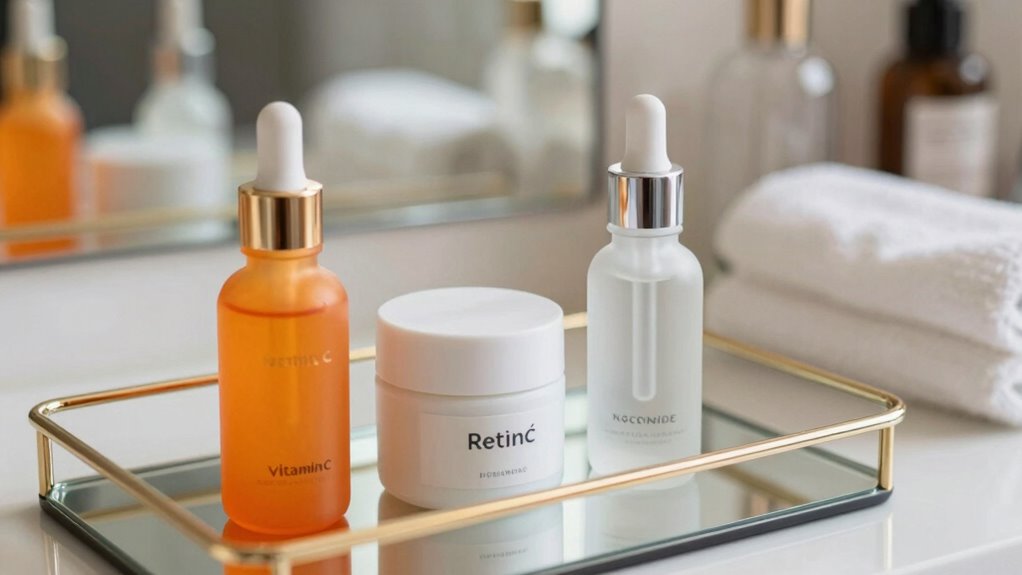
Are you unsure which skincare ingredient—Vitamin C, Retinol, or Niacinamide—is best for your skin? Deciding where to start can feel overwhelming, especially when each offers unique benefits. Understanding how these ingredients work involves considering factors like skin absorption and ingredient stability. For example, Vitamin C, especially in its most effective forms like L-ascorbic acid, needs to be properly formulated to guarantee good skin absorption. If it’s not stable—prone to oxidation—its potency diminishes quickly, reducing the antioxidant benefits you seek. That’s why many products incorporate stabilizing agents or packaging that limits exposure to light and air, helping maintain ingredient stability and efficacy. Additionally, proper storage plays a vital role in preserving ingredient stability over time. Retinol, a derivative of Vitamin A, is renowned for promoting cell turnover and reducing signs of aging. However, it’s quite sensitive to degradation when exposed to light and air, which affects its stability over time. This means you should look for formulations that protect retinol from oxidation, assuring it remains effective throughout its shelf life. When applied, retinol penetrates the skin relatively well, but its effectiveness hinges on proper formulation and your skin’s ability to absorb it. If your skin barrier is compromised or overly dry, absorption might be hindered, so starting with a gentle formulation is wise. Niacinamide, a form of Vitamin B3, stands out because of its remarkable stability and broad compatibility with other ingredients. It’s highly water-soluble and absorbs easily into the skin without the need for complicated formulations. Its stability means you can incorporate it into your routine without worry about degradation. Plus, it’s suitable for most skin types, including sensitive skin, and works well to strengthen the skin barrier, regulate oil production, and improve overall skin tone. When selecting skincare products, considering ingredient stability can help you achieve better long-term results. In addition, understanding skin absorption helps you choose products that deliver active ingredients effectively. Incorporating knowledge of ingredient interactions can further optimize your skincare routine, ensuring each component works harmoniously with others. Furthermore, researching product formulation can give you insights into how well a product might work for your skin. When choosing which to start with, consider your skin’s specific needs. If you want brightening and antioxidant protection, Vitamin C might be your first choice—just ensure you select a stable, well-formulated product. If your main concern is anti-aging and improving cell turnover, retinol is effective but should be introduced gradually to minimize irritation. For overall skin health, barrier support, and inflammation reduction, niacinamide offers a versatile and stable option that’s easy to incorporate. Ultimately, your choice depends on your skin goals, but understanding how each ingredient interacts with your skin’s absorption and stability will help you make a confident decision.
As an affiliate, we earn on qualifying purchases.
Frequently Asked Questions
Can These Ingredients Be Used Together in the Same Skincare Routine?
Yes, these ingredients can be combined in your routine, but careful ingredient combinations are key for routine integration. Use Vitamin C in the morning for antioxidant protection, and apply Retinol at night to avoid irritation. Niacinamide is versatile and can be used both morning and night. Just make certain you introduce each gradually and monitor your skin’s response to prevent any adverse reactions, creating a balanced, effective skincare routine.
Which Ingredient Is Best for Sensitive Skin Types?
For sensitive skin, niacinamide is your best choice because it’s gentle and highly compatible with sensitive skin types. It helps reduce redness and strengthens the skin barrier without causing irritation. Vitamin C and retinol can be effective but may cause sensitivity initially. If you want to try them, start with low concentrations and introduce them gradually, ensuring ingredient compatibility to avoid reactions and keep your skin calm and healthy.
How Long Does It Take to See Visible Results?
You’ll typically see visible results within 4 to 12 weeks, but it varies based on ingredient interactions and your skincare routine timing. Consistency is key; using products as directed and allowing time for absorption helps. Some ingredients, like retinol, may take longer to show effects, while others, like niacinamide, work faster. Patience and regular use are essential for noticeable improvements in your skin’s texture and tone.
Are There Any Common Side Effects Associated With These Ingredients?
An ounce of prevention is worth a pound of cure. Common side effects from these ingredients can include irritation, redness, or dryness, especially if used together improperly. To guarantee skincare safety, watch for ingredient interactions that might cause adverse reactions. Always patch-test new products and introduce them gradually to avoid unwanted side effects. If you experience persistent irritation, consult a dermatologist to tailor your routine safely.
What Is the Ideal Order to Apply These Products?
You should apply your skincare products in the right order to maximize ingredient compatibility and effective layering. Start with a lightweight, water-based serum like vitamin C, which penetrates easily. Follow with niacinamide, as it layers well with other ingredients. Finish with retinol, applying it last to minimize irritation. This sequence helps guarantee each ingredient works effectively without compromising skin safety or absorption.
Conclusion
Ultimately, choosing between vitamin C, retinol, or niacinamide is like selecting your own adventure in skincare—each offers unique benefits. Think of vitamin C as your morning sun, brightening your day; retinol as the evening star, guiding renewal; and niacinamide as the steady heartbeat, maintaining balance. Whichever you choose, remember that patience and consistency are your trusted allies. Like a well-tended garden, your skin will flourish as long as you nurture it with the right ingredient at the right time.
Halloween Picks
halloween
As an affiliate, we earn on qualifying purchases.