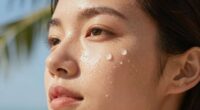
To reduce skin irritation from sweat, start by showering promptly after sweating and using gentle, fragrance-free cleansers. Wear breathable, moisture-wicking clothes to keep your skin dry. Stay well-hydrated to dilute sweat and prevent irritation, and incorporate water-rich foods into your diet. Use soothing skincare products with aloe vera or chamomile and avoid harsh scrubs or alcohol-based products. Maintaining good hygiene and environmental factors helps protect your skin; discover more tips to keep irritation at bay.

Get workout gear delivered free with Prime
- Fast, free delivery on millions of items
- Prime Video, Amazon Music and more included
- Member-only deals all year
Key Takeaways
- Shower promptly after sweating using gentle, fragrance-free cleansers to remove sweat and prevent pore clogging.
- Wear breathable, moisture-wicking clothing to keep skin dry and reduce irritation.
- Stay well-hydrated by drinking water and eating water-rich foods to dilute sweat and minimize skin irritation.
- Apply soothing skin products like aloe vera or chamomile to calm irritated or sensitive skin.
- Maintain good indoor air quality and avoid harsh skincare products to support skin resilience and reduce irritation.

Sweat is your body’s natural way of cooling down, but it can sometimes cause skin irritation when it lingers on your skin. Understanding how sweat gland function works can help you manage this problem better. Sweat glands are responsible for producing sweat, which evaporates to cool your body. However, when sweat stays on your skin for too long, it can lead to irritation, rashes, or even breakouts. To reduce these issues, you need to focus on effective hydration strategies. Proper hydration helps your body regulate sweat better, ensuring it doesn’t become overly salty or thick, which can irritate your skin. Drinking enough water throughout the day keeps your sweat dilute and less likely to clog pores or cause irritation.
Another essential step is to pay close attention to your hydration strategies. When you’re dehydrated, your sweat becomes more concentrated, increasing the risk of skin irritation. Incorporate water-rich foods like fruits and vegetables into your diet and consider carrying a water bottle with you. Staying consistently hydrated helps your sweat function crucially, preventing the buildup of sweat on your skin. If you’re active or tend to sweat heavily, replacing lost fluids during and after exercise is vital. This prevents sweat from sitting on your skin for too long and minimizes irritation.
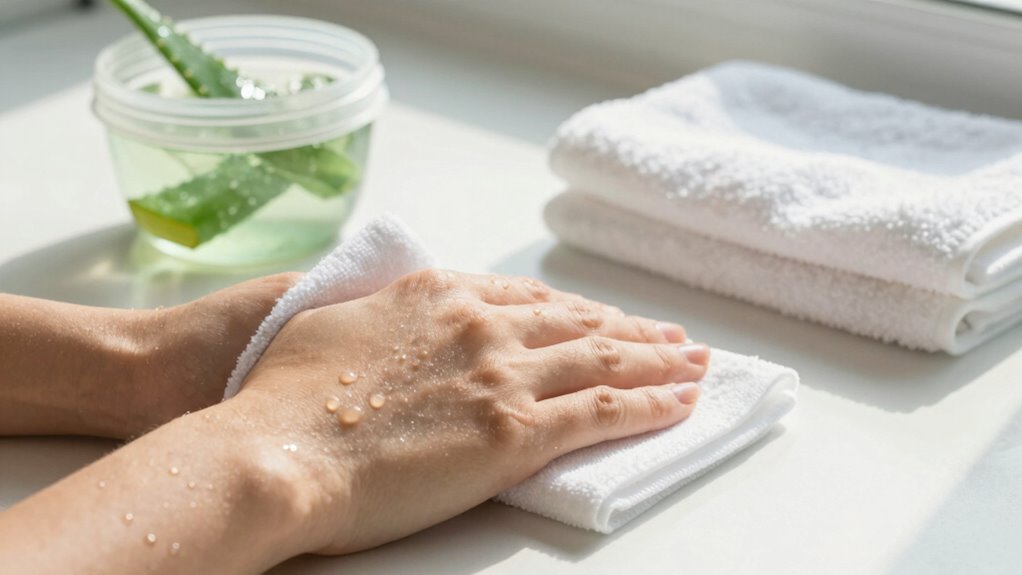
In addition to hydration, maintaining good hygiene is key. Shower promptly after sweating, especially if you’ve been exercising or in hot environments. Use a gentle, fragrance-free cleanser to wash away sweat without stripping your skin’s natural oils. Pat your skin dry instead of rubbing, which can cause irritation. Wearing breathable, moisture-wicking clothing also helps manage sweat and prevents it from sticking to your skin. These fabrics draw sweat away from your body, reducing the chances of irritation and bacterial growth that can lead to breakouts or rashes. Incorporating proper skin care routines that include gentle cleansing and moisturizing can further support skin health and reduce irritation. Being mindful of clogged pores and how they contribute to skin issues can help you choose better skincare products and habits. Additionally, maintaining optimal indoor air quality can help prevent skin issues caused by environmental factors like dust or allergens that may exacerbate irritation. Using soothing skin products containing ingredients like aloe vera or chamomile can provide additional relief for irritated skin. If you notice persistent irritation, avoid harsh scrubs or alcohol-based products, as they can worsen the condition. Instead, opt for gentle skincare routines tailored to sensitive skin. Remember, the goal is to keep your skin cool, dry, and free from prolonged sweat contact. By understanding your sweat gland function and implementing effective hydration strategies, you can considerably reduce skin irritation caused by sweat. Regularly managing environmental factors and skin pH balance can also support overall skin resilience. Consistency is key—pair proper hydration with good hygiene and gentle skincare, and you’ll see a remarkable difference in how your skin reacts to sweat.
fragrance-free gentle cleanser for sensitive skin
As an affiliate, we earn on qualifying purchases.
As an affiliate, we earn on qualifying purchases.
Frequently Asked Questions
Can Diet Impact Sweat-Related Skin Irritation?
Yes, your diet can impact sweat-related skin irritation, especially if you have allergies. Eating foods that trigger allergies, like nuts or dairy, may increase inflammation and worsen irritation. Conversely, a balanced diet rich in anti-inflammatory foods like fruits, vegetables, and omega-3s can help reduce skin sensitivity. Paying attention to your body’s reactions to certain foods and avoiding known allergens can considerably improve your skin’s response to sweat.
Are Certain Fabrics Better for Sweat-Prone Skin?
Certain fabrics are better for sweat-prone skin because they wick away moisture, reduce chafing, and allow your skin to breathe. Choose lightweight, breathable clothing materials like cotton, linen, or moisture-wicking synthetic fabrics. Avoid synthetic blends that trap heat and sweat. Opt for loose-fitting clothes that promote airflow, and steer clear of tight, non-breathable fabrics. By selecting the right fabric choices and clothing materials, you help minimize irritation and stay comfortable all day.
How Does Hydration Affect Skin Irritation From Sweat?
Staying well-hydrated helps maintain your skin’s barrier, making it more resistant to irritation caused by sweat. When your hydration levels are good, your skin remains soft, flexible, and less prone to chafing or redness. Proper hydration also promotes faster healing of irritated skin and reduces inflammation. To keep irritation at bay, drink plenty of water throughout the day and use moisturizers that support your skin barrier.
Can Medication Help Reduce Sweat-Induced Skin Issues?
Your skin’s irritation from sweat can feel like battling a wildfire, but medication can help. While prescription antiperspirants or oral medications, like anticholinergics, are effective, you might also explore medication alternatives like topical treatments—antibacterial or soothing creams—that calm inflammation and reduce irritation. Always consult your healthcare provider to choose the right approach, ensuring you avoid further skin issues and keep your skin comfortable and healthy.
What Natural Remedies Alleviate Skin Irritation From Sweat?
You can try herbal remedies like aloe vera or chamomile to soothe skin irritation caused by sweat. Essential oils such as tea tree or lavender, when diluted, can also reduce inflammation and calm your skin. Apply these remedies gently after sweating, and make sure to keep your skin clean and dry. Regular use of natural remedies helps prevent irritation and promotes healing, leaving your skin feeling refreshed and less inflamed.
Conclusion
So, next time you’re sweating it out and your skin starts protesting, remember—your best defense is just staying dry and clean. Who would’ve thought that simple habits could turn you into a skincare hero? Ironically, the more you fight sweat’s protests, the less it’ll bother you. So, go ahead, embrace those quick showers and breathable fabrics—your skin might just thank you with fewer irritations… or at least, less drama.
Halloween Picks
halloween
As an affiliate, we earn on qualifying purchases.