TL;DR

Get workout gear delivered free with Prime
- Fast, free delivery on millions of items
- Prime Video, Amazon Music and more included
- Member-only deals all year
A post on bookofjoe2.blogspot.com claims that raising an unconscious person’s legs can help restore circulation and may make CPR more effective. It provides no supporting evidence, and its advice should not be treated as a substitute for emergency services, CPR, or an automated external defibrillator (AED).
A blog post published in October 2026 says bystanders who do not know CPR should raise an unconscious person’s legs, claiming the action can increase blood return to the heart and lungs. The post supplies no cited medical evidence for its comparisons or its assertion that the technique cannot cause harm, so readers should not use it in place of calling emergency services or following dispatcher instructions.
The post, published by bookofjoe2.blogspot.com, describes lifting someone’s legs to about waist height. Its author says this could help move blood from the limbs toward the central circulation, and presents the maneuver as an option for people who are frightened or untrained in CPR. These are claims made by the post, not findings supported by studies or medical guidance included in the source.
The article also says leg elevation is equivalent to a two-unit blood transfusion, which it describes as 40% of an average adult’s circulating blood volume, and asserts that raising the legs makes CPR more effective. It gives no method, research citation, clinical circumstances, or qualifications for those statements. The source’s claim that the action cannot do harm is likewise not substantiated in the material provided.
The post refers to a “Code Blue” scene and says the author tells someone to raise the patient’s legs on arrival. It does not identify the author’s qualifications, name a hospital or emergency service, or provide a date or case details for that experience. The post also does not explain how to distinguish a cardiac arrest from other causes of collapse.
Why Emergency Guidance Matters
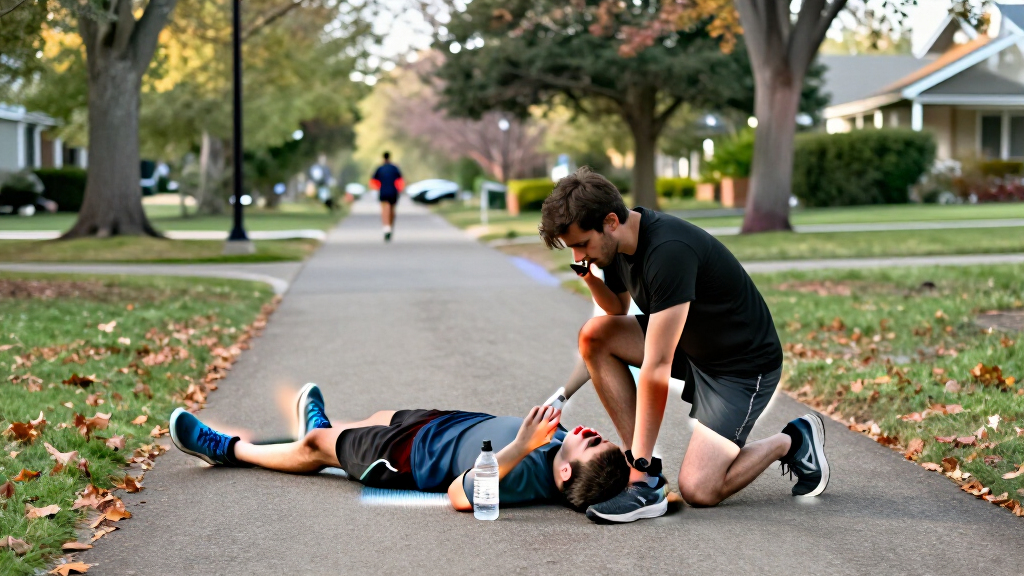
For a bystander facing a person who has collapsed, clear, reliable instructions matter: a speculative maneuver could distract from contacting emergency services or from steps recommended by trained dispatchers. The post is framed as advice for people who lack CPR skills, which makes it especially important to distinguish its proposal from established emergency instructions.
This report does not establish that leg elevation is harmful, nor can it determine what would happen in a particular emergency. But the source does not justify presenting the maneuver as a replacement for CPR or as a guaranteed safe action. Readers should treat the post’s circulation and blood-volume comparisons as unverified claims unless they are backed by credible medical authorities.
People who want to be prepared can seek recognized first-aid and CPR training and learn where public-access AEDs are located. In an emergency, contact local emergency services promptly and follow the dispatcher’s directions rather than relying on an unsourced online tip.
Products Worth Considering

Hyperice Hypervolt 3 Percussion Massage Gun with Heated Head and Premium Carry Case

LEVOIT Vital 100S-P Smart Air Purifier with Washable Pre-Filter

Garmin Venu 3 Fitness Smartwatch, 45 mm, Black
As an affiliate, we earn on qualifying purchases.
The Post’s CPR Alternative Claim
The post begins by acknowledging that CPR can help someone in an emergency, then argues that relatively few people know what to do or act. It offers leg elevation as a simple alternative for an untrained, scared bystander. The source gives no data to support its statements about how many people know or perform CPR.
Its explanation is that raising the legs sends more blood toward the heart and lungs. It then makes two stronger claims: that this is equivalent to a large blood transfusion and that the maneuver improves CPR. The supplied report includes no research references or external medical guidance to validate either point. The difference between a proposed explanation and verified clinical advice is central to assessing the post.
The source is a blog post, not a cited clinical guideline or emergency-services protocol. No independent corroboration, expert assessment, or response from a medical organization is included in the material supplied for this article. That limits what can responsibly be concluded about the technique.
““Bend down, pick up their feet, and hold their legs in the air waist-high.””
— The bookofjoe2.blogspot.com post
Evidence Behind Leg Elevation
The supplied source does not establish whether raising a person’s legs improves outcomes during cardiac arrest, works alongside CPR, or is suitable for different causes of collapse. It also does not support the stated comparison to two units of blood or the claim that the maneuver cannot cause harm. No independent expert or medical authority is quoted.
The post offers no details about the person’s condition, the circumstances in which the technique might be used, or when it might be inappropriate. It is therefore not possible from this material to determine the action’s safety or effectiveness in an individual emergency. Those questions require reliable clinical evidence and guidance, neither of which the post provides.
Follow Dispatchers’ Instructions
The blog post does not announce research, a medical review, or a response from emergency services. Until its claims are assessed by credible medical sources, readers should not treat it as a CPR substitute or as proof that leg elevation is harmless. If someone collapses, call local emergency services and follow the dispatcher’s instructions; use CPR or an AED if directed or if trained to do so.
Readers seeking to prepare can take a course from a recognized first-aid or CPR provider. Any future assessment of the blog’s advice would need to address evidence, appropriate circumstances, and potential risks—not just the author’s explanation of blood flow.
Key Questions
Does the source prove that raising someone’s legs can save their life?
No. The blog post makes that suggestion but provides no supporting studies or independent medical guidance in the supplied material.
Is raising someone’s legs a substitute for CPR?
The source does not establish that it is. Do not treat the post as a substitute for emergency services, CPR, or dispatcher instructions.
What should I do if someone collapses?
Contact local emergency services promptly and follow the dispatcher’s directions. If trained, use the appropriate CPR and AED steps as instructed.
Does the post show that leg elevation is harmless?
No. “Cannot do any harm” is the author’s unsubstantiated claim; the supplied report does not give evidence establishing safety.
Source: hn