
TL;DR

Get workout gear delivered free with Prime
- Fast, free delivery on millions of items
- Prime Video, Amazon Music and more included
- Member-only deals all year
A preliminary study of adults older than 78 found that masked high blood pressure—normal readings in a medical office but high readings at home—was associated with a 70% higher rate of falls than high readings in both settings. The findings were presented at the American Heart Association’s 2026 Hypertension Scientific Sessions; they do not establish that masked high blood pressure causes falls.
Adults older than 78 whose blood pressure was high at home but not in a medical office had a 70% higher rate of falls than peers with high readings in both settings, according to preliminary research presented at the American Heart Association’s Hypertension Scientific Sessions in Arlington, Virginia. The finding suggests that office readings alone may not identify every older adult who could be at increased risk, but the study does not show that masked high blood pressure caused the falls.
The analysis included 758 adults older than 78. Researchers classified 15.4% as having masked high blood pressure, meaning their office readings were not high while their home readings were. Another 34.5% had sustained high blood pressure, with high readings in both settings; 17.0% had white-coat high blood pressure, with higher readings in the office; and 33.2% had normal readings in both settings.
During a median follow-up of 350 days, 23.4% of participants reported having fallen at least once during the previous 12 months. The study also found that, when office and home blood pressure differences were analyzed as a continuous measure, lower office readings relative to home readings were associated with a higher incidence of falls. The reported 70% comparison was between the masked and sustained high blood pressure groups; it is not a comparison with people whose readings were normal in both settings.
Frances Wang, the study’s presenting author and a researcher at Beth Israel Deaconess Medical Center in Boston, said home readings can add information to clinical assessment and may help identify patients with hidden fall risk. The research was described as preliminary and presented at the 2026 Hypertension Scientific Sessions, held October 7–11.
Why Home Readings May Matter
Falls are a major health concern for older adults: the U.S. Centers for Disease Control and Prevention identifies them as the leading cause of disability and functional decline among adults 65 and older. A fall can threaten mobility and independence, making ways to identify potentially relevant risks important to patients and care teams.
The findings add to evidence that blood pressure readings outside the clinic may offer information not captured by an office measurement. If a clinician sees only a normal office result, elevated readings at home could otherwise go unrecognized. The study does not establish that home monitoring prevents falls, or that changing blood pressure treatment would reduce them. It points to an association that merits further study and clinical discussion.
home blood pressure monitor for elderly
As an affiliate, we earn on qualifying purchases.
As an affiliate, we earn on qualifying purchases.
Office and Home Readings Compared
Masked high blood pressure describes a pattern in which readings are not elevated in a clinical setting but are elevated outside it. It contrasts with sustained high blood pressure, where readings are high both in the office and at home, and white-coat high blood pressure, where readings are high in the office but not at home. These categories depend on measurements in different settings, so an office reading alone cannot distinguish all of them.
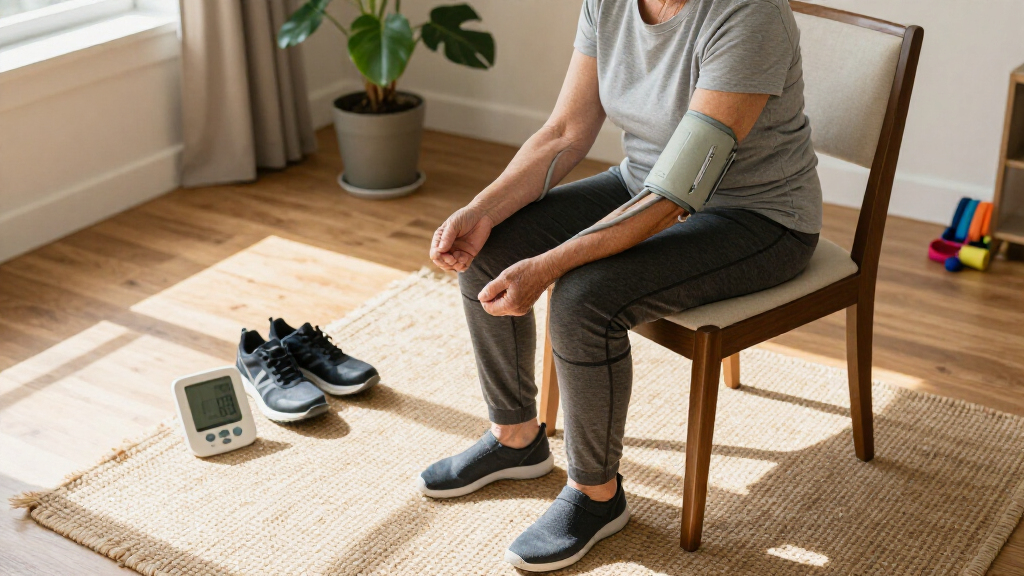
The report says the findings align with the American Heart Association’s 2025 blood pressure guideline, which recommends annual blood pressure monitoring for adults and recommends home monitoring to help confirm an office diagnosis, track readings and inform care as part of an integrated plan. Wang encouraged older adults, family members and caregivers to measure blood pressure at home regularly and share the results with a health care team.
“These findings highlight that, in addition to office blood pressure measurement, home blood pressure readings can be an important way to identify hidden high blood pressure at home and risk of falls in older adults.”
— Frances Wang, Ph.D., M.S., study presenting author
What the Findings Cannot Establish
The results are preliminary, and the available report does not provide enough detail to determine whether the association persists after accounting for other differences among participants. The study reports self-reported falls, including whether participants had fallen during the previous 12 months, and a median follow-up of 350 days; those time frames should not be treated as the same measure of new falls occurring only during follow-up.
The analysis does not explain why participants with masked high blood pressure had a higher fall rate, or establish that their blood pressure pattern caused falls. It also does not show whether treating or lowering home blood pressure would change fall risk. Further details about the study methods and additional research are needed to clarify those questions.
How Clinicians May Use Home Readings
For now, the report supports discussing home blood pressure measurements with a health care professional, particularly when readings at home differ from those taken in the office. The American Heart Association guideline recommends home monitoring as part of an integrated care plan, rather than as a substitute for professional assessment. Patients should share their readings with their care team, which can interpret them alongside other health information.
The research was presented at the October 2026 scientific meeting, and the report characterizes it as preliminary. The material available does not identify a planned publication date for a full study or specify when further results will be released. Researchers will need to investigate the reasons for the association and whether it holds in other groups before its implications for fall prevention or treatment can be established.
Key Questions
What is masked high blood pressure?
It is a pattern in which blood pressure is not high in a medical office but is high at home. Home and office measurements can therefore give different results.
How much higher was the reported fall rate?
In the study, adults older than 78 with masked high blood pressure had a 70% higher rate of falls than participants whose readings were high both at home and in the office. The figure does not describe a comparison with people whose readings were normal in both settings.
Does the study prove that masked high blood pressure causes falls?
No. The findings show an association, and the study did not establish why the fall rate was higher or whether the blood pressure pattern caused falls.
Should older adults check blood pressure at home?
The American Heart Association recommends home monitoring to help confirm an office diagnosis and track blood pressure as part of an integrated care plan. People should share home readings with their health care team for interpretation and guidance.
Source: rss
Halloween Picks
halloween
As an affiliate, we earn on qualifying purchases.