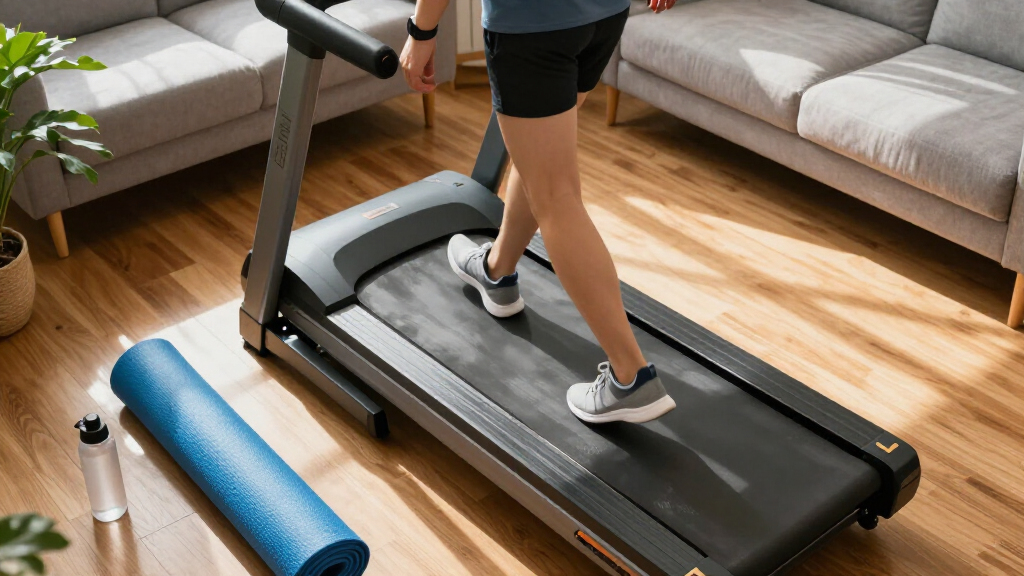

The best folding treadmill for home workouts balances three things that usually fight each other: a compact folded footprint, enough motor power for real running, and incline options that make indoor walking worthwhile. My top pick overall is the Foldable Treadmill with 0–16% Auto Incline and 3.0 HP Motor, because it combines a 350 lb capacity with the widest auto-incline range in this lineup — no manual lever to fuss with between intervals. The UMAY Folding Treadmill with 20% Auto Incline goes even steeper for hill-walking training, while the NordicTrack T6.5S is the choice if you want a traditional full-deck running machine rather than a walking pad. The main tradeoff you’ll face in this category is that ultra-slim folding designs sacrifice deck stability and running room, whereas sturdier machines take up more space even when folded. Keep reading for the full breakdown of all 15 models and who each one actually suits.

Get workout gear delivered free — and shop member deals
- Fast, free delivery on millions of items
- Access to Prime Big Deal Days deals on October 6–7
- Prime Video, Amazon Music and more included
Complete the kit


Key Takeaways
- Auto incline separates the serious options from the rest: only the 0–16% Auto Incline model and the UMAY 20% offer motorized incline, while every walking pad in this roundup requires you to stop and adjust a manual lever — a real limitation for interval training.
- The 3.0 HP motor tier (the 12% Manual Incline model and the 0–16% Auto Incline pick) matters if anyone in the household wants to run; the slim walking pads with handlebars are walking-only machines despite how they’re marketed.
- Handlebars are the hidden differentiator among walking pads: models like the Cardirun with 10% incline and handle bar and the KASSADIN 380AM-VVB offer balance support that matters for older users or steep incline work, at the cost of a slightly larger folded footprint.
- The NordicTrack T6.5S is the only traditional full-deck treadmill here — it’s the most stable for running but the least ‘folding-friendly’ in practice, so it only makes sense if you have a dedicated corner rather than a living room you share.
- Multi-function models like the KALWOL 6-in-1 and FOUSAE 5-in-1 bundle speakers and app connectivity, but those extras don’t offset weaker frames — pay for the deck and motor first, entertainment second.
| Cardirun Foldable Walking Pad Treadmill with 10% Incline and Handle Bar |  | Best Walking Pad for Beginners | Incline: 10% manual | Running speed: 0.6–6.2 MPH | Walking speed: 0.6–3.8 MPH | VIEW LATEST PRICE | See Our Full Breakdown |
| Foldable Walking Pad Treadmill with Handle Bar |  | Best Value for Under-Desk Walking | Speed modes: Walking 0.6–1.2, jogging 1.9–2.5, running 3.1–4 MPH | Motor: 440 W | Weight capacity: 264 lb | VIEW LATEST PRICE | See Our Full Breakdown |
| Foldable Incline Treadmill with Handle |  | Best for High Weight Capacity | Maximum incline: 16% | Motor: 3.0 HP | Weight capacity: 400 lbs | VIEW LATEST PRICE | See Our Full Breakdown |
| Cursor Fitness Folding Treadmill with 16% Manual Incline and LED Displays |  | Best Overall | Incline: Manual: 0%, 8%, or 16% | Motor: 3.0 HP peak brushless | Speed range: 0.6–7.0 MPH | VIEW LATEST PRICE | See Our Full Breakdown |
| Foldable Home Treadmill with 3.0 HP Motor and 12% Manual Incline |  | Best for Joint-Friendly Workouts | Motor: 3.0 HP brushless | Incline: 12% manual | Speed range: 0.6–6.2 MPH | VIEW LATEST PRICE | See Our Full Breakdown |
| Cardirun Foldable Treadmill with 10% Manual Incline |  | Best for Heavier Users | Motor: 3.5 HP brushless | Speed Range: 1.0–7.6 mph | Manual Incline: 0%, 3%, 10% | VIEW LATEST PRICE | See Our Full Breakdown |
| KALWOL 6-in-1 Foldable Treadmill with Speaker and App Compatibility |  | Best Value All-Rounder | Speed Range: 0.6–7.5 MPH | Incline: Manual, up to 10% | Motor: 3.0 HP brushless | VIEW LATEST PRICE | See Our Full Breakdown |
| UMAY Folding Treadmill with 20% Auto Incline |  | Best Incline Training | Motor: 4 HP | Speed Range: 0.6–8 mph | Maximum Incline: 20% (auto) | VIEW LATEST PRICE | See Our Full Breakdown |
| NordicTrack T6.5S Treadmill |  | Best for Real Runners | Maximum Speed: 10 MPH | Incline Range: 0–10% motorized | Cushioning: KeyFlex | VIEW LATEST PRICE | See Our Full Breakdown |
| Terluxra Foldable Walking Pad Treadmill with Handlebar |  | Best Compact Walking Pad | Motor: 2.0 HP | Speed Range: 0.6–4 mph | Exercise Modes: Walking, jogging, running | VIEW LATEST PRICE | See Our Full Breakdown |
| Foldable Walking Pad Treadmill with Manual Incline |  | Best Budget-Friendly Walking Pad | Running area: 35 × 14.4 in | Folded dimensions: 40.5 × 18 × 4.7 in | Speed range: 0.6–6.2 mph | VIEW LATEST PRICE | See Our Full Breakdown |
| FOUSAE 5-in-1 Foldable Treadmill with Incline |  | Best for Heavier Users | Motor: 3.0 HP brushless | Speed range: 0.6–7.5 MPH | Incline: 10% (claimed) | VIEW LATEST PRICE | See Our Full Breakdown |
| Foldable Walking Pad Treadmill with Manual Incline |  | Best Beginner Pick | Running area: 35 × 14.4 in | Folded dimensions: 40.5 × 18 × 4.7 in | Speed range: 0.6–6.2 mph | VIEW LATEST PRICE | See Our Full Breakdown |
| KASSADIN 380AM-VVB Folding Walking Pad Treadmill with Handle Bar and Incline |  | Best for Joggers and Faster Runs | Motor: 3.5 HP | Speed range: 0.6–10.0 MPH | Weight capacity: 400 lb | VIEW LATEST PRICE | See Our Full Breakdown |
| Foldable Treadmill with 0–16% Auto Incline, 0.6–7.5 MPH Speed, 3.0 HP Motor, LED Display, and 350 lb Capacity |  | Best Auto Incline Training | Motor: 3.0 HP brushless | Speed range: 0.6–7.5 MPH | Auto incline: 0–16%, 12 levels | VIEW LATEST PRICE | See Our Full Breakdown |
| folding treadmills for home workout | Motor | Speed range |
|---|---|---|
| Cardirun Foldable Walking Pad | — | — |
| Foldable Walking Pad Treadmill | 440 W | — |
| Foldable Incline Treadmill wit | 3.0 HP | — |
| Cursor Fitness Folding Treadmi | 3.0 HP peak brushless | 0.6–7.0 MPH |
| Foldable Home Treadmill with 3 | 3.0 HP brushless | 0.6–6.2 MPH |
| Cardirun Foldable Treadmill wi | 3.5 HP brushless | 1.0–7.6 mph |
| KALWOL 6-in-1 Foldable Treadmi | 3.0 HP brushless | 0.6–7.5 MPH |
| UMAY Folding Treadmill with 20 | 4 HP | 0.6–8 mph |
| NordicTrack T6.5S Treadmill | — | — |
| Terluxra Foldable Walking Pad | 2.0 HP | 0.6–4 mph |
| Foldable Walking Pad Treadmill | — | 0.6–6.2 mph |
| FOUSAE 5-in-1 Foldable Treadmi | 3.0 HP brushless | 0.6–7.5 MPH |
| Foldable Walking Pad Treadmill | — | 0.6–6.2 mph |
| KASSADIN 380AM-VVB Folding Wal | 3.5 HP | 0.6–10.0 MPH |
| Foldable Treadmill with 0–16% | 3.0 HP brushless | 0.6–7.5 MPH |
More Details on Our Top Picks
Cardirun Foldable Walking Pad Treadmill with 10% Incline and Handle Bar
This option stands out for arriving fully assembled, which immediately separates it from the Cursor Fitness model and most other pads that ship 90% pre-assembled. For someone buying their first piece of home cardio equipment, that removes the most common frustration point entirely. The 5-inch folded profile is the slimmest here, sliding under a sofa or bed where the Foldable Incline Treadmill’s 4-inch frame cannot go once you account for its taller handrails.
The tradeoff is ambition: a 6.2 MPH ceiling and manual incline mean this is really a walking-first machine. Compared with the 440 W walking pad, the Cardirun offers a higher top speed and incline variety, but neither approaches the Cursor’s 7.0 MPH or 400 lb capacity.
Pros:- Arrives fully assembled with no setup required
- Folds to just 5 inches tall for under-furniture storage
- Both walking and running modes with 10% incline variety
- App compatibility without any subscription requirement
Cons:- Incline must be adjusted manually between levels
- Top speed of 6.2 MPH caps serious running workouts
Best for: First-time buyers who want a plug-and-play walking pad with light jogging capability and zero assembly hassle
Not ideal for: Runners or heavier users — the modest motor and 6.2 MPH cap limit serious training
- Incline:10% manual
- Running speed:0.6–6.2 MPH
- Walking speed:0.6–3.8 MPH
- Folded height:5.0 inches
- Display:LED with time, distance, speed, calories
- Controls:Remote with one-touch mute
- Assembly:None required
- Storage:Foldable with transport wheels
Our verdict“This pick makes the most sense for beginners who value effortless setup and slim storage over raw performance.”
Foldable Walking Pad Treadmill with Handle Bar
What distinguishes this model is its removable handrail design — strip the rails off and it becomes a genuine under-desk walking pad, something the Cardirun and the Foldable Incline Treadmill cannot offer. The 440 W motor is tuned for quiet, low-speed operation, making it better suited to workday walking than any running-focused option in this lineup.
The compromise is significant, though. With a 4 MPH maximum, even the Cardirun’s 6.2 MPH feels spacious by comparison. And unlike the Cardirun’s tool-free fold, converting this pad between desk and handrail modes means unscrewing bolts, so owners who switch configurations daily will find that chore adds up quickly.
Pros:- Removable handrails enable true under-desk use
- Quiet 440 W motor suits shared workspaces
- Compact folding design with built-in transport wheels
- Remote pauses workouts and retains data for 10 minutes
Cons:- Maximum speed of 4 MPH is the lowest in this roundup
- Removing handrails requires unscrewing bolts
Best for: Remote workers who want a quiet walking pad that tucks under a desk and doubles as a light-jogging machine with rails attached
Not ideal for: Anyone who wants to run — the 4 MPH ceiling rules out anything beyond a brisk walk or slow jog
- Speed modes:Walking 0.6–1.2, jogging 1.9–2.5, running 3.1–4 MPH
- Motor:440 W
- Weight capacity:264 lb
- Running area:90 × 38 cm
- Folded dimensions:104 × 48.7 × 10.5 cm
- Belt:5-layer non-slip with shock absorption
- Display:LED with time, speed, calories, distance
- Features:Detachable phone holder, transport wheels
Our verdict“Choose this if under-desk walking is the priority and you can live with a very low top speed.”
Foldable Incline Treadmill with Handle
With a 400 lb weight capacity, this treadmill supports users that most walking pads simply cannot — the under-desk model tops out at 264 lb and the 3.0 HP brushless option at 300 lb. The 42-inch handrails and 16% incline also make it a stronger choice for anyone who wants stability during steep uphill walking, which is where incline training delivers its biggest calorie burn.
The frustration is transparency: no running surface dimensions are listed, so taller runners with long strides are buying blind on deck length. Compared with the Cursor Fitness, which shares the same 400 lb rating and incline range but publishes a 37.5-inch belt, this model asks you to trust specifications that aren’t fully disclosed. The 12 preset programs partially compensate, adding structure that the manual-incline alternatives lack.
Pros:- 400 lb weight capacity, the highest alongside the Cursor Fitness
- 16% incline for demanding hill-style workouts
- 42-inch handrails provide secure grip points
- 12 preset speed programs add training structure
Cons:- Running surface dimensions are not disclosed
- Folding a taller handrail-equipped frame is more involved than slim walking pads
Best for: Heavier users up to 400 lbs who want stable handrails and steep incline walking without a full-size treadmill footprint
Not ideal for: Tall runners with long strides — the unlisted deck dimensions make it impossible to verify adequate running space
- Maximum incline:16%
- Motor:3.0 HP
- Weight capacity:400 lbs
- Handrail height:42 inches
- Display:3 screens
- Preset programs:12
- Shock absorption:7-layer system
- Folded thickness:Approximately 4 inches
- Assembly:90% pre-assembled
Our verdict“This model is better suited to heavier users prioritizing capacity and incline than to runners who need verified deck space.”
Cursor Fitness Folding Treadmill with 16% Manual Incline and LED Displays
This is the most complete package in the batch. The 0/8/16% incline options give it more workout variety than the Cardirun’s single 10% setting, and the published 37.5 × 15-inch running surface solves the disclosure problem that plagues the Foldable Incline Treadmill — you know exactly what you’re standing on. A 7.0 MPH top speed is the fastest here, enough for a genuine steady run rather than a shuffle.
It also matches the 400 lb capacity of the Foldable Incline Treadmill while folding to roughly 4 inches thick, and at 40.8 lbs it’s light enough to move solo. The catch: incline changes still require stopping and repositioning manually, and 7.0 MPH still falls short of true sprint training. Serious distance runners should look toward auto-incline options like the UMAY with 20% motorized grade.
Pros:- Three manual incline levels (0%, 8%, 16%) for varied training
- Fastest top speed in this batch at 7.0 MPH
- 400 lb weight capacity with fully disclosed running surface
- Quiet brushless motor at ≤45 dB with shock absorbers
Cons:- Incline adjustments require stopping to reposition manually
- 7.0 MPH ceiling limits faster runners
- 15-inch belt width feels narrow for running
Best for: Home users who want one machine that handles walking, jogging, incline training, and moderate running with full spec transparency
Not ideal for: Speed-focused runners — 7.0 MPH is a ceiling, not a starting point, for tempo or interval training
- Incline:Manual: 0%, 8%, or 16%
- Motor:3.0 HP peak brushless
- Speed range:0.6–7.0 MPH
- Maximum user weight:400 lbs
- Running surface:37.5 × 15.0 inches
- Noise level:≤45 dB
- Weight:40.8 lbs
- Folded dimensions:44.29 × 21.77 × 4.13 inches
- Displays:3 LED screens
Our verdict“The best all-around choice for buyers who want incline variety, a real running speed, and honest specs in one folding frame.”
Foldable Home Treadmill with 3.0 HP Motor and 12% Manual Incline
Where this model earns its spot is cushioning and comfort. The six-layer belt with shock absorption, paired with a quiet brushless motor under 50 dB, makes it the pick for anyone whose knees have opinions about hardwood floors and cheap belts. The data-pause feature — metrics are saved when you stop — is a small convenience the Cardirun doesn’t clearly offer.
Positioned against the Cursor Fitness, it sits a notch below on versatility: 12% incline versus 16%, 6.2 versus 7.0 MPH, and a 300 lb capacity versus 400. The running surface is a similar 38 × 15 inches, so stride room is comparable. Where it wins is everyday livability — quieter operation, included water bottle holder, and gentler landings for walkers and joggers rather than performance seekers.
Pros:- Six-layer cushioned belt reduces joint impact
- Brushless motor runs below 50 dB for apartment use
- LED display saves workout data when paused
- Folds and rolls away with built-in wheels
Cons:- 12% incline and 6.2 MPH ceiling trail the Cursor Fitness
- 300 lb weight capacity is mid-pack for this lineup
- 38 × 15 inch deck is tight for taller runners
Best for: Walkers and light joggers with sensitive joints or downstairs neighbors who prioritize cushioning and quiet over maximum speed
Not ideal for: Heavier users over 300 lbs or incline-focused trainers — the Cursor Fitness beats it on both capacity and grade
- Motor:3.0 HP brushless
- Incline:12% manual
- Speed range:0.6–6.2 MPH
- Maximum user weight:300 lbs
- Running surface:38 × 15 in
- Cushioning:Six-layer non-slip belt with shock absorption
- Noise level:Below 50 dB
- Display:LED; saves data when paused
- Accessories:Water bottle and phone holders
Our verdict“This pick makes the most sense for comfort-first buyers who value quiet, cushioned sessions over top-end speed or incline.”
Cardirun Foldable Treadmill with 10% Manual Incline
This option stands out for its 400 lb weight capacity, which puts it in rare company alongside the UMAY Folding Treadmill and well above the 242 lb limit of the Terluxra walking pad. Compared with the KALWOL 6-in-1, the Cardirun pairs a slightly stronger 3.5 HP brushless motor with a three-position manual incline that tops out at 10%, enough to raise your heart rate without complicating the machine. The cushioned 16 x 40-inch belt keeps things quiet, and the folding frame collapses to a slim 20.5-inch footprint for sliding under a bed or against a wall.
The tradeoffs are real, though: 7.6 mph caps your top pace, so genuine runners should look at the NordicTrack T6.5S instead, and the incline must be set by hand before your workout rather than adjusted on the fly.
Pros:- 400 lb weight capacity, among the highest in this lineup
- Three manual incline settings plus 12 preset programs for varied training
- Cushioned, anti-slip belt and sub-45 dB operation for apartment use
- Folds down to roughly 20 inches deep with transport wheels
Cons:- Top speed of 7.6 mph limits serious running workouts
- Incline must be adjusted manually between sessions
Best for: Larger riders who need a 400 lb capacity but still want a folding frame for a spare bedroom or living room
Not ideal for: Runners training above 7.6 mph or anyone who wants push-button incline changes mid-workout
- Motor:3.5 HP brushless
- Speed Range:1.0–7.6 mph
- Manual Incline:0%, 3%, 10%
- Maximum Weight Capacity:400 lbs
- Running Area:16 x 40 in
- Noise Level:Under 45 dB
- Folded Dimensions:20.5 x 23.6 x 47.2 in
Our verdict“This model makes the most sense for heavier users who want a sturdy, quiet folding treadmill for walking and moderate jogging rather than speed work.”
KALWOL 6-in-1 Foldable Treadmill with Speaker and App Compatibility
For shoppers who want one machine that covers everything from slow desk-side walking to incline intervals, this pick delivers the broadest feature set per dollar in this group. The 0.6 mph starting speed is slower than the Cardirun’s floor of 1.0 mph, which matters if you plan to walk during work calls, and the six workout modes give structure that simpler walking pads like the Terluxra lack entirely. App support for FITSHOW, KINOMAP, and ZWIFT also outpaces what the NordicTrack T6.5S offers without a paid membership.
Where it compromises: the manual 10% incline means stopping to adjust it, and the 40 x 16-inch belt is on the narrow side, so taller runners with long strides may feel pinched compared with the UMAY’s wider 44.1-inch deck.
Pros:- Six workout modes spanning city walk through climbing
- Compatible with FITSHOW, KINOMAP, and ZWIFT at no subscription cost
- No assembly required, arrives ready to roll on transport wheels
- Quiet 3.0 HP brushless motor rated at 40 dB or less
Cons:- Manual incline cannot be changed mid-workout
- Narrow 16-inch belt width limits comfortable running
Best for: Budget-conscious buyers who want walking, jogging, HIIT programs, and third-party app syncing in one no-assembly machine
Not ideal for: Tall runners with long strides — the 40-inch belt length feels cramped at jogging speeds
- Speed Range:0.6–7.5 MPH
- Incline:Manual, up to 10%
- Motor:3.0 HP brushless
- Weight Capacity:350 lb
- Programs:12 HIIT programs
- Apps:FITSHOW, KINOMAP, ZWIFT
- Noise Level:≤40 dB
Our verdict“The strongest pick for buyers who want maximum versatility and app connectivity without paying subscription fees or a premium price.”
UMAY Folding Treadmill with 20% Auto Incline
If hill work is the centerpiece of your training, nothing else in this lineup matches the 20 levels of automatic incline reaching 20%. Both the Cardirun and KALWOL cap out at 10% and require you to hop off and reposition the deck, while the UMAY adjusts mid-stride from the console — a genuinely different workout experience for interval training. The 4 HP motor is the most powerful here, and the hydraulic folding system lowers the deck gently rather than letting it crash down.
The catches: 8 mph still falls short of the NordicTrack T6.5S’s 10 mph for faster runners, and the unspecified belt length is a gap buyers with long strides should query before purchasing. It is also one of the heavier, bulkier machines when folded, so it suits a dedicated corner more than under-bed storage.
Pros:- 20% auto incline adjustable mid-workout, double the manual range of most rivals
- Most powerful motor in this group at 4 HP
- 7-layer cushioned deck with independent suspension
- Hydraulic folding system with a smooth assisted descent
Cons:- 8 mph ceiling limits tempo and interval running
- Running belt length is not specified, a concern for tall users
Best for: Walkers and joggers who want automatic incline intervals that mimic real hill training at home
Not ideal for: Speed-focused runners and anyone who needs ultra-compact under-desk storage
- Motor:4 HP
- Speed Range:0.6–8 mph
- Maximum Incline:20% (auto)
- Maximum User Weight:400 lbs
- Display:Touchscreen
- Noise Level:Less than 45 dB
- Folding:Hydraulic folding system with transport wheels
Our verdict“The clear choice for incline-focused home training, provided you jog rather than sprint and have room for its footprint.”
NordicTrack T6.5S Treadmill
This is the only machine in this batch built for genuine running, with a 10 mph top speed that clears the 7.5–8 mph ceilings of the KALWOL, Cardirun, and UMAY. The 0–10% motorized incline adjusts automatically during iFIT trainer-led workouts, and SmartAdjust tunes speed and grade to your performance — a level of coaching integration the app-connected budget models simply don’t replicate. KeyFlex deck cushioning is also more runner-specific than the basic shock absorbers on the walking pads.
The tradeoff is an ecosystem you pay into: most connected features require an iFIT membership, and the Bluetooth heart-rate monitor is sold separately, so the real cost of the full experience sits above the sticker. If you only walk, this machine is overkill next to the Terluxra.
Pros:- 10 MPH top speed, the highest in this lineup
- Motorized 0–10% incline that adjusts automatically during iFIT workouts
- KeyFlex cushioning designed to reduce joint impact while running
- Syncs with Strava, Garmin, and Apple Health
Cons:- Trainer-led workouts and auto-adjust features require a paid iFIT membership
- Bluetooth heart-rate monitor sold separately
Best for: Runners who want trainer-led workouts, auto-adjusting incline, and a 10 mph top speed in a folding frame
Not ideal for: Buyers who want a subscription-free experience — core connected features sit behind iFIT membership
- Maximum Speed:10 MPH
- Incline Range:0–10% motorized
- Cushioning:KeyFlex
- Display:LCD
- Connected Features:iFIT workouts, ActivePulse, SmartAdjust, AI Coach (membership required)
- Compatible Apps:Strava, Garmin, Apple Health
- Frame:Foldable with assisted lowering and transport wheels
Our verdict“The pick for actual runners who will use the speed range and coaching ecosystem, but overkill for casual walkers unwilling to subscribe.”
Terluxra Foldable Walking Pad Treadmill with Handlebar
Where every other machine here tries to be a do-everything treadmill, this one wisely narrows its job to walking — and wins on simplicity. Its 2.0 HP motor and featherweight folding frame make it the easiest option to slide under a sofa or stash in a closet, something the 400-lb-capacity Cardirun and the hydraulic UMAY can’t manage. The included handlebar and remote control give it an advantage over bare walking pads for anyone unsteady on their feet, while the LED display covers the basics of speed, distance, time, and calories.
The limitations define the category: 4 mph means jogging is out of the question, and the 242 lb weight cap is the lowest in this roundup. Compared with the KALWOL, you give up incline and app features entirely in exchange for the smaller footprint.
Pros:- Most compact and portable folding design in this lineup
- Handlebar adds stability that bare walking pads lack
- Remote control and LED display keep operation simple
- Shock-absorbing, anti-slip belt for daily walking comfort
Cons:- Maximum speed of 4 mph prevents jogging or running
- 242 lb weight capacity is the lowest in the roundup
Best for: Office workers, seniors, or small-apartment dwellers who want a stowable walking pad with a safety handlebar
Not ideal for: Anyone over 242 lbs or hoping to jog — the speed ceiling and weight limit rule out both
- Motor:2.0 HP
- Speed Range:0.6–4 mph
- Exercise Modes:Walking, jogging, running
- Maximum Weight Capacity:242 lbs (110 kg)
- Display:LED; tracks speed, distance, time, and calories
- Controls:Remote control
- Storage:Foldable; front rollers for moving
Our verdict“A focused walking pad for low-impact daily movement in tight spaces — skip it if you ever intend to run.”
Foldable Walking Pad Treadmill with Manual Incline
This option stands out for sliding under a bed or sofa at just 4.7 inches thick, which is the kind of storage flexibility apartment dwellers actually use. Compared with the KASSADIN 380AM-VVB, it gives up motor power (480 W versus 3.5 HP) and half the weight capacity, but it also asks far less of your floor space and budget. The 12 preset programs and three countdown modes give structure to walks that would otherwise drift, and the five-layer cushioned belt softens the joint impact that bare walking pads often ignore. The tradeoff is real: the manual incline means stepping off to adjust, and the 220 lb limit excludes larger users. This pick makes the most sense for light walkers and casual joggers who prioritize storage over raw performance.
Pros:- Folds to 4.7 inches for under-bed or under-sofa storage
- 12 preset programs plus time, distance, and calorie countdown modes
- Five-layer non-slip belt with shock absorption
- Transport wheels make repositioning easy
Cons:- Manual incline requires stopping to adjust
- 220 lb weight capacity is the lowest tier in this lineup
Best for: Apartment dwellers and small-space residents who walk daily and need a machine that disappears under furniture
Not ideal for: Runners over 220 lbs or anyone wanting powered incline adjustments mid-workout
- Running area:35 × 14.4 in
- Folded dimensions:40.5 × 18 × 4.7 in
- Speed range:0.6–6.2 mph
- Motor power:480 W
- Maximum user weight:220 lb
- Incline:Manual
- Programs:12 preset programs
Our verdict“A storage-first walking pad for casual users who value a low footprint over motor muscle.”
FOUSAE 5-in-1 Foldable Treadmill with Incline
With a 400 lb weight capacity, the FOUSAE outmuscles nearly everything else here — including the UMAY Folding Treadmill and both 220 lb walking pads — making it the safer choice for bigger frames. The 3.0 HP brushless motor and 40 × 16-inch deck give it the widest, most forgiving running surface in this batch, and app connectivity plus 12 HIIT programs add training variety that basic walking pads can’t match. A sub-30 dB noise claim also makes it office-friendly in a way the louder KASSADIN isn’t. Two honest cautions: the 10% incline boost claim is promotional copy rather than verified data, and the missing dimensions mean you’re trusting the fold will fit your space. This model is better suited to buyers who need capacity and versatility over verified specs.
Pros:- Highest weight capacity in the lineup at 400 lbs
- Widest deck at 40 × 16 inches
- Sub-30 dB claimed noise level suits shared offices
- No assembly required out of the box
Cons:- Incline performance claims lack independent substantiation
- No product dimensions or unit weight disclosed
Best for: Users between 220 and 400 lbs who need a durable, app-connected machine for mixed walking and HIIT sessions
Not ideal for: Buyers who want confirmed folded dimensions before purchasing, since none are published
- Motor:3.0 HP brushless
- Speed range:0.6–7.5 MPH
- Incline:10% (claimed)
- Weight capacity:400 lbs
- Running deck:40 × 16 inches
- Programs:12 HIIT programs
- Noise level:Below 30 dB
- Assembly:None required
Our verdict“The strongest pick for heavier users, as long as you accept some unverified spec claims.”
Foldable Walking Pad Treadmill with Manual Incline
For someone starting a walking habit, this model strips the decision fatigue out of the equation: simple LCD console, 12 presets, countdown modes, and safety handrails. It mirrors the earlier Foldable Walking Pad (B0H3V9RWC5) almost exactly — same deck, same 480 W motor, same 4.7-inch fold — but adds a device holder, which matters if your motivation comes from streaming a show while walking. Compared with the feature-dense KALWOL 6-in-1, it deliberately skips speakers and app integrations, and that simplicity is the point for beginners who just press start. The ceiling is low, though: the 220 lb limit and 6.2 mph top speed mean it’s a starter machine, not a long-term training partner. This pick makes the most sense for first-time buyers building a routine.
Pros:- Safety handrails provide stability for new or cautious users
- Device holder for streaming during workouts
- Folds flat for under-bed or under-sofa storage
- Straightforward LCD with core metrics
Cons:- 220 lb weight capacity limits longevity for many users
- Narrow 14.4-inch belt can feel confining at faster paces
Best for: Fitness beginners who want a plug-and-play walking pad with handrails and a device holder for entertainment
Not ideal for: Intermediate runners or users over 220 lbs who will outgrow it within months
- Running area:35 × 14.4 in
- Folded dimensions:40.5 × 18 × 4.7 in
- Speed range:0.6–6.2 mph
- Motor power:480 W
- Maximum user weight:220 lbs
- Programs:12 preset programs
- Features:Safety handrails, transport wheels, device holder
Our verdict“The easiest entry point into home walking, best treated as a habit-building tool rather than a forever machine.”
KASSADIN 380AM-VVB Folding Walking Pad Treadmill with Handle Bar and Incline
A 0.6–10.0 MPH top speed sets the KASSADIN apart — it’s the only machine in this batch that reaches true running territory, where the auto-incline model (B0HGYC77DB) caps out at 7.5 MPH. Pair that with the same 400 lb capacity as the FOUSAE and a 3.5 HP motor (the most powerful listed here), and you get a machine built for sustained training rather than casual steps. The handle bar adds stability at pace, and 12 preset programs keep progression structured. Transparency gaps hold it back: no stated incline range and no quantified noise figure, so you’re buying on motor and speed specs alone. This option stands out for runners who don’t want a full-size treadmill but refuse to be capped at jogging speed.
Pros:- Highest top speed in this batch at 10.0 MPH
- 3.5 HP motor handles sustained running loads
- 400 lb weight capacity matches the FOUSAE
- 365-day support with 24/7 assistance
Cons:- No published incline range or percentage
- Noise level described but never quantified
Best for: Regular joggers and runners who want folding convenience without sacrificing speed or capacity
Not ideal for: Shared-space users sensitive to noise, since the motor’s loudness isn’t specified
- Motor:3.5 HP
- Speed range:0.6–10.0 MPH
- Weight capacity:400 lb
- Preset programs:12
- Design:Folding with handle bar and incline support
- Deck:Cushioned anti-slip
- Support:365-day service access, 24/7 assistance
Our verdict“The pick for anyone whose workouts include real running, not just walking — provided unlisted specs don’t bother you.”
Foldable Treadmill with 0–16% Auto Incline, 0.6–7.5 MPH Speed, 3.0 HP Motor, LED Display, and 350 lb Capacity
If hill work is your goal, this is the standout: 12 auto-incline levels up to 16%, adjustable from the console without breaking stride — a genuine advantage over the manual-incline walking pads (B0H3V9RWC5, B0H462GMJP), which force you to stop and reposition. It also publishes what others hide: exact folded dimensions (46.5 × 23 × 5.5 inches), weight (58 lbs), and a below-50 dB noise figure, making it the most transparent spec sheet in the batch. Compared with the UMAY’s 20% auto incline, you sacrifice a little incline ceiling but gain verifiable dimensions and a quiet brushless motor. The constraints are clear: a 15-inch-wide belt is snug for runners with a long stride, and 7.5 MPH caps you at a moderate jog. This pick makes the most sense for walkers and joggers training with structured intervals.
Pros:- Auto incline to 16% adjustable mid-workout
- Fully disclosed dimensions, weight, and noise specs
- Quiet 3.0 HP brushless motor under 50 dB
- Six-layer cushioned belt protects joints on incline work
Cons:- 15-inch belt width is narrow for running strides
- 7.5 MPH ceiling limits serious runners
Best for: Users who want push-button hill training and calorie burn from incline walking or interval workouts
Not ideal for: Tall runners with wide gaits or anyone who trains above 7.5 MPH
- Motor:3.0 HP brushless
- Speed range:0.6–7.5 MPH
- Auto incline:0–16%, 12 levels
- Maximum user weight:350 lbs
- Running surface:38 × 15 inches
- Folded size:46.5 × 23 × 5.5 inches
- Noise level:Below 50 dB
- Weight:58 lbs
Our verdict“The best choice for incline-driven training at home, provided your pace stays at a jog or below.”

How We Picked
I evaluated each treadmill through the lens of what actually matters in a home setting: folded footprint versus unfolded usability, motor power relative to intended use, incline mechanism (auto versus manual), deck size, and user weight capacity. Because these machines live in bedrooms and living rooms rather than gyms, I also weighed noise behavior, how easily the unit moves on its transport wheels, and whether the folding mechanism is something you’d realistically operate daily or something that would become an excuse to skip workouts.
The ranking logic follows use case rather than pure spec count. Machines with motorized incline and stronger motors rank higher for most buyers because they support progression — you won’t outgrow them. Compact walking pads with handlebars rank as beginner and space-saving picks, judged on stability and safety rather than top speed. Traditional full-deck models are ranked on build quality and running comfort. Where two products look similar on paper, the tiebreaker was always the detail that shows up in week three of ownership: the awkward manual incline lever, the wobble at higher speeds, the display you can’t read while walking.
Factors to Consider When Choosing Folding Treadmills For Home Workouts
Before you pick a specific model, it helps to understand what actually separates a folding treadmill you’ll use for years from one that becomes a clothes rack. These are the factors I’d weigh before clicking buy, and the mistakes I see buyers make most often.Auto Incline vs. Manual Incline: The Difference Nobody Explains
Manual incline means you physically stop, get off, and reposition a lever or pin — usually between two and three fixed settings. That’s fine if you set the incline once and walk for 40 minutes, but it breaks any interval or hill-repeat workout into a stop-start chore, which is why so many manual-incline machines end up permanently parked at one setting. Auto incline adjusts from the console mid-stride, which changes the kind of training you can do entirely: progressive hill climbs, rolling-simulation programs, and calorie burn that better matches outdoor walking. Expect to pay meaningfully more for motorized incline, and accept that the mechanism adds weight and one more thing that can fail long-term. My honest advice: if you walk to support weight loss or training goals, auto incline is worth stretching for. If you just want movement while watching TV, manual is perfectly adequate.
Motor Power: Buy for What You’ll Do in Year Two
Walking pads typically ship with 1.5–2.5 HP motors that handle walking speeds comfortably but strain — loudly and with deck vibration — if pushed toward jogging speeds for long sessions. A 3.0 HP motor is the threshold where regular running becomes realistic, and it also runs cooler and quieter at walking speeds, which extends the machine’s lifespan. The classic buying mistake is choosing a budget 2.0 HP walking pad, then starting a couch-to-5K plan and discovering the machine can’t sustain it. A related note: check the continuous duty rating, not peak horsepower, because manufacturers love quoting the bigger peak number. Also match the motor to body weight — a motor that’s adequate for a 140 lb walker may struggle with a 250 lb user, even at the same speed.
Folded Footprint Is Not the Same as Usable Footprint
Product listings advertise the folded dimensions, but what determines whether a machine works in your home is the interplay of three measurements: folded size for storage, unfolded size during use, and the space you need around it to step on and off safely. A slim walking pad that slides under a sofa still needs clear floor space when deployed, and models with upright handlebars often can’t slide under furniture at all. Measure your intended storage spot and your workout spot before ordering — the gap between them is where most returns come from. Also think about ceiling height if you’re tall: you’ll be elevating on an incline, and basement users sometimes find their head uncomfortably close to joists at 12%+ grades.
Weight Capacity as a Proxy for Build Quality
The stated user weight limit tells you more than just who can use the machine — it’s a rough proxy for frame rigidity, deck thickness, and overall durability. Machines rated at 220–240 lb flex noticeably at higher speeds, and that flex shows up as deck wobble and squeaks within months. Anything rated 300 lb or higher, like the 350 lb auto-incline pick in this roundup, generally indicates a steel frame that will also feel more stable for lighter users. If two machines seem otherwise identical, choose the higher capacity one. One caution: treat no-name listings with implausible capacities on flimsy frames skeptically, because that number is only as honest as the brand behind it.
Handlebars, Safety Features, and Who’s Actually Using It
Handlebar-free walking pads photograph beautifully, but they remove your fall-back point, and that matters if any user is older, recovering from injury, or working at steep incline where balance is challenged. Models with removable or folding handlebars give you the option, which is why they dominated the beginner end of my rankings. Look also for an emergency stop magnet or clip — genuinely important at inclines above 10% — and a starting speed low enough (0.6 MPH or so) to step on safely. If the machine will be shared across a household with very different ability levels, prioritize quick-start simplicity over console complexity, because the feature nobody can figure out is the feature nobody uses.
Warranty, Assembly, and the True Cost of Cheap
Folding treadmills are mechanical devices with motors, belts, and folding hinges — all wear items — so the warranty structure predicts how the brand expects the machine to age. A strong warranty covers the motor and frame for years and labor for at least one; thin coverage signals a disposable product. Assembly is another hidden cost: walking pads are mostly ready out of the box, while full-deck folders can require 60–90 minutes of honest work with two people. Finally, resist the bundled-app-and-speaker trap. Connectivity is pleasant but replaceable with a tablet and a shelf; a weak motor or wobbling deck is not fixable with software. Spend your budget on the parts that touch the floor and move you.
Frequently Asked Questions
Can you actually run on a folding treadmill, or are they walking-only?
It depends entirely on the motor and deck combination. Walking pads with 1.5–2.5 HP motors and short decks are designed for walking speeds up to about 4 MPH, and running on them stresses the motor while the reduced deck length shortens your stride unnaturally. Models with 3.0 HP motors and full-length decks — like the 12% Manual Incline folder and the NordicTrack T6.5S in this roundup — handle regular jogging and running legitimately. A reasonable rule: if the machine folds completely flat like a slab, treat it as a walker; if it folds into an upright A-shape with a traditional frame, running is on the table. Also verify the speed range actually reaches 7 MPH or more if running is the goal, because some compact models cap out lower than you’d expect.
Is manual incline really that much worse than auto incline?
For steady-state walking, no — set it once and go, and manual saves you real money. For anything structured, yes, the difference is substantial. Manual incline requires stopping and stepping off to move a lever, which fragments hill intervals, progressive climbs, and any workout where you’d otherwise press a button mid-stride. Auto incline also typically offers finer increments, so you can creep up 0.5% at a time rather than jumping between three fixed slots. The compromise worth knowing about: manual incline adds no motorized parts, so there’s less to break over a decade of ownership. If your routine is one set-and-forget walk per day, manual is the smarter buy; if you train with any intent, budget for auto.
How much floor space do I need for a folding treadmill at home?
Plan for three zones, not one. The storage zone is the folded footprint — check whether the machine folds flat enough to slide under a bed or stands upright needing wall depth, because handlebar-equipped models change that answer. The workout zone is the unfolded footprint plus about two feet of clearance behind the deck, since stepping off the back of a moving belt is the most common household accident. The ceiling zone is the forgotten one: at 12–20% incline, your head height increases by several inches, which matters for tall users in basements or rooms with low fixtures. Measure all three before ordering, and remember the machine needs to physically travel between storage and workout zones if they’re not the same spot.
Are walking pads with handlebars worth the extra bulk?
Handlebars make sense for three groups: anyone using inclines above 8%, older users or those with balance concerns, and people who like a console reference point for heart rate grips and controls. The tradeoff is honest — handlebar models usually don’t slide under sofas, so your storage plan changes from ‘invisible’ to ‘leaning against a wall.’ Removable or fold-down handlebars, like on several Cardirun and KASSADIN models in this roundup, split the difference and are the design I’d steer most households toward. If you’re a confident walker at flat grades in a small apartment, skip the handlebars and enjoy the slimmer profile. If incline training is the whole point of your purchase, treat them as required equipment rather than an upgrade.
What weight capacity should I look for in a folding treadmill?
Start with the heaviest person who’ll use the machine, then add a buffer of at least 50 lb — not for safety, but because capacity correlates directly with frame stiffness and deck durability, and running near the limit accelerates wear on the motor and belt. A 300 lb rating generally indicates a steel frame that will feel solid under any user and hold up to daily use; 220–240 lb ratings on slim walking pads predict more flex and a shorter service life even for lighter walkers. If the household includes users above 275 lb, the 350 lb-rated auto-incline model in this lineup is one of the few folders that won’t feel compromised. Also read the fine print on warranty terms, because some brands void coverage for users above a lower threshold than the advertised capacity.
Conclusion
After comparing all 15 machines, the right choice comes down to who you are when you’re not shopping. For best overall, the Foldable Treadmill with 0–16% Auto Incline, 3.0 HP motor, and 350 lb capacity is the most complete package — it walks, runs, climbs, and supports the widest range of users without any single weak point. For best value, the Cardirun Foldable Treadmill with 10% Manual Incline delivers incline training and a handlebar at a walking-pad price, accepting only the inconvenience of a manual lever. For best premium, the UMAY with 20% Auto Incline is the hill-training specialist, and the NordicTrack T6.5S is the pick if ‘premium’ means a genuine running deck rather than maximum incline.
For beginners and casual walkers, the handlebar-equipped walking pads like the KASSADIN 380AM-VVB and the Terluxra with Handlebar offer the safest, simplest entry point. For small-space buyers, the slim manual-incline walking pads fold flattest and slide away completely. And for runners specifically, only the 3.0 HP machines qualify — the Cursor Fitness 16% incline model being the manual-incline alternative if auto-incline stretches the budget. Match the machine to your actual routine, not your aspirational one, and you’ll end up with a treadmill that earns its floor space.
Fall Picks
fall essentials
As an affiliate, we earn on qualifying purchases.