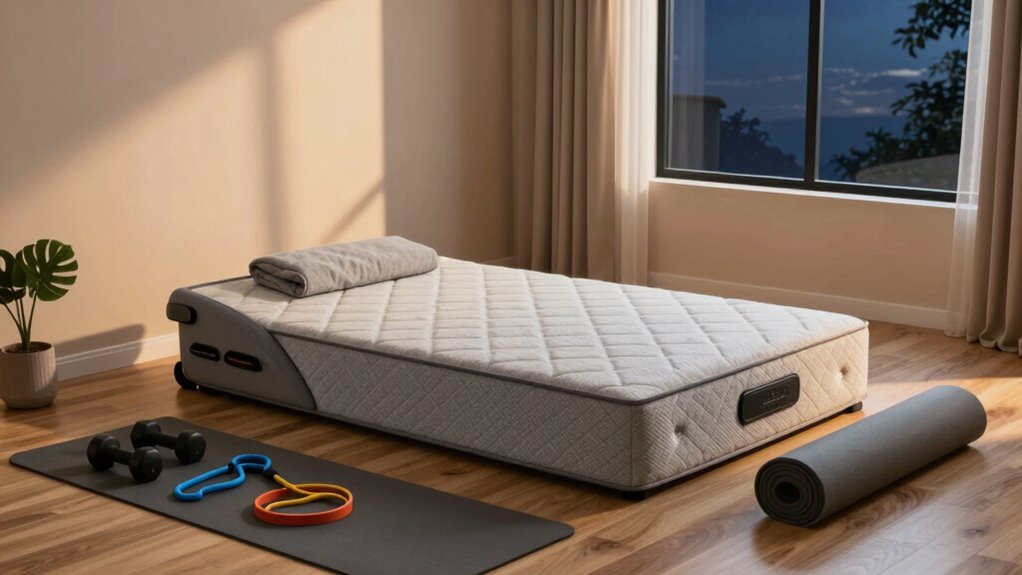

To improve both sleep and training, you should focus on optimizing your recovery routines. Prioritize quality sleep by creating a cool, dark environment, limiting screen time, and establishing a consistent bedtime. Incorporate supplements like magnesium and melatonin to support relaxation, and practice mindfulness techniques such as meditation or deep breathing to calm your mind. Combining these strategies enhances rest and performance, and if you keep going, you’ll discover even more ways to elevate your recovery game.

Get workout gear delivered free with Prime
- Fast, free delivery on millions of items
- Prime Video, Amazon Music and more included
- Member-only deals all year
Key Takeaways
- Optimize sleep environment by keeping the room cool, dark, and limiting screen time before bed.
- Incorporate magnesium and melatonin supplements to regulate sleep cycles and improve rest quality.
- Establish a consistent bedtime routine to signal the body for better sleep and recovery.
- Practice mindfulness techniques like meditation and deep breathing to reduce stress and enhance sleep onset.
- Combine supplements with relaxation practices for a holistic approach to improving sleep and training results.
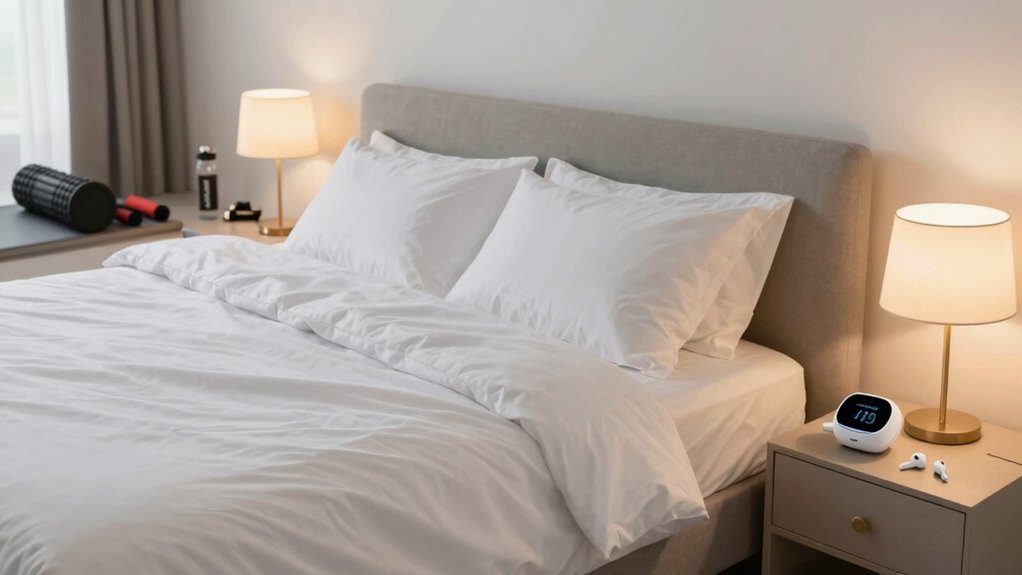
Getting enough quality sleep is essential for maximizing your training results, but many people overlook how recovery upgrades can boost both rest and performance. When you focus on improving your sleep, you’re not just helping your body recover—you’re also setting the stage for better training outcomes. Two effective strategies to enhance both your sleep and your workouts are using nutritional supplements and practicing mindfulness techniques. Together, they create a holistic approach that supports recovery on multiple levels.
Prioritizing quality sleep through supplements and mindfulness boosts recovery and enhances training results.
Nutritional supplements can be a game-changer when it comes to improving sleep quality. Supplements like magnesium and melatonin are popular choices because they help regulate your sleep cycle and promote relaxation. Magnesium, in particular, plays an indispensable role in calming your nervous system, easing muscle tension, and reducing stress, all of which contribute to more restful sleep. Melatonin, a hormone naturally produced by your body, signals to your brain that it’s time to wind down, making it easier to fall asleep and stay asleep throughout the night. Incorporating these supplements into your routine, especially if you’re experiencing sleep disturbances, can lead to quicker sleep onset and deeper rest, which in turn accelerates recovery and enhances your training performance. Additionally, creating comfortable sleep environments can further optimize these benefits and promote more consistent rest. Proper sleep hygiene practices, like limiting screen time before bed and maintaining a cool, dark room, can also significantly improve sleep quality. Making adjustments to your sleep environment can also help reinforce these benefits and ensure you wake up feeling refreshed. Developing a consistent bedtime routine can further enhance these effects by signaling to your body that it’s time to wind down.
Meanwhile, mindfulness techniques serve as an excellent tool for calming your mind and reducing stress before bedtime. Practices like meditation, deep breathing, or progressive muscle relaxation help you disconnect from daily worries and create a peaceful mental state conducive to sleep. When you dedicate just a few minutes each evening to mindful breathing or guided meditation, you train your brain to enter a relaxed state more readily, making it easier to drift off and stay asleep. These techniques also improve your overall stress response, which is essential because high stress levels can interfere with sleep quality and recovery. Incorporating home design features that promote a calming environment can further enhance these practices and support restful sleep. By integrating mindfulness into your nightly routine, you not only improve your sleep but also develop a mental resilience that benefits your training consistency and focus. In addition, maintaining a consistent sleep schedule helps reinforce your body’s natural rhythms and enhances the effectiveness of these techniques. Using relaxation techniques regularly can help create a more tranquil mental space, promoting a restful night’s sleep and better recovery.
As an affiliate, we earn on qualifying purchases.
Frequently Asked Questions
Can Recovery Upgrades Cause Any Adverse Effects?
Recovery upgrades can cause adverse effects if you experience potential overuse or allergic reactions. Overusing certain devices or supplements might lead to skin irritation, fatigue, or decreased effectiveness. Additionally, allergic reactions to materials or ingredients can trigger symptoms like redness, swelling, or breathing issues. Always follow usage guidelines, monitor your body’s response, and consult a healthcare professional if you notice any adverse reactions to guarantee safe and effective recovery support.
How Long Does It Take to Notice Improvements?
You might notice improvements in sleep quality and training intensity within a few days to a couple of weeks after implementing recovery upgrades. Consistent use helps your body adapt faster, leading to better rest and more effective workouts. However, individual results vary based on factors like age, lifestyle, and initial fitness level. Stay patient, keep consistent, and you’ll likely see positive changes in your sleep and training performance over time.
Are These Upgrades Suitable for All Fitness Levels?
Did you know that nearly 80% of adults experience sleep issues at some point? These upgrades are generally suitable for all fitness levels, but you should tailor them to your needs. Incorporate effective fitness equipment and diet modifications to optimize results. Beginners might start with simple adjustments, while advanced athletes can explore more sophisticated options. Always listen to your body and consult professionals if unsure about what’s best for your specific fitness level.
Do Recovery Upgrades Replace Traditional Rest Days?
Recovery upgrades don’t replace traditional rest days, but they complement them. You still need scheduled rest to allow your body to fully recover. Enhancing your sleep environment and implementing nutrition strategies can accelerate recovery, making rest days more effective. These upgrades boost your overall recovery process, but they shouldn’t eliminate the need for complete rest periods. Balance them with proper rest days to optimize both sleep and training results.
Can Recovery Tools Be Used During Travel or Away From Home?
Using recovery tools during travel is like carrying a mini spa with you. Portable tools make travel recovery easy, so you can maintain your routine even away from home. You can use foam rollers, massage balls, or compact percussive devices to ease muscle tension and promote circulation. These travel recovery options help you stay fresh and ready, making it easier to stay consistent with your training no matter where you are.
Conclusion
By embracing these recovery upgrades, you’re planting seeds for better sleep and more effective training—like a gardener nurturing a thriving garden. When you prioritize proper hydration, quality sleep, and smart nutrition, you set the stage for your body to perform at its best. Remember, your recovery routine isn’t just a side dish; it’s the main course that fuels your progress. Take charge now, and watch your fitness journey blossom into something truly extraordinary.
Fall Picks
fall essentials
As an affiliate, we earn on qualifying purchases.